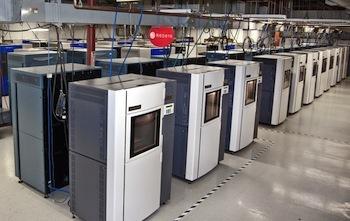
As the cost of systems continues to decline, the barrier to entry diminishes, thus providing access to a broader audience to drive creative new businesses. Historically, we have witnessed 3D printing in the prototyping operations of many high tech and medical device companies, primarily used as a research and development tool, or perhaps buried deep in a supply chain for a unique part. However, we are now commonly being approached with the reality that additive manufacturing is becoming mainstream and used within a wide spectrum of business models including direct to consumer solutions that enable everyone to have access to 3D printers, which will deliver on-demand personalized consumer goods. Indeed, some businesses are targeting manufacturing 3D operations (or outsourced Contract Manufacturing Operations) to onshore with speed, scale, and volume. Regulatory bodies are taking notice.
The issues before regulators include how printed products will perform over time, the consistency of their quality, and an awareness of the materials used. Although many are not currently exposed to government regulation and inspection, a plan should be developed to proactively institute quality and safety standards. The Food and Drug Administration recently released an additive manufacturing working group, and the list of questions and concerns gives a sense of the level of scrutiny that can be expected. For its part, the FAA says it is making efforts to understand the implications of 3D printing in the aerospace industry.
Undoubtedly, one of the first questions that will be asked by an insurance underwriter when discussing a company is “what happens if their product is used to print a gun or a bomb?” Although this is a valid question, we are seeing a level of acceptance from some carriers, and they want to understand where to place their bets. In a recent interview with Chubb Insurance, their loss control team was focused on helping clients identify and mitigate the risks they face. Ask your broker to assist you by mapping out your insured, potentially underinsured, and uninsured exposures.
These are a few key areas to focus on:
- Products: Product liability insurance provides coverage against allegations from a third party of Bodily Injury of Property Damage resulting from your products or services. In a claim, it is common that the entire stack of providers could be forced to defend themselves, including the product manufacturer, printer manufacturer, software designer, distributor, and retailer.
- Contracts: Consult with a creative and knowledgeable attorney to address liability at a contractual level with strong hold harmless and indemnification language, and work with your insurance broker to develop favorable insurance language and limits.

- Manufacturing Process and Materials:
– Plastics, nano materials, physical vapor deposition
– Study safety data sheets and toxicity reports
– Occupational health and safety for employees, e.g., dust collection systems for powdered metals like chromium or formaldehyde - Environmental: Leachability risk?
- Quality Controls: Understand marketing risk, and the aggressive salesperson, who may be willing to overstate capabilities. These inaccurate representations may lead to Breach of Warranty claims
- Intellectual Property: Increases the risk of design theft as the underlying software file could easily be used to produce counterfeit products. Although this insurance was historically expensive and restrictive, we have seen a material trend toward the availability of viable insurance products to protect our clients.
As with any emerging area of risk, it is critical to conduct a thorough risk assessment to uncover the products’ liability exposures, to anticipate environmental and workplace safety threats, and to expose the potential for losses to valuable corporate assets including the loss of intellectual property. This important discussion will help you develop a strategy to: first, mitigate the risks where possible; and then, to develop answers to the questions you will face when approaching insurance underwriters for their participation in your risk transfer program. There are insurers who are interested in underwriting programs for additive manufacturing companies as long as they have the information that they believe will allow them to quantify the exposure to loss and allow them to establish adequate rate to make this a potentially profitable arrangement. The more completely the underwriter understands your company’s exposures and risk mitigation efforts, the better the coverage terms and pricing will be.
Let us know what you see to be primary risks and benefits in the additive manufacturing field over at the 3D Printing Opportunities and Risks forum thread at 3DPB.com.
About Author: Eric Long is a Senior Vice President & Founding Principal at ABD Insurance & Financial Services