
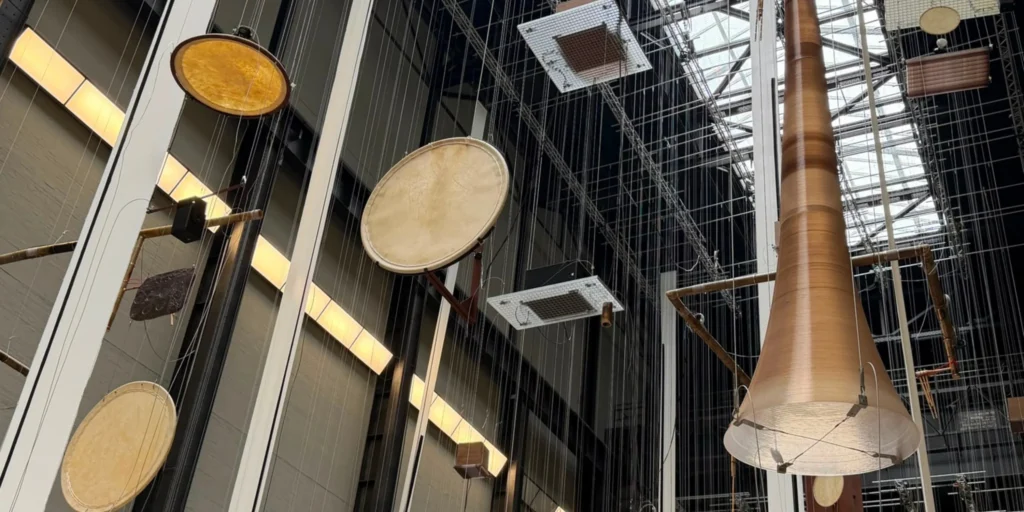
At London’s Tate Modern, visitors can now experience 3D printing in a slightly different way: through sound. Giant horns made with bamboo-based materials hang inside the museum’s famous Turbine Hall, where art, music, and technology come together in a new installation by Lebanese artist and composer Tarek Atoui.
Called Hold, the exhibition opened in October as part of the eleventh Hyundai Commission at Tate Modern. Behind some of its most striking pieces are London-based digital fabrication company Fab.Pub and architecture studio Mamou-Mani, which worked with Atoui and his team to bring the project to life using 3D printing.
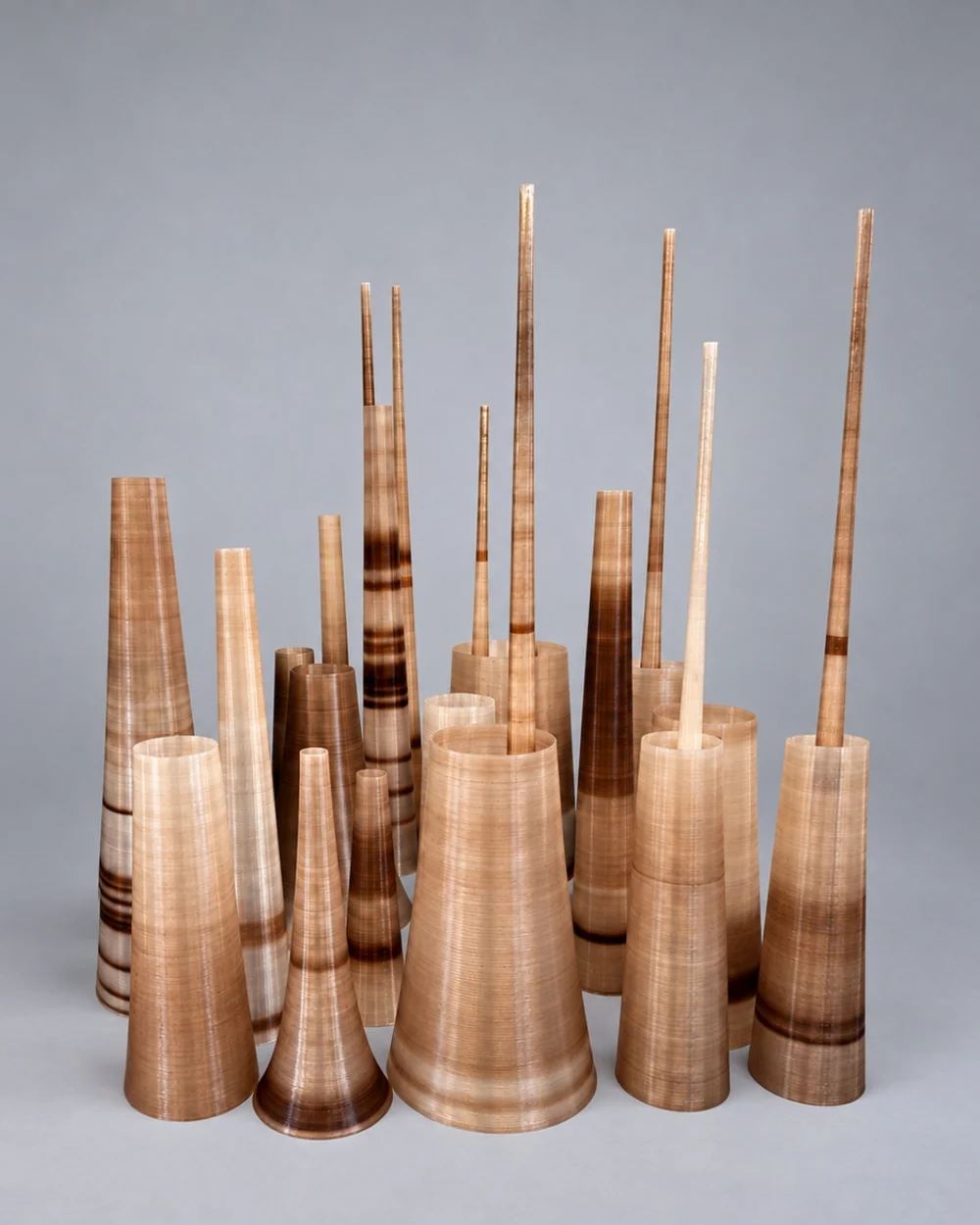
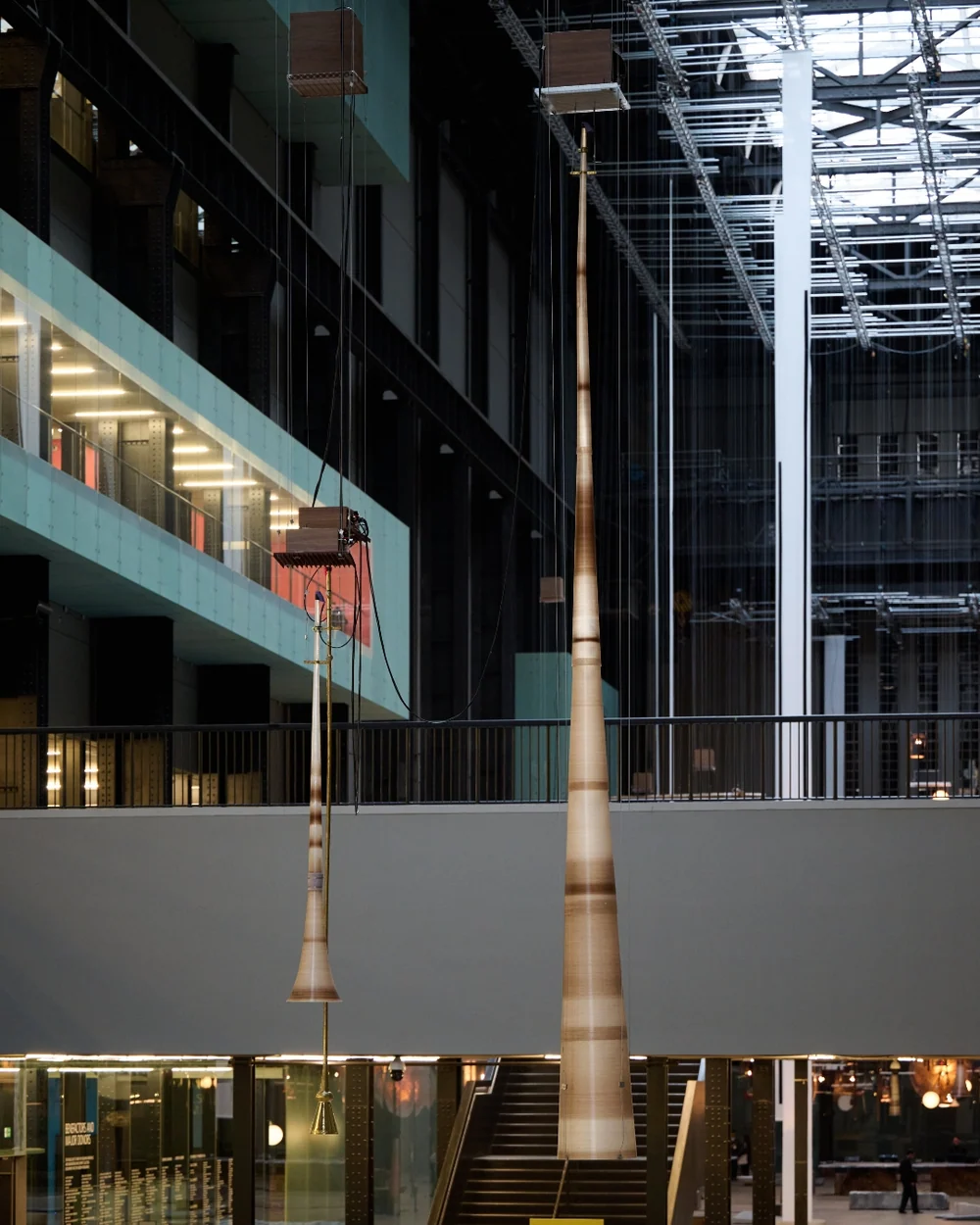
The project took 14 months, from the first material experiments to the final installation. Along the way, the team produced nine horns, 36 platforms, six towers, 16 table bases, and two boundary rings. Together, the printed horns measure more than 40 meters (131 feet) in length, with some reaching up to eight meters (26 feet).
But things get even more interesting when you look at what went into the printers. The team first tried limestone and basalt, but Atoui ended up choosing bamboo. Fab.Pub took bamboo powder from waste material supplied by ADEZZ and mixed it with two different plastics.
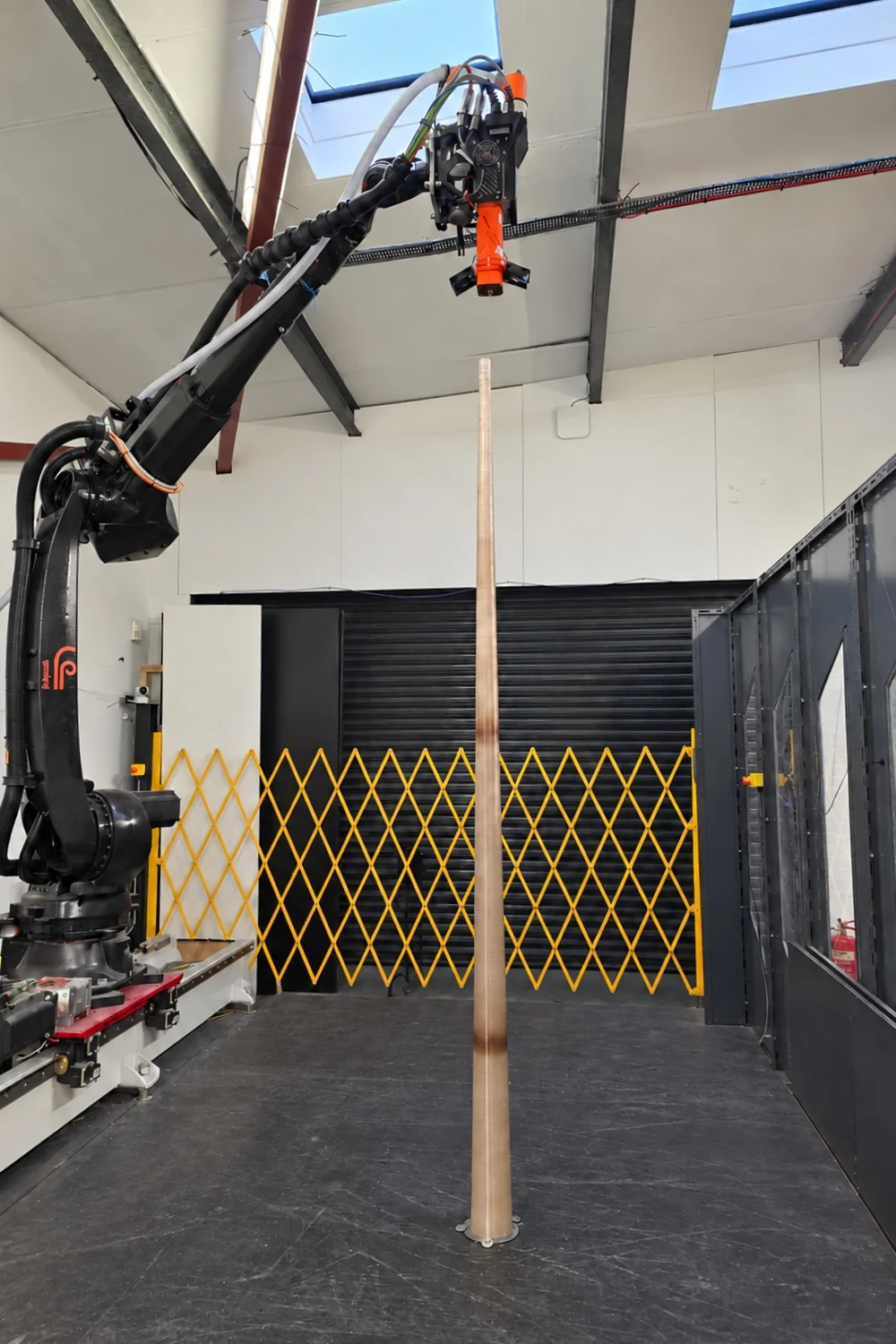
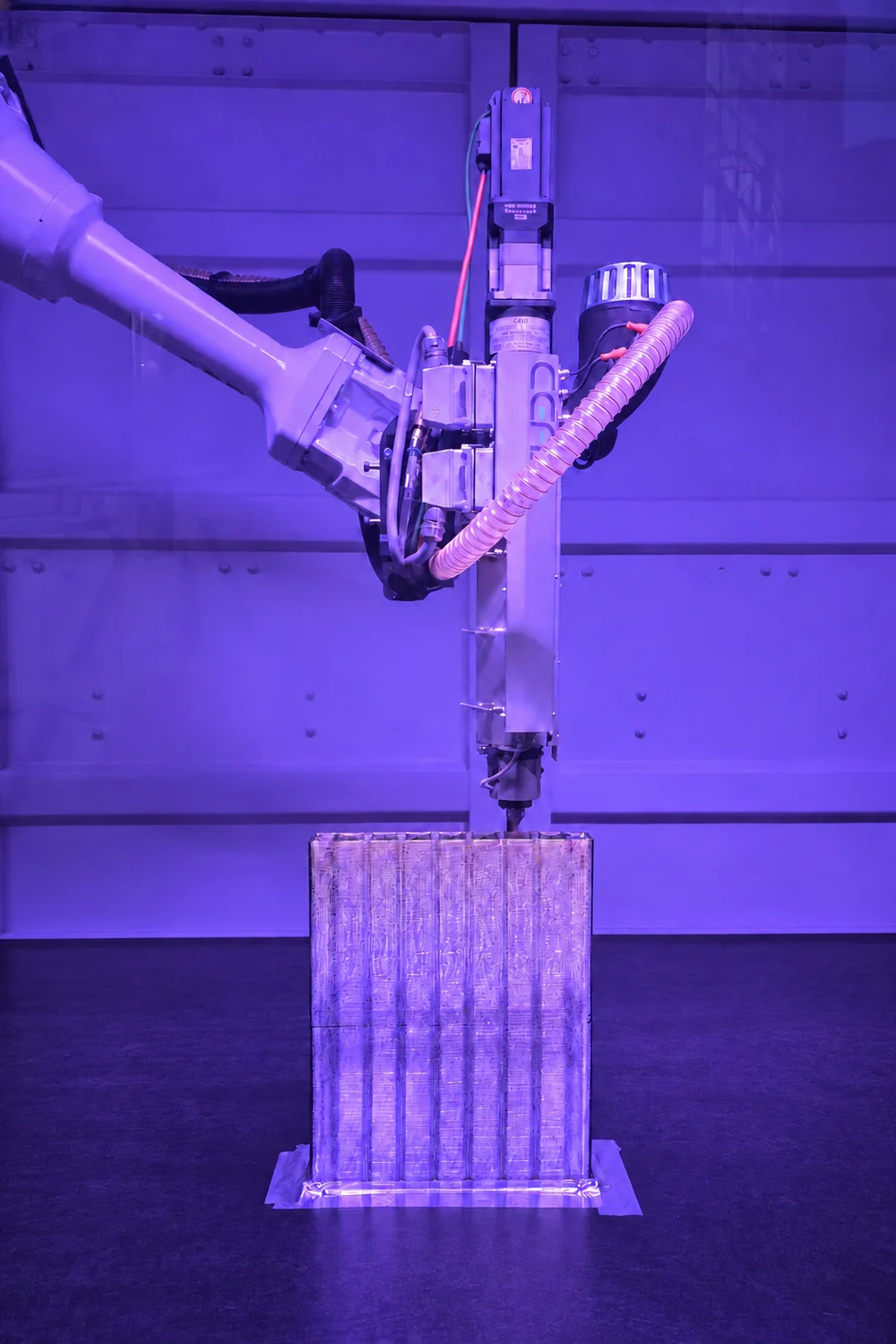
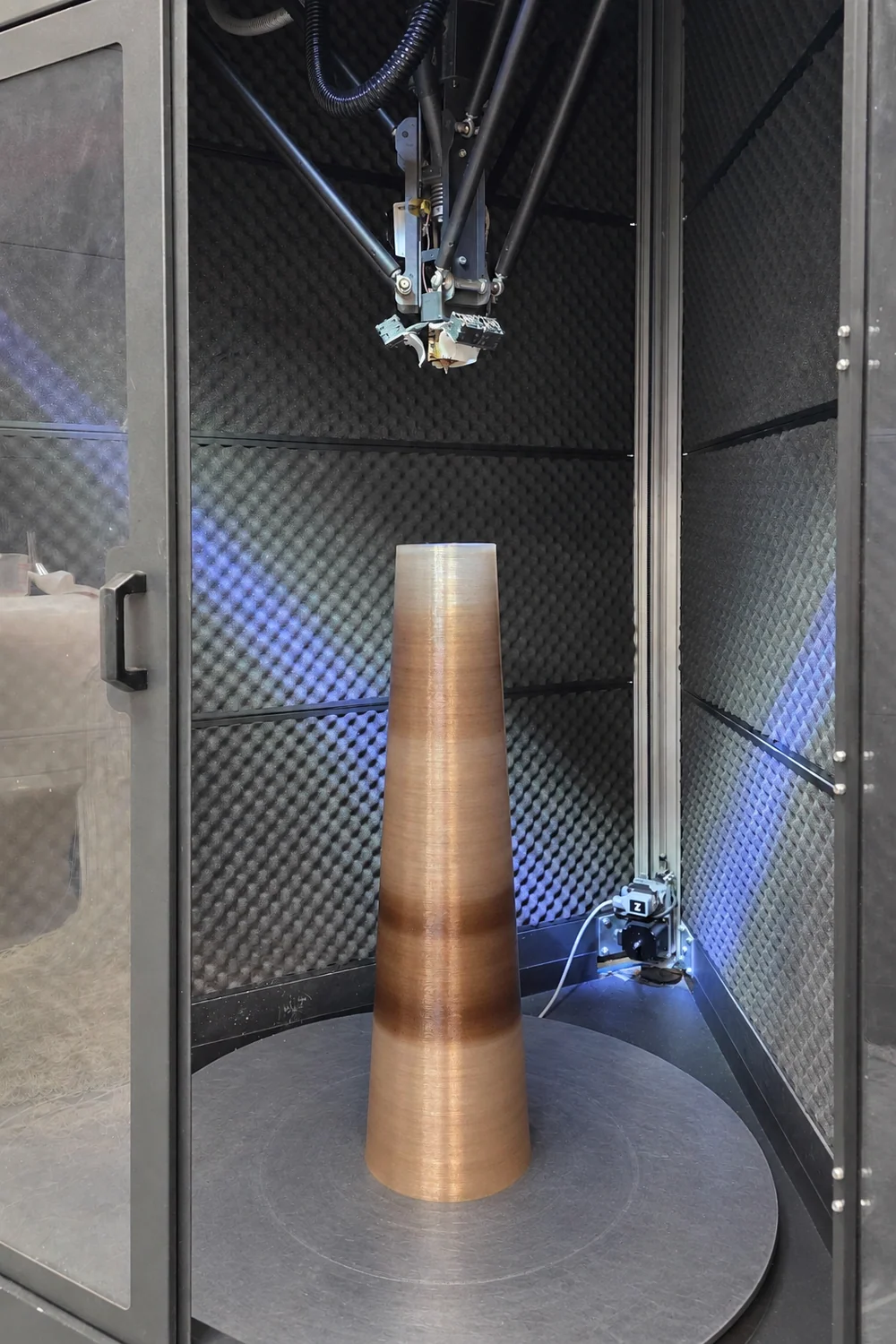
The team used PLA for the horns and boundary rings, and PETG for the platforms and towers. At its London workshop, Fab.Pub tested how well the materials printed, how well they held their shape, and what kind of finish they produced.
Not everything was printed on the same machine, either. The team used robotic arms to print the large horn sections, while other pieces were made using Fab.Pub’s Mobile Factory robotic system and large-format 3D printers. And of course, even with all this technology, some things worked better by hand. The team wanted the colors to change gradually across the printed pieces, but the results looked a little too perfect. So the operators started adding the bamboo blend by hand as the machines were printing.
“What I find especially exciting is the human side of it: the operators introduced the bamboo blend by hand during printing, giving the surfaces their changing colour and texture,” Arthur Mamou-Mani told 3DPrint.com.
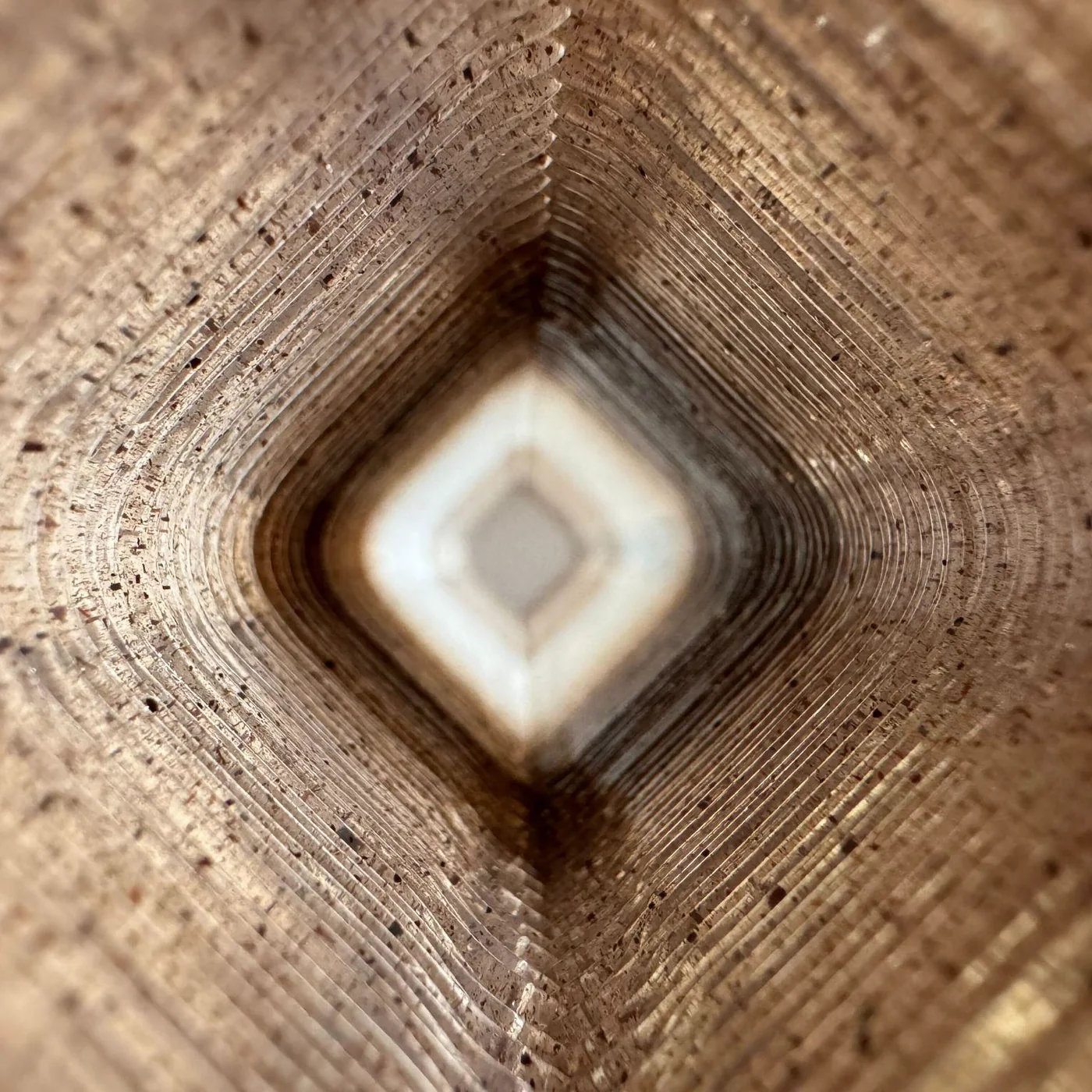
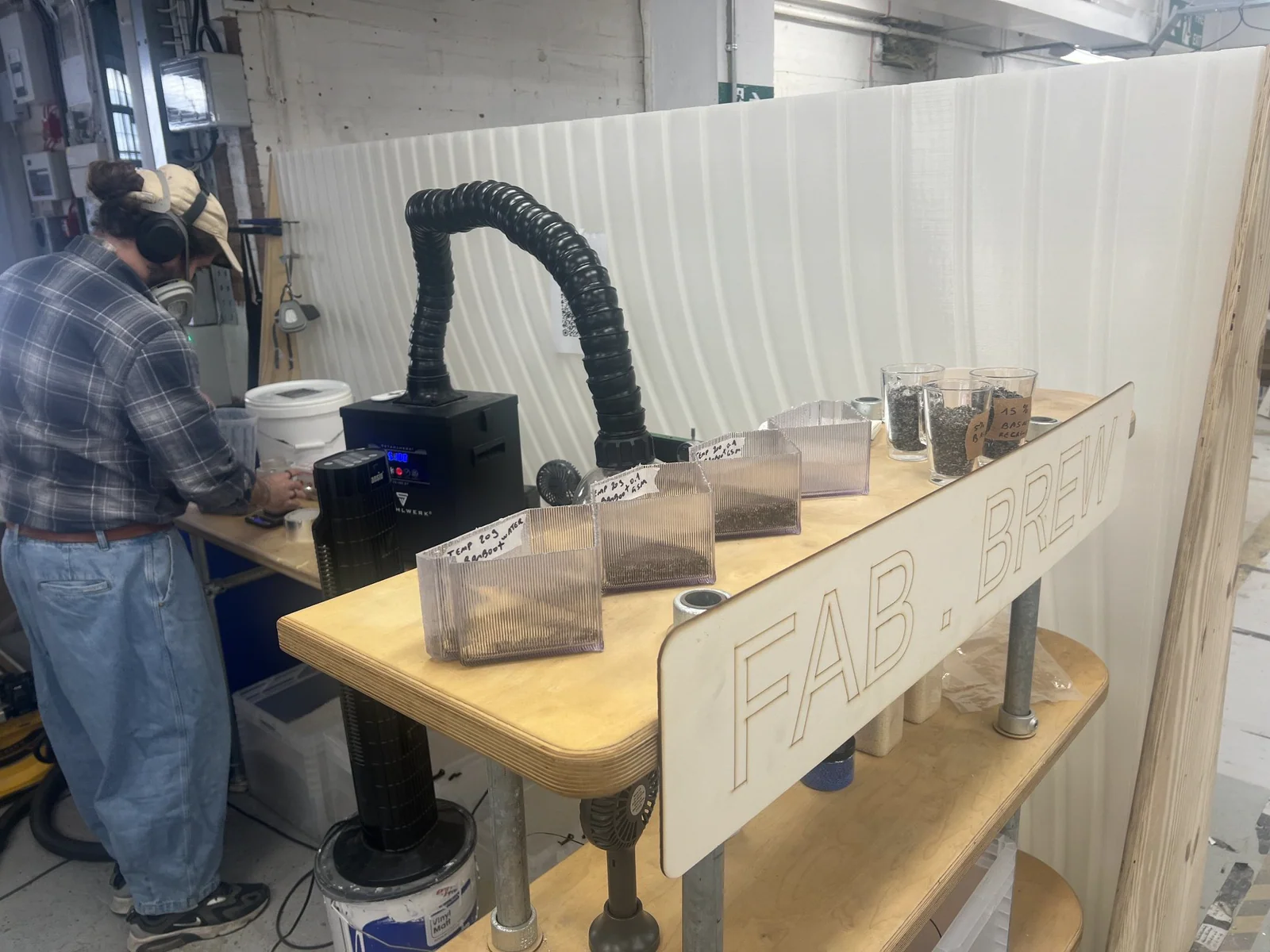
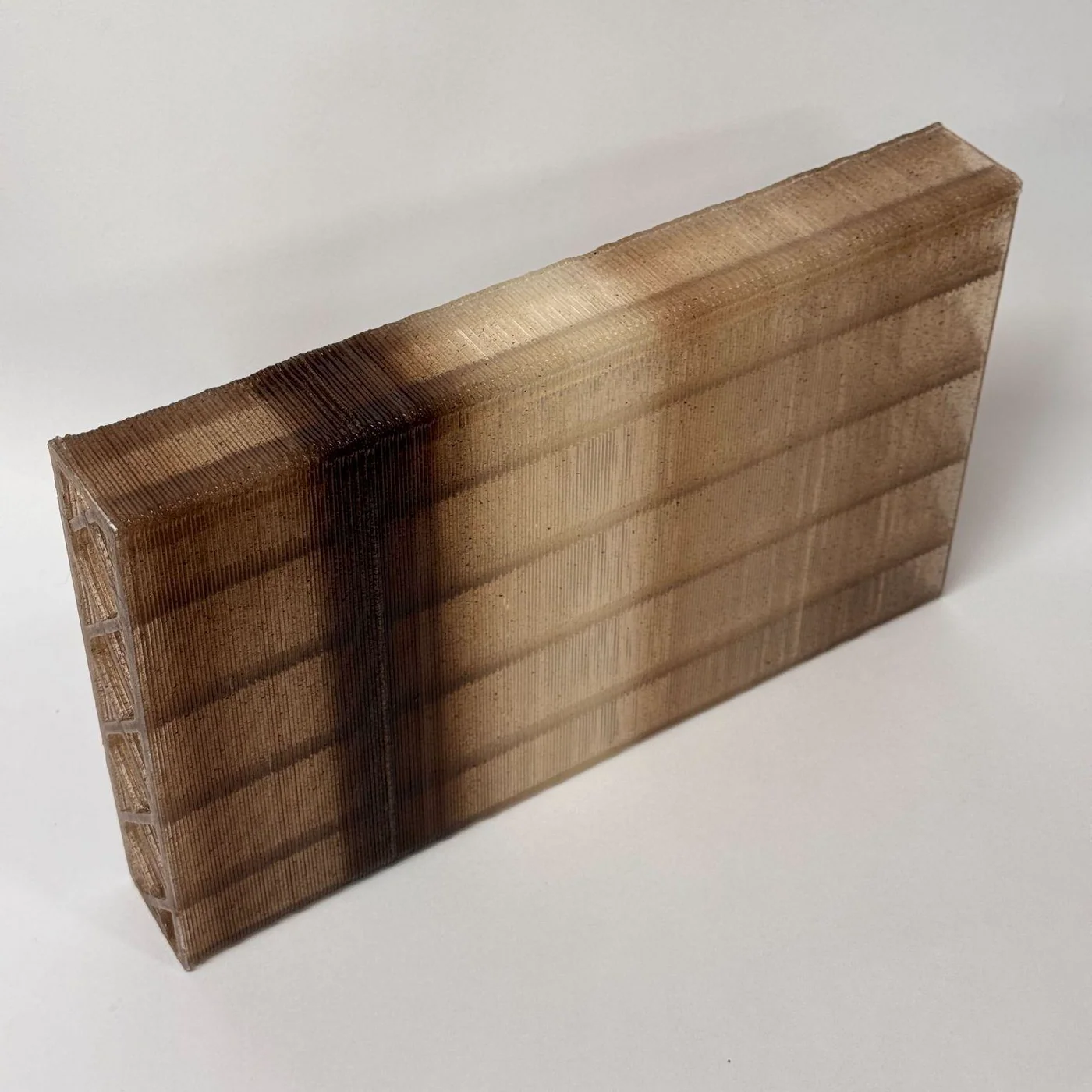
It’s a wonderful example of how human creativity can still play a part in a largely automated process, reminding us that there is still room for craftsmanship. The small differences in color and texture are now part of the artwork, bringing a particular warmth to the industrial space of the Turbine Hall.
Of course, the printed pieces also needed to do more than just look good. Working with British engineering firm Webb Yates Engineers, the team tested the platforms, hanging horns, and their connections to make sure everything was safe before installing the pieces at Tate Modern.
Then came the fun part: testing the sound. During a visit to Fab.Pub’s workshop, Atoui tried out one of the 3D printed horns using compressed air and a mouthpiece with a membrane. According to Fab.Pub, the horn made a deep sound that you could actually feel. And what started out as a mix of bamboo and plastic was now a musical instrument.
Inside Tate Modern, the 3D printed pieces are part of a much larger collection of instruments and objects. There are Korean drums, traditional Asian mouth organs, bamboo pipes, and large pieces of fabric that move with the air in the hall. Microphones pick up sounds from around the room, and software created by Atoui mixes them and plays them back. So what visitors hear changes over time.
In fact, visitors are encouraged to take their time, walk around, or even sit or lie on stones that vibrate with the sound. Atoui has also invited musicians to perform as part of the installation over the coming months.

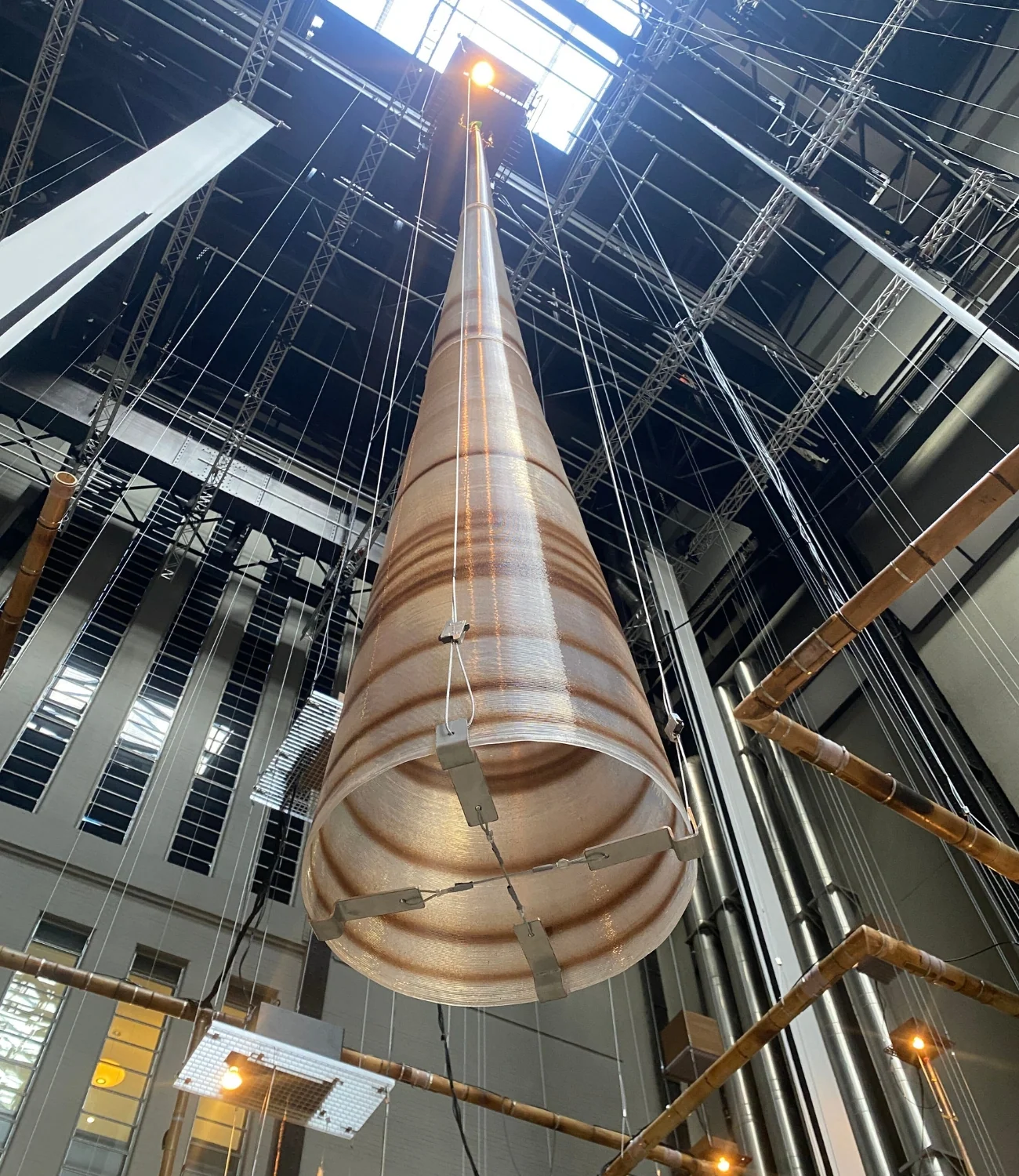
A close-up of one of the 3D printed bamboo-based horns suspended inside Tate Modern’s Turbine Hall. Image courtesy of Fab.Pub.
We often discuss how 3D printing is helping companies cut costs, develop new products, and scale up production. But it’s also nice to see what artists are doing with the technology, experimenting with different materials and finding new ways to use them. In this case, even making music with them.
For anyone visiting London in the coming months, Hyundai Commission: Tarek Atoui – Hold is free to visit at Tate Modern and runs through April 11, 2027.