

Even the Pentagon knows it’s Formnext! Or, if they don’t, then they have miraculously good timing. The night before the trade show, the Pentagon announced that, in partnership with the US Commerce Department, it has reached out to “roughly 500 key manufacturing entities” across the US to gain insight into “capital expenditures, machine utilization, powder and feedstock supply lines, and software integration across aerospace, maritime, munitions, space, and ground vehicle sectors.”
Will said roughly 500 key manufacturing entities comply? Well, it’s a funny story actually. Ya see, leadership over at the Commerce Department has been in a bit of “hot water” lately, and, while other people’s hot water is rarely our business in the AM industry, this particular vintage of hot water involves accusations of looking the other way on transfers of American high tech to the Chinese. Whoops!
Again, it’s interesting timing. I would imagine that the reached-out-to entities have business models that are beholden in some significant way to the Pentagon, and non-compliance would thus be bad business. Worse business than giving up your secrets to “the enemy” (boo!)? I guess that’s for the roughly 500 to decide. Honestly, though, I believe that the two US departments are essentially trying to figure out what they should invest their money in when it comes to the AM industry, and I’m sure the 500 or so anointed will be forthcoming, although some of them may be forthcoming with trepidation.
Over the summer, which suddenly feels at least one historical era ago, I wrote about Project Peculiar Document, an important development with a funny name that surely has a charming anecdote to go along with it. The point of the project was much the same as the latest announcement, which is to figure out how to lower barriers to adoption for new AM users, except the earlier development was specifically related to speeding up qualification.
Similarly, as I wrote in that post about the changes to US military AM qualification protocol, I believe that this new development is also related to putting the finishing touches on our new war economy, and in that vein, the Pentagon invoked the Defense Production Act (DPA) as its justification for seeking out the data from suppliers. The developments that have taken place in the world since Project Peculiar Document was announced do not argue against the idea that we should expect more, not less, war in the future.
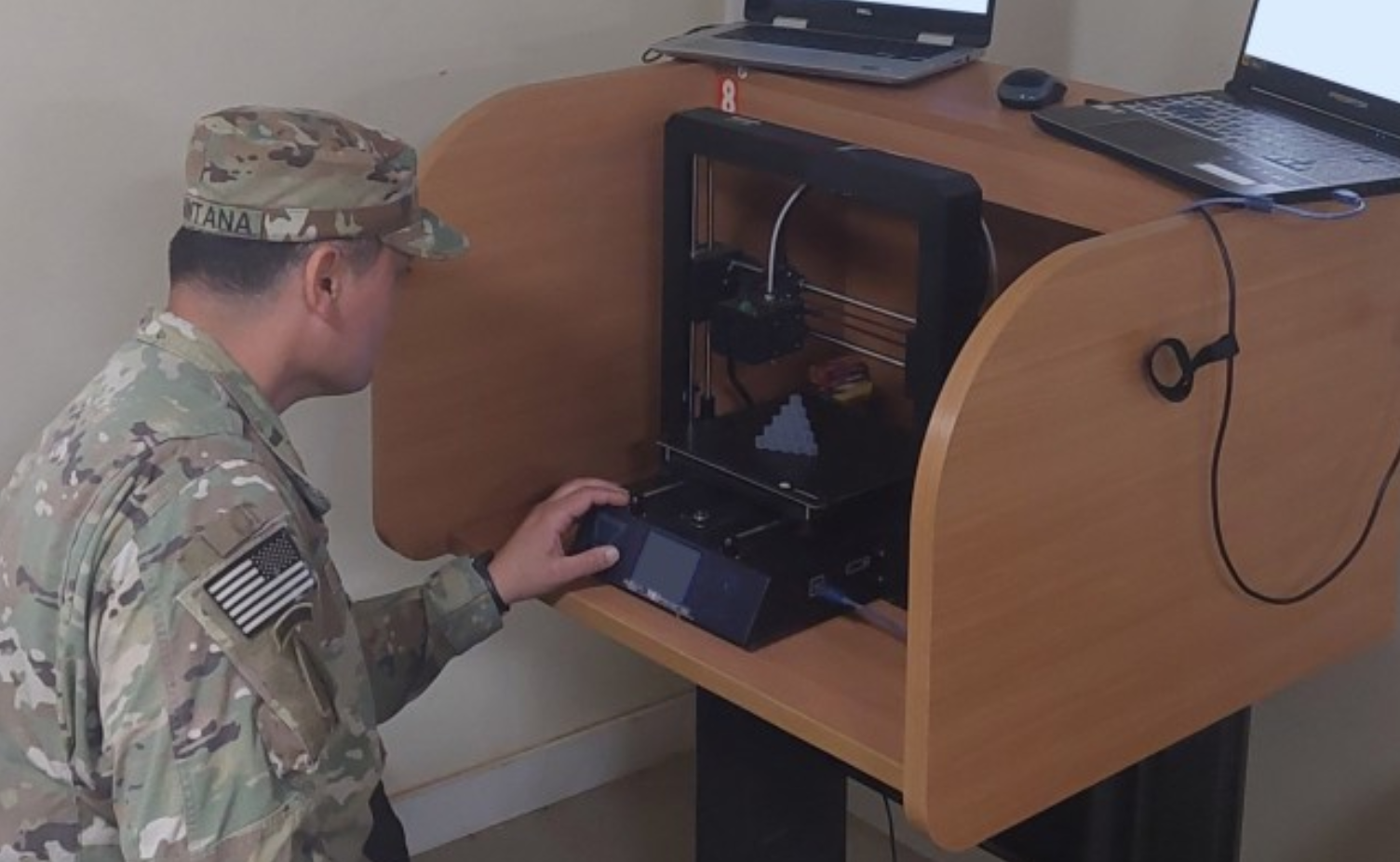
Image courtesy of the U.S. Army
At the same time, war, and even that potential new world war which I hear has been creating a lot of “buzz” amongst investors, probably won’t look anything like what anyone outside of Iran, Ukraine, Gaza, Yemen, the African coup belt, etc., imagines that it will look like. And, even the shocking number of locales suffering under the weight of ongoing conflicts probably aren’t great models for whatever is being cooked up right now. As the world fully shifts to a predominately cybersecurity footing, in fact, we can consider 3D printing capacity to be just as likely as anything else to be a target for attack.
This is why I’ve tried to focus at least somewhat on the industrial AI side of the AM industry’s push to scale, as well as the cybersecurity angle in particular, but it is, admittedly, still a pretty newly emerging landscape. However, I’m sure we’re on the verge of seeing more and more announcements related to that set of issues, and indeed we already have seen more in the context of Formnext press releases.
Maybe the Pentagon did not actually time the announcement to align with the world’s largest AM event, but I, personally, would find that to be inconceivable. In that sense, it’s also fascinating to see how closely the world’s largest bureaucracy pays attention to this niche little market. To me, that’s always suggested that, soon enough, it will be neither niche nor little.
Featured image generated by Google’s Nano Banana