

In posts last month about Eplus3D and how it’s scaling production for the AI infrastructure market, I focused on how the Chinese additive manufacturing (AM) landscape looks poised to intensify even further its already rather intense competitiveness. In the post linked in the first sentence, I concluded by mentioning how the Eplus3D scale-up is being supported by the company’s relationship with a subsidiary of Chinese steel giant Jingye Group, which is currently building a $700 million metal AM service facility and is a longtime user of Eplus3D machines.
As I noted, that’s a theme that’s by no means exclusive to Eplus3D and Jingye Group, but is increasingly evident across the Chinese and, indeed, the global AM market: now that metal AM is finally being adopted for genuine industrial-level production, service providers and material suppliers are gaining equal footing with OEMs. Farsoon, another major Chinese OEM, has made similar announcements lately that reinforce this same narrative.
To start with the most immediate stories, in anticipation of Formnext (you can check out Farsoon in Hall 11.0 – Booth E11), Farsoon announced two machine launches, one metal and one polymer, both specifically tailored to industrial production. That itself isn’t a new thing for Farsoon, as the company has offered a number of what it calls “production-ready” systems for years now. However, the machines that Farsoon is launching at Formnext, the FS722M (metal) and the HT1002P (polymer) both include subtle differences from their predecessors that prove just how much the balance in the Chinese market has shifted towards a focus on customers using AM in real-world production environments.
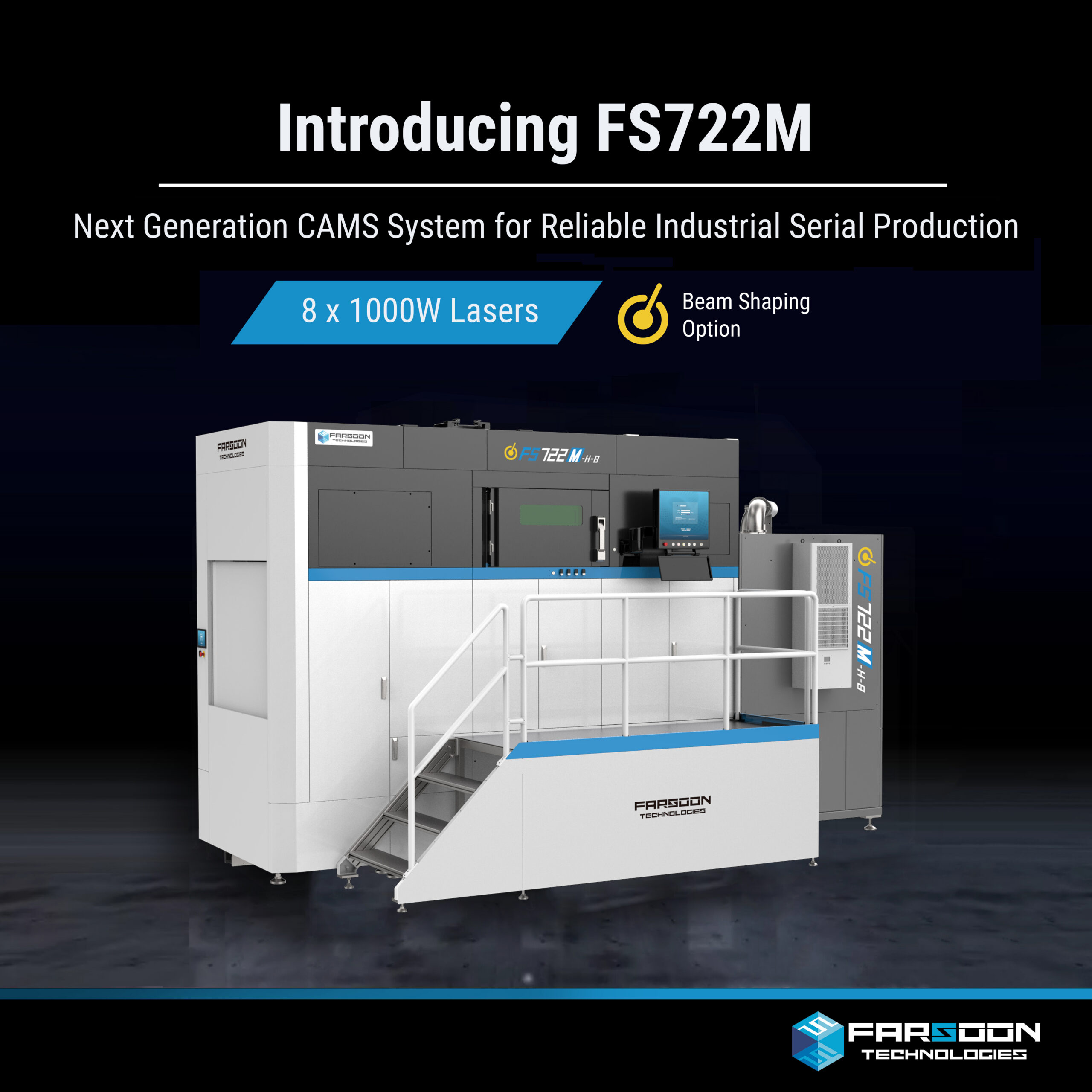

Farsoon states that, thanks to “listening to series-production customers”, it has incorporated changes to the FS722M that improve upon the FS721M and FS721M-H. The company notes the same with regard to the polymer machine, the Flight HT1002P-CAMS, when contrasted with the earlier HT1001P and Flight HT1001P-H systems. On the surface, the FS722M seems fairly similar to the earlier models, but that’s largely because of how much the FS721M has evolved since it was first launched. Essentially, all the features (eight lasers, beam-shaping, a 650 mm Z-axis) that were available through upgrades in the FS721M are now standard in the FS722M. Incorporating all of those factors into the original design is especially important for the new machine’s software architecture, which leans heavily on automated process control.
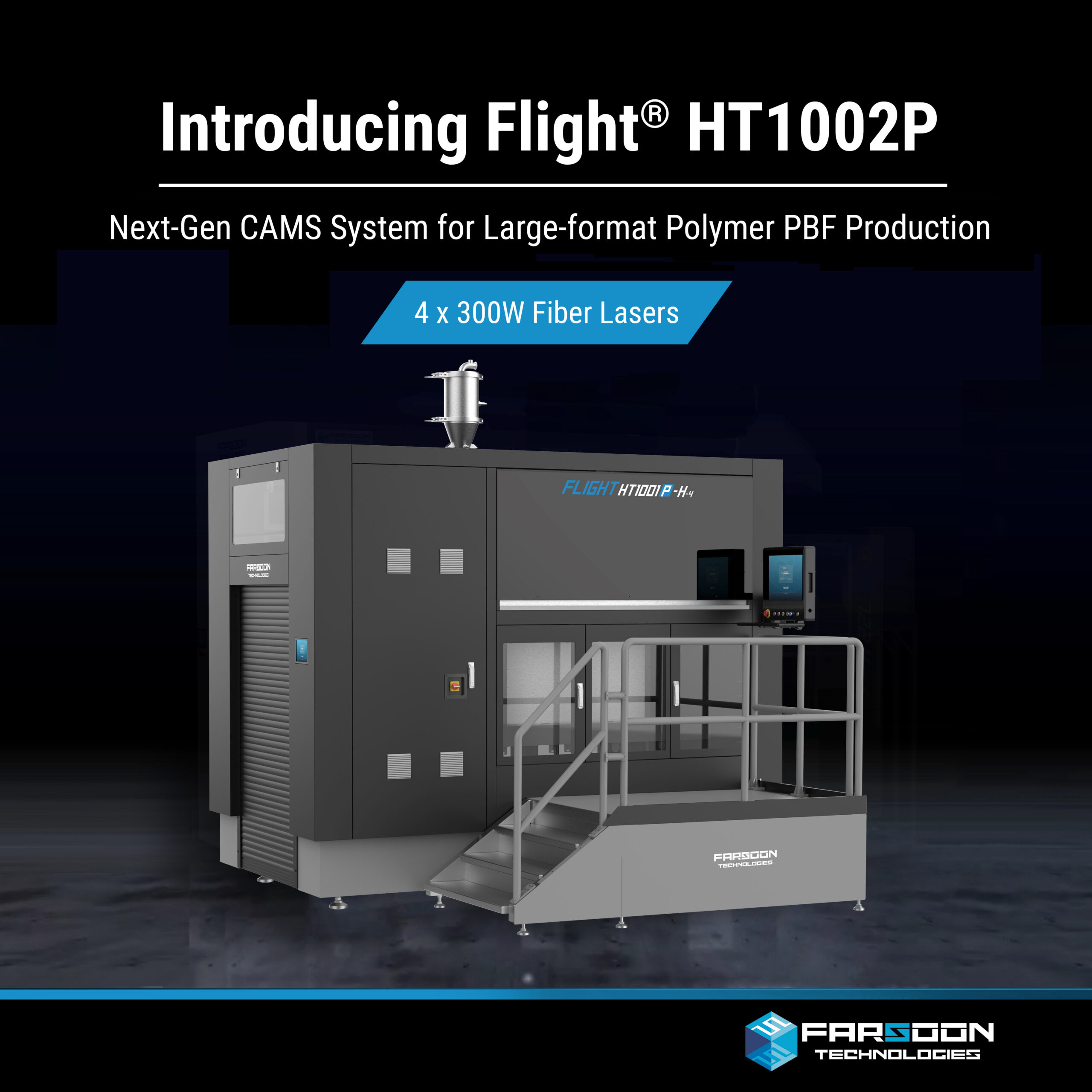
As for the Flight HT1002P-CAMS, the differences are more immediately obvious, given the much larger Z-axis (650 mm vs 450 mm) and the fact that it doubles the laser-count of the predecessors. But the purpose for the launch is the same as with the FS722M: meeting demand from customers who use AM for daily series production.
The most interesting thing about the launches is the light they shed on the October news that Farsoon’s board of directors approved a plan for private placement of A-shares worth up to around 3 billion yuan (~$450 million). This comes in around 25 percent below the originally announced target, and the reduction mostly comes from the portion of the planned proceeds targeted for the Farsoon services platform pivot. But the services portion is still the largest component of the plan (~1.5 billion yuan vs 1 billion and 350 million yuan for machine development and headquarters construction), and it seems likely that the company may simply have set an intentionally high target originally to ensure that the agreed-upon amount would be more than enough for the services buildout.
Going back to the machine launches, 3D Printing Industry reported last month that Farsoon is planning on using internally something like 90 percent of the up to 650 new machines that could be funded by the capital raise. China’s AM OEMs, then, appear to be making a hard shift towards the model where the customer owns the machine but the OEM operates it. While this isn’t a new idea, the fact that it now seems to be the dominant trend in the most important AM market has significant implications for the metal AM market globally.
As for the applications it will target, we already know Chinese OEMs are very bullish on AI hardware components. Farsoon may also be trying to corner the automotive market, given that it recently highlighted work it did on the Apollo Evo hypercar, which is something you might do if you were trying to draw attention to your automotive wins ahead of a European trade show. While hypercars are not good candidates for series production, Farsoon also has relationships with Brose, one of the world’s largest auto parts suppliers, and has worked with FAW-Volkswagen, which produces Volkswagens and Audis for the Chinese market.
Images courtesy of Farsoon