
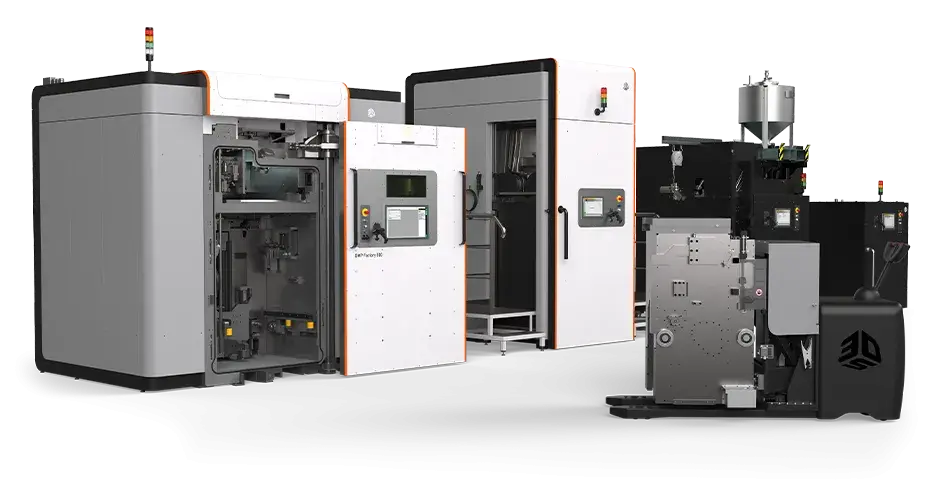
3D Systems announced in August that Dr. Jeff Graves, the company’s CEO since early 2020, is planning to retire, and Joris Peels wrote an excellent post at the time of the announcement on 3D Systems’ track record during Graves’ tenure. He navigated the company through the strangest and most volatile period in the history of the AM industry and he’ll be giving the next CEO a solid base to build on.
On the Q3 earnings call, Graves noted that the company continues the search for its successor, so while that’s still up in the air, 3D Systems did share a lot of useful information about its expectations going forward. I’ll get to that part, but first, in terms of the numbers, the company posted a loss per share of around 6 cents (diluted non-GAAP). This was a sequential decline from Q2, but it was an improvement over Q3 2025, when the company’s losses were 8 cents per share. Additionally, its revenue grew at around 9 percent YOY, from $91 million to just under $100 million, and excluding the hit 3D Systems took from software divestitures, revenue growth was 11 percent.
If you just look at things from a bird’s-eye view, it would appear that 3D Systems is kind of just treading water. But the details of the company’s results tell a different story, as Dr. Graves described on the earnings call. Take aerospace and defense, for instance, which is an especially important metric in terms of the strategic industrial applications that 3D Systems has homed in on as its focal areas:
“In aerospace and defense, revenue grew more than 50% in the quarter, excluding our Air Force development program, led by printer sales into space launch systems and a range of other defense applications,” Dr. Graves said. “This is a large and exciting market, though growing exposure to defense program timing may make quarterly results somewhat lumpier as we grow. On a rolling 12-month basis, however, we expect a clear upward trend. Near-term rocket propulsion applications remain the most compelling opportunities.”
Graves made a similar remark about 3D Systems’ performance in semiconductor capital equipment (semicap) and data center infrastructure:
“In data center infrastructure, semiconductor, and high-performance computing, revenue grew significantly. Our metal printing technology is already producing components for semiconductor manufacturing equipment and advanced computing systems, including customers adding printer capacity in the quarter to support that work. We expect this area to grow and become a material revenue stream for our industrial business over time.”
These are very positive signs based on where the AM market is moving. The company’s main challenge is that its positive catalysts are still being weighed down by a long history of spreading itself thin across too many markets, but it does look like 3D Systems has a viable strategy for streamlining where it devotes its efforts.
It might not be a strategy that’s necessarily going to attract equity investors in an environment where everyone is increasingly wary of new capex announcements, but my unpopular opinion is that the near-term preferences of American equity investors tend to lead to horrible long-term business decisions. And, that is in no small part because one of the operating principles for American equity investors is to punish companies for capex announcements.
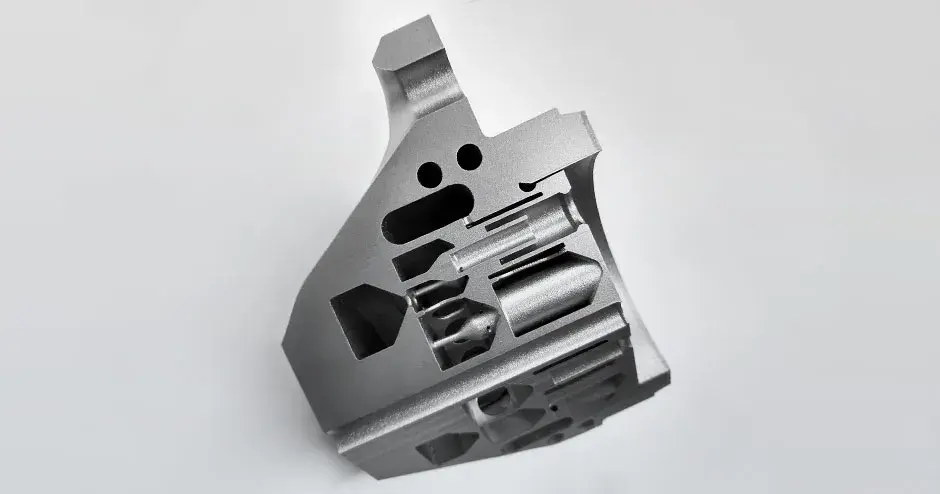
Graves didn’t announce a ton of new capex, but, in a response to a question from Troy Jensen, he did allude to metal platforms that the company is developing primarily in response to semicap and aerospace and defense demand:
“[L]ook at AI infrastructure—you’ve got the companies that design the chip-making equipment, if you will, the multi-hundred-million-dollar type machines. The market potential for making components in those machines alone would justify its own type of printer—its own size of printer, if you will.
Aerospace and defense is the same way. It depends heavily on what size components you’re going to make. If you’re going to make missile parts that are over a meter in diameter and two meters high, you need to have a machine for that. Other applications are smaller components that can obviously be done in smaller footprints. So it’s a long-winded way of saying we do absolutely plan on launching additional platforms. They’re all well beyond the concept phase and ready for detailed engineering and then move into manufacturing. We are waiting to see what the highest-potential applications are, and those customer discussions are heavily underway right now. Which is part of the reason, Troy, quite honestly, we wanted to make sure our balance sheet’s in good shape, because those all require investments.”
This is precisely how the company should be moving, from my perspective, but as Graves said, “those all require investments.”
I think the truly encouraging thing, however, is that not only do all of 3D Systems’ big target markets overlap with each other, but the company recognizes that and is leveraging it:
Referring to a new technology center the company just announced, Dr. Graves said, “To expand our capacity for manufacturing metal parts, we recently celebrated the grand opening of our new facility in Littleton, Colorado. Building on the extensive fleet of metal and polymer systems already located there and the quality systems we have in place for our medtech business, we cut the ribbon on an additional 50,000 square feet that will house printers and post-print processing equipment for metal parts in our key markets.
We’ll add print capacity at the rate needed to support growing demand for industrial metal parts. By focusing this new facility on our industrial markets, we’ll simultaneously free up capacity for our medical implants, where demand is also growing quickly.”
That’s a very effective and realistic approach to synergizing your key divisions. Again, “realistic” isn’t something that makes investors start reaching for their proverbial wallets, but it is an under-appreciated strength in an industry where it’s difficult to separate the steak from the sizzle.
As for the CEO search, I don’t know if he’s even in the running or has any interest in the job, but if the company is considering promoting internally, I feel like Scott Green, 3D Systems’ Principal Solutions Leader for Industrial Solutions would be a great choice. He essentially built their semicap business and was very early to understand how much potential there is in AM for data centers. In any case, if the next CEO is someone else, they need to make sure they keep Green around.
Images courtesy of 3D Systems