
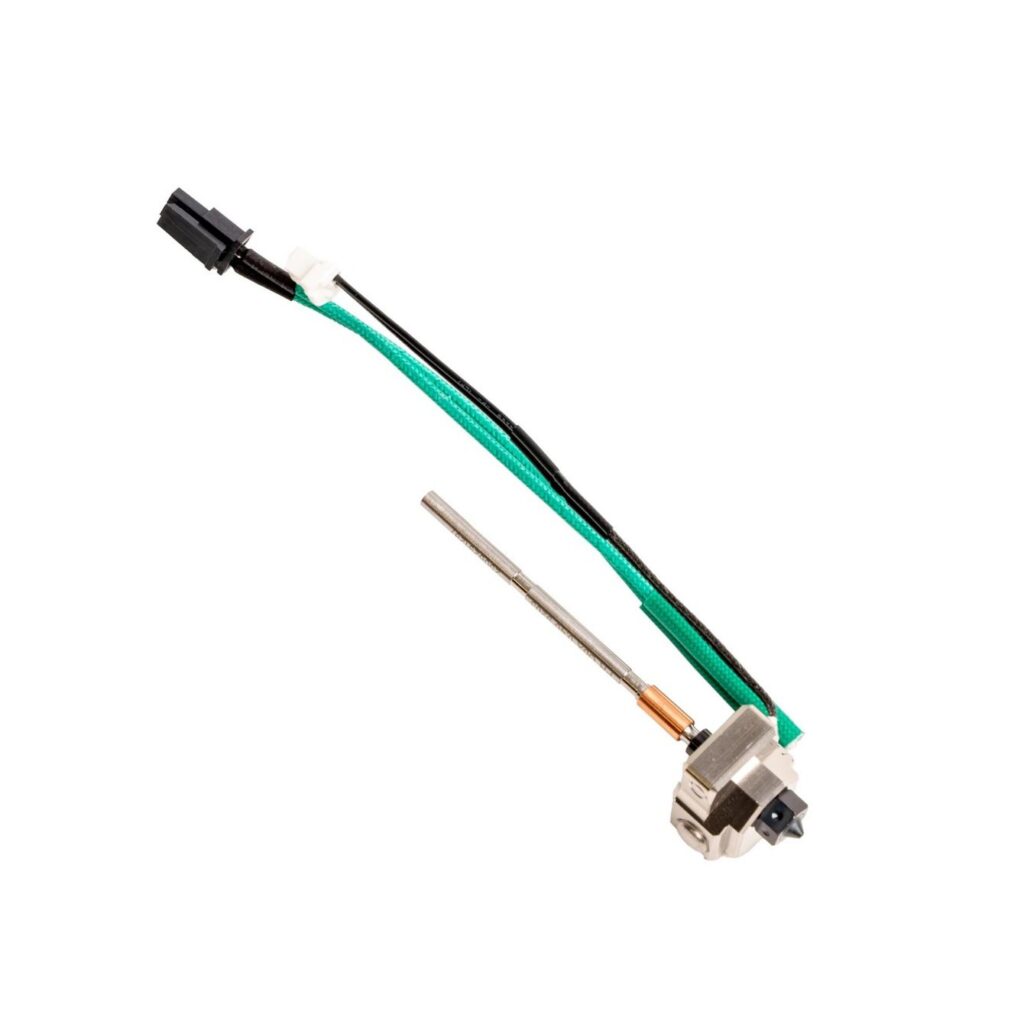
Prusa Research is offering a new hot end for its Core One 3D printers. The new high-temperature hot end can go up to 400 °C. The swappable hot end can be taken out without the use of tools in under a minute. The company says that the nozzle is meant for ASA, PC Blend, PC Blend Carbon Fiber, PA11 Carbon Fiber, PPS-CF, PPS-GF, PPA-CF. You can also use the HT Hotend for everyday PLA and PETG.
The hotend can improve interlayer bonding of parts across several materials. Stronger layer adhesion improves part strength for PA 11 Carbon Fiber, PC Blend Carbon Fiber, and ASA. The main working principle here is higher extrusion temperatures, some around 350C. PC Blend Carbon Fiber gets 7% better interlayer bonding. This reduces anisotropy and, in the Z-layer direction, would improve tensile strength. Shear could also be improved. The CF blend material will be particularly interesting, since the extra bonding will also offset the reduction in intra-layer strength caused by the fibers themselves. Added for stiffness, these reduce tensile strength. In particular, the part’s pull-out strength could see huge gains. For PA11 Carbon Fiber, the increase is up to 23%.
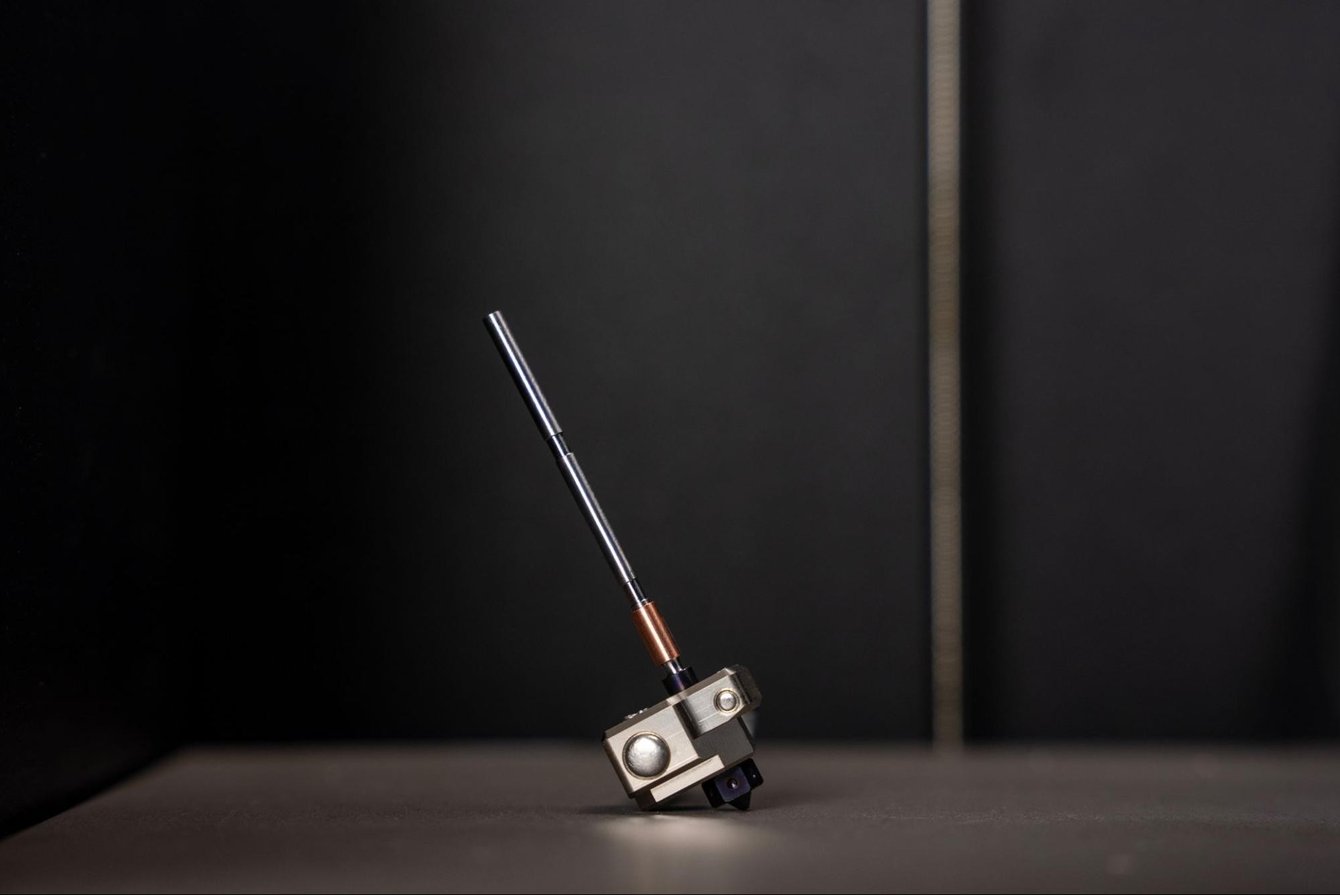
The Core One can now print new materials too, such as PPS-CF, PPS-GF, and PPA-CF. PPS has a 250 °C heat deflection temperature and excellent chemical and mechanical resistance. The material can be UL94 V-0 flame retardant. Only do this if the air filtration unit is installed and working properly. In some cases, PPS melting can release sulfur dioxide if it overheats.
Another new material is PPA Carbon Fiber. Polyphthalamide usually needs to be dried and is known by brand names like Zytel HTN or Ultramid. It has good impact resistance. It offers good impact, wear, UV, and heat resistance, along with great strength. Compared to other polyamides, this semi-aromatic material is more water-resistant and is used in under-the-hood automotive applications and connectors. This is a great material to add to the arsenal, and I think it could be very exciting for a lot of expeditionary use. The HT Hotend upgrade kit is $199, while the entire Core One L+ would cost $2,169, and you can buy both now. It could work for Prusa CORE One, CORE One+, CORE One+ (Gen2), CORE One L, and CORE One L+. The hotend is based on the E3D ObXidian 500.
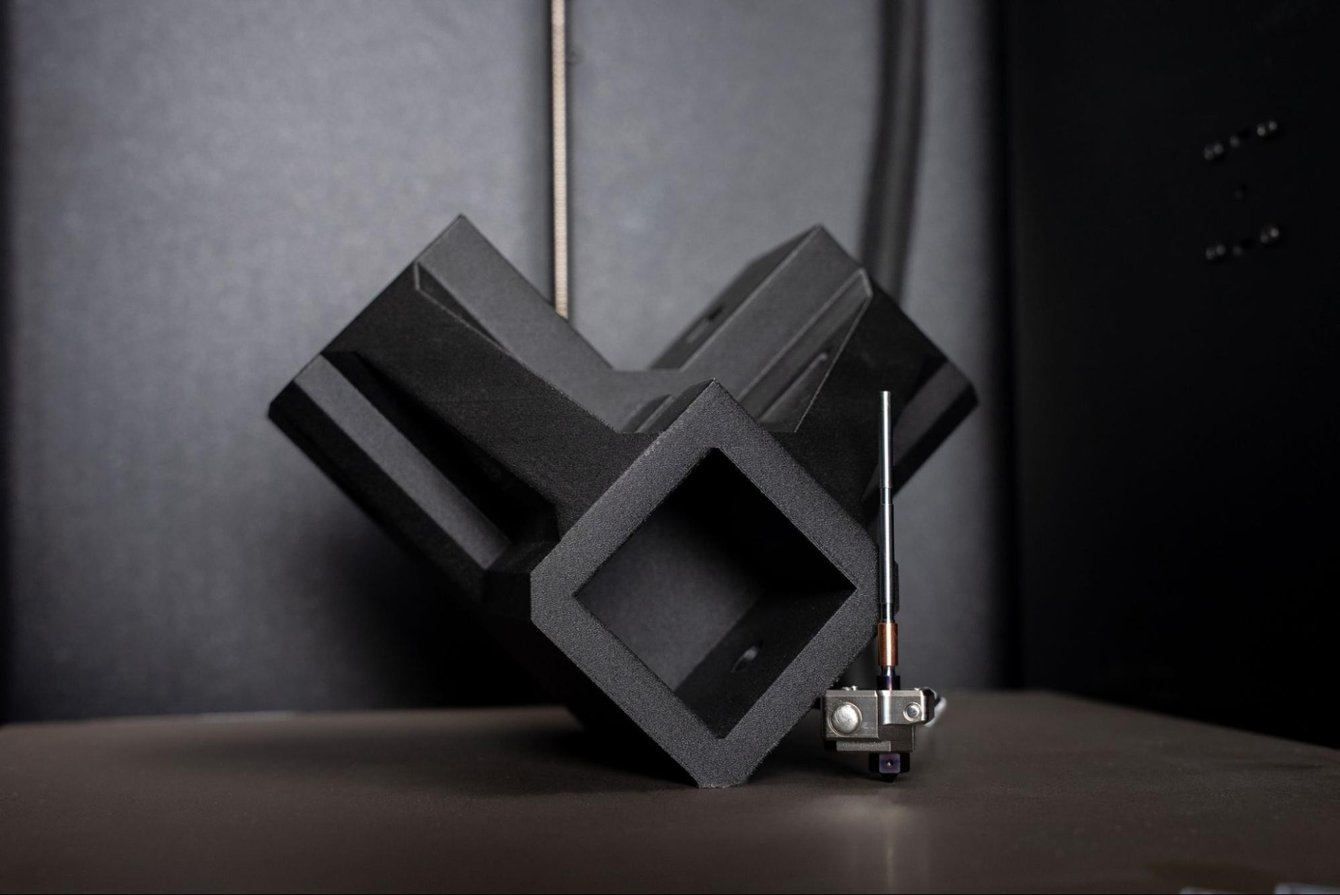
I’ve been incredibly impressed with the Core One’s performance with polycarbonate and its PC Blend material. That material opens up so many applications and parts. I was impressed with how well it printed big parts in that material. By adding more technical materials, it is really differentiating itself for the engineering and military communities. Cheaper printers are out there now, and they work well. Prusa really needs its reputation for quality and longevity to shine. And adding materials others can’t use really helps.
Prusa is making itself the darling of the automotive, military, and industrial firms. Bambu’s onslaught in the consumer market has been relentless. Seeking the higher ground in larger parts and more difficult, higher-temperature architectures could give the firm a safe place to grow.