
In a previous article, we looked at what is driving the new low-cost metal 3D printing market. Below-$100,000 diode lasers, gantry motion stages, software, and design will drive a growing market for low-cost metal systems. We’re seeing prices as low as $10,000 for kits, and this segment is set to expand.
Looking Back
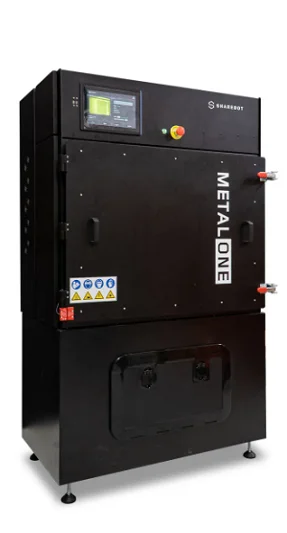
We first looked at Push Button Metal 3D printing in 2021. Of the companies we talked about then Meltio, One Click Metal, Laser Melting Innovations, Xact Metal, and Sharebot — Meltio has focused on industrial manufacturing of its DED systems. OneClick seems to be doing very well, offering an easy-to-use system that appeals to people new to additive manufacturing. Xact as well seems to be riding the coattails of the reindustrialization push in America. I rarely hear about Sharebot, and when I do, it’s about systems other than their MetalOne, so I’ll do more digging to see how they’re doing now. Fraunhofer spin-off Laser Melting Innovations licensed its technology to Kurtz Ersa. Laser Melting Innovations itself still does engineering and development work for 3D Printing. Kurtz Ersa still offers the Alpha 140, but it’s unclear how much the company is pushing the printer. It’s remarkable to me how well these firms are doing overall.

In a later article in 2021, we looked at an expanded list of the vendors. Coherent’s Creator3D sadly is no more. The machine was originally named the ORLAS Creator and was made by OR Laser. Later, through Coherent’s mergers, its additive manufacturing strategy seems to have shifted, and the company dropped the printer.
Later, Additec launched the Fusion S, which appears to be a rebadged Chinese system. Freemelt has embraced the R&D space and is moving upmarket toward industrial production. A UTC spin-off created the open-source Panda system, which was placed at universities and won US Air Force contracts. However, the system seems to have lost momentum. The firm ARCTOS is working on the AMSENSE sensor system and government research, and DCS Corporation recently bought it. I can find a listing for the Panda printer, but it doesn’t seem to be getting much attention.
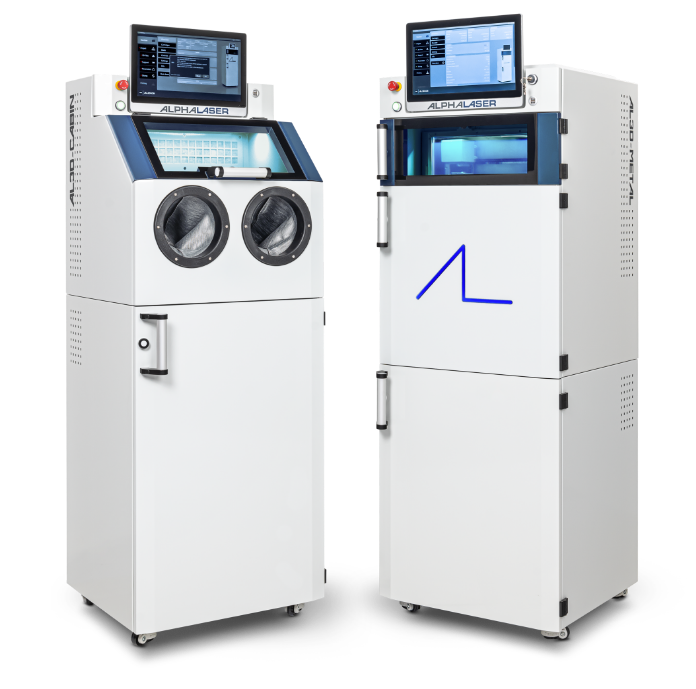
In 2025, we looked at Push Metal 3D printing below $50,000. There, we mentioned the Alpha Laser (AL3D), which I really liked. It’s still being offered, but the company seems not to want to market it. The Riton Mlab we covered continues to do well, and the company has sold over 1,000 printers.
We also mentioned AO Metal, which rebadges Chinese 3D printers in the US. This company seems to have missed the recent hype. A previous company owned by the founder appears on a U.S. Treasury OFAC sanctions list. FastForm has done very well and has also delivered over 1,000 systems in the first half of 2025. It is now expanding its lineup to higher-end systems. The Phrozen FORGE surprised me then. Phrozen has really built out its dental market, but I didn’t expect a metal printer. The system is not available currently. 2OneLab’s dental-focused systems are still on offer and they seem to be being used more in dental. The company is as quiet as a mouse, however, so it’s hard to know if they’re doing well.
Timid
Strangely, if we look at the companies in this market, they seem too timid. Even Chinese AM companies, often aggressive marketers in other segments, are relatively understated here. To succeed in such a wide new market, these firms should get much more aggressive in marketing. I’m not saying we should promise the earth and deliver dirt like before. But, well executed, well done, well placed marketing campaigns would really help. True stories from users, true cost calculations, true assessments of the potential. Not some “make everything now” claim, but a realistic one: with training and a lot of work, you could make X amount of Y every day for $Z.
Strangely, in this market we see companies that don’t do marketing or do it very poorly. But volume matters in this market. And low margins will be ameliorated if customers come to you. Yes, many of these firms have little to invest, but well-executed marketing isn’t as hard as building an affordable LPBF system.