

Pioneered by Xact Metal, low-cost metal printing could break open the LPBF market and make it much bigger than it is now. OneClickMetal showed us how canisters and ease of use could get you an accessible system that could work on a carpeted floor. But Xact and OneClick sell systems from $70,000 to $200,000. Chinese firms such as FastForm and Riton then showed us that you could make a dental desktop LPBF system for around $40,000. Dutch firm MetalBase showed us you could get a value-engineered system for less than that, before another entry-level contender, ScrapLabs, joined in.
Categories

One Click Metal’s metal 3D printing system and powder-handling setup. Image courtesy of One Click Metal.
We’re seeing three distinct categories emerge. We’re seeing $60,000 to $100,000 systems, which are accessible industrial systems. I call these Pre-Industrial. These are useful for people starting with metal printing who want to eventually do production. OneClick and Xact systems, for example, are being used a lot by startups in the suppressor market that buy a system with cash and then go into production. They then buy several systems and may go on to purchase larger industrial systems from companies like SLM or EOS. They have 150 x 150 x 150 mm build volumes and 200-500W lasers. Peripherals like powder handling mean different machines are available, and they offer things like canisters. These systems tend to print in lots of different materials.
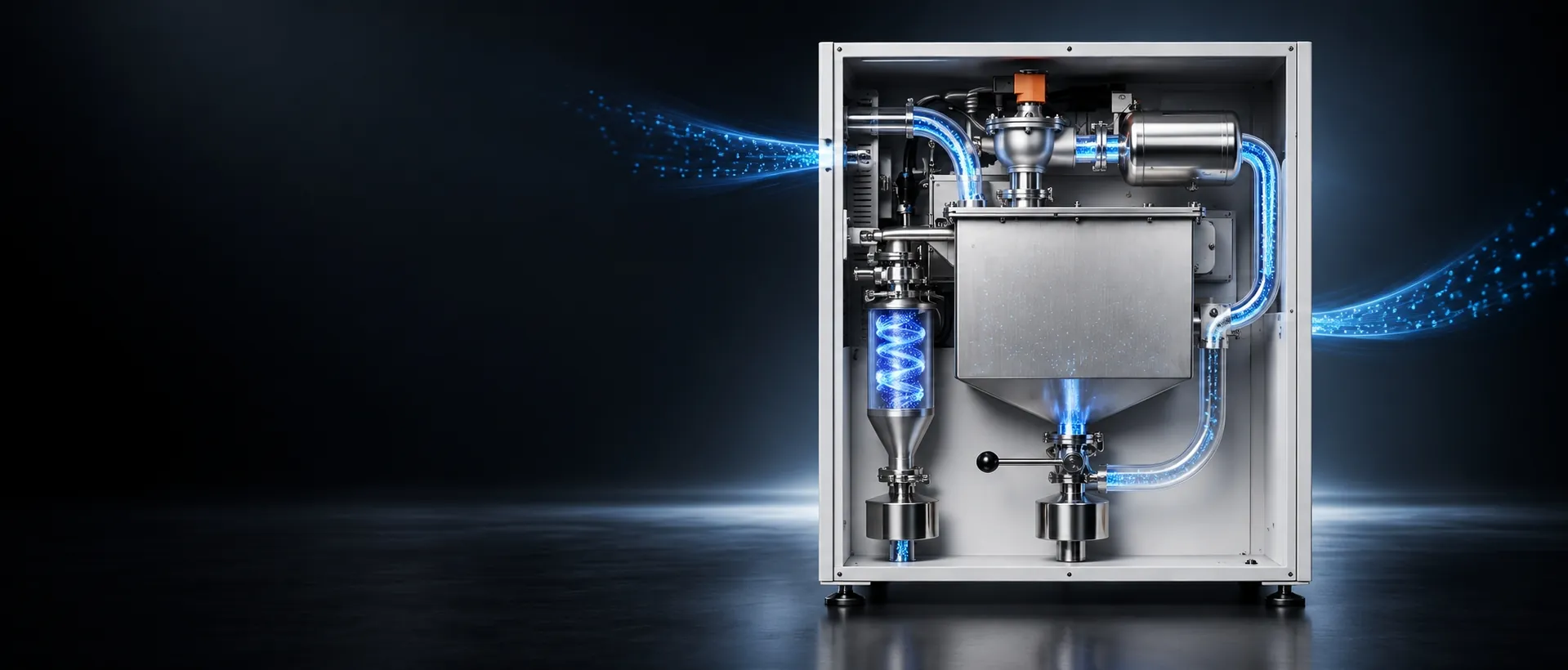
Rendering of the FastForm DeskFab X1 metal 3D printer. Image courtesy of FastForm.
The second category is around desktop dental systems. These are value-engineered systems that work with cobalt chrome and have small form factors. The Riton MLab is typical, with a circular 100 x 90 mm build volume and a 200W laser. These systems are made specifically for dental printing and focus on dental materials and workflows. Everything is handled inside the machine, which keeps the form factor low. But the philosophy is different. The Riton, for example, lets you pour in powder mid-print. So it’s not designed to keep you safer, but it will let you print in a smaller surface area.

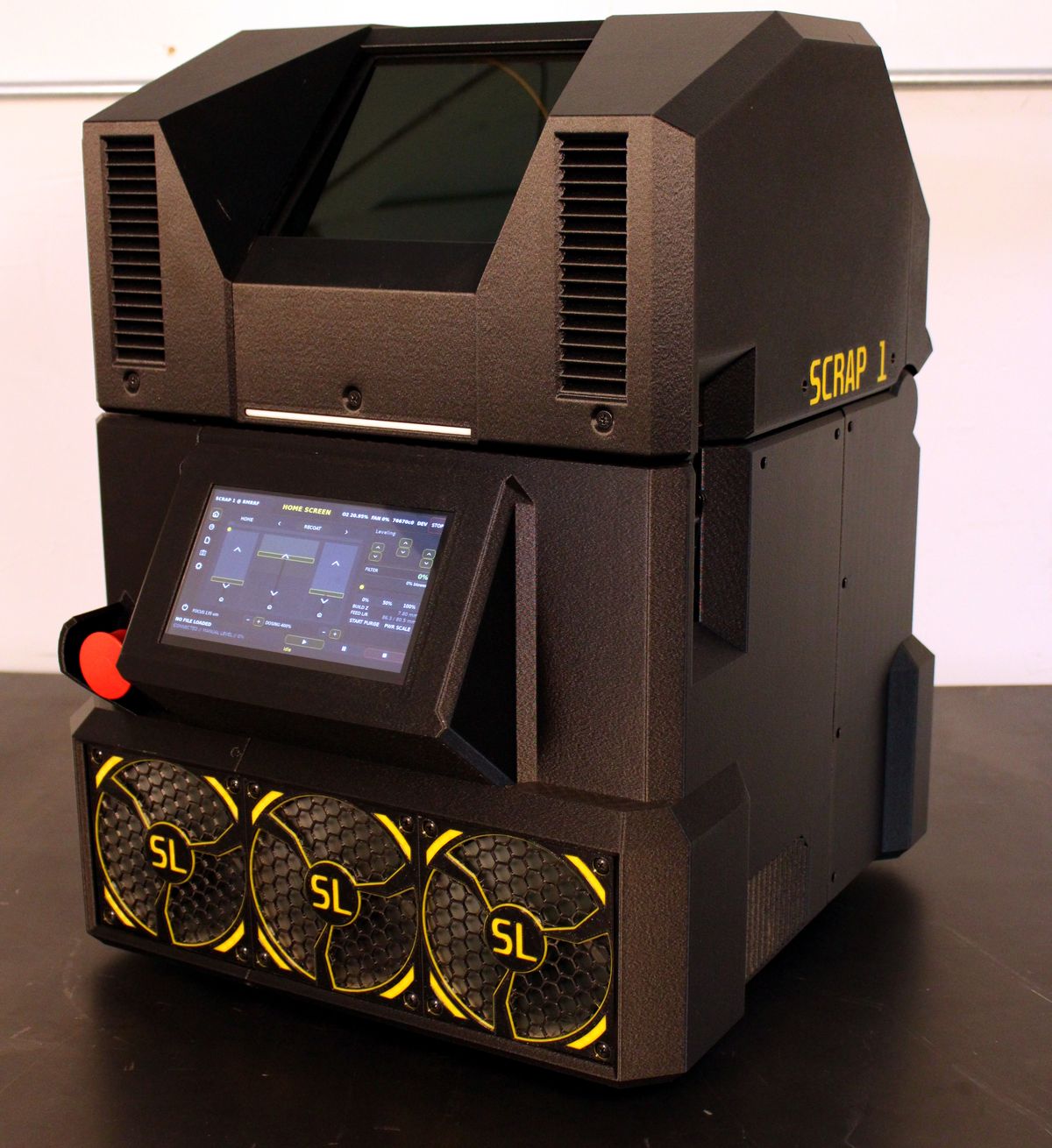
The ScrapLabs SCRAP 1 metal 3D printer. Image courtesy of ScrapLabs.
The third emerging category is in low-cost desktop systems like MetalBase and Scraplabs. The target market includes desktop users, makers, and labs. It also includes machine shops, inventors, and entrepreneurs. The prices are lower, $10,000 to $30,000, and the systems are more manual. A lot of extreme value engineering is happening here. Systems are also compact. Architecturally, they mix the compactness of dental printers with the open architecture and many materials of pre-industrial systems. Here we see 60 to 200W lasers, 128 x 100 mm build volumes. We’re also, quite remarkably, I think, seeing Klipper-based architectures, which is a desktop Material Extrusion architecture. We’re also seeing OrcaSlicer used as slicing software here. In the other segments, proprietary software, Magics or Netfabb, are being used.
Developments
The major development here is the continued lowering of laser costs. Now we’re seeing differentiation in lasers as wel. Xact and OneClickMetal use Ytterbium Fiber Lasers. ScrapLabs uses diode lasers, while ScrapLabs uses a Blue Diode Laser. MetalBase uses only a 60W Blue Diode laser, giving the firm a major architectural advantage over other systems and making it more affordable by design.
Generally, fiber lasers focus well, require less maintenance, but cost more. The wavelength and overall precision of the laser make it an ideal candidate for LPBF. Diode lasers focus worse, have a broader beam profile, are more compact, are cheaper, and may use less power. Because they are less expensive to make, diode lasers could take over much of the low-end fiber laser market and grow quickly. Fiber lasers remain dominant in cutting and machining while still growing quickly. But diode lasers are growing in semiconductor applications and in EV and electronics manufacturing, specifically for processing copper. They’re also being used widely in Lidar, laser hair removal, and other growing areas. Each fiber laser contains a diode laser, which means each sold fiber laser also includes a diode laser. Fiber lasers also contain rare earths, and geopolitical instability may disrupt their supply chains or make them more expensive. Diode lasers also piggyback on developments in semiconductors and are used there as well, so they could still increase capabilities or be reduced in cost quite radically. In the long run, it seems to me that diode lasers will be the predominant laser for low-cost metal systems. This choice matters because you will want to design a completely different machine around a laser to optimize for it. Especially in low-cost systems, you want to cut the fat and optimize for what you have.
The second major difference is that pre-industrial systems typically use High-speed Galvo Scanners. ScrapLabs opted for a more Ultimaker-like approach and went with a belt-driven gantry system, while MetalBase uses a CoreXY approach. This is a significant cost reduction. It’s weird, really, because it requires a lot more parts and assembly. Smoke machine galvo systems and the like should have been reduced radically in cost by now, but they haven’t. We’d expect less maintenance from galvo systems and perhaps better performance. But the gantry motion stages do radically reduce the purchase price. Overall, MetalBase with a 60 W blue diode laser and a CoreXY architecture looks like it could dominate the category because it’s just so much cheaper to make and buy than anything else. Now, of course, fundraising, marketing, and all the rest do matter, so we can’t say that MetalBase will win, but technically it should.
Different Paths
Beyond the motion stage and laser choice, other important paths matter. One is on software. Low-cost systems rely on a hodgepodge of open-source packages not made for their application. This may be a risk at one point. Others rely on a combination of their own firmware and established software. As we have seen in Desktop Material Extrusion, a software focus is important. If you’re not a software firm, you need strong partnerships to do well. Companies in these segments need to choose whether to own the software portion of their development because they think they can win through software, or to leave it to specialized firms.
Overall, UI and usability also differ significantly. Some people don’t care about the overall software and UI experience, while for other firms it seems to be their main consideration. This is also a choice: design, human factors, and UI can not be casually implemented well. Companies need to choose between being the box and being the whole experience. Software-defined experiences have driven Bambu’s dominance in desktop polymer 3D printing. So it’s more than “it looks nice.” You can use software to get faster build times, sharper edges, more accurate parts, and more.
We first looked at the low-cost metal 3D printing push-button market in 2021. We were very bullish on that segment then. For some years it was quiet, and our enthusiasm was misplaced. But now, with emerging low-cost defense applications, suppressors, and reindustrialization, more and more machine shops and startups are buying low-cost LPBF systems. Advances in lasers and new motion stages have driven price breakthroughs that will propel the market further.