

I just posted about how the FCC’s looming ban on new imports of robot systems is combining with surging robotics demand to create a big opportunity for the additive manufacturing (AM) industry. Had I waited only a day, I could’ve included in my article a similar post from Protolabs about how the digital manufacturing platform achieved double the revenue from its robotics customers in H1 2026, compared to the same half in 2025.
Protolabs highlighted the same point made in a case study by the Boston-based AM service Upside Parts, the latter of which is what prompted me to discuss the topic: robotics customers are more likely to prioritize speed of delivery than customers in other verticals. One reason, perhaps, why both companies found this to be an opportune time to emphasize their strength in robotics is that the event RoboBusiness 2026 is coming up (October 20-21, Santa Clara Convention Center), where attendees can talk to Protolabs at Booth #411.
Protolabs also specifically tied its own robotics growth in large part to its 3D printing capacity, noting that one source of its success here is its aptitude in multiple different materials, including silicone, which the AM industry in general still has great challenges with. In addition, the company noted that it’s able to leverage its CNC machining capacity for “lightweight metals and engineering plastics” used in structural components, gears, etc.
In her write-up on Protolabs’ Q1 2026 earnings report, Vanesa Listek detailed that while Protolabs’ 3D printing revenue was flat overall in Q1 2026, its metal AM business saw 30 percent growth. If the company continues to see growing demand from robotics customers for both polymer and metal parts, maybe the company will have greater opportunity to incorporate its metal AM capacity into its robotics business.
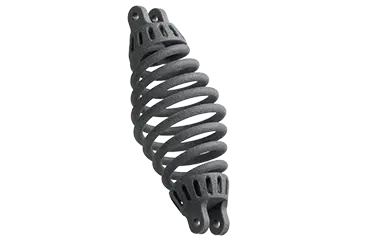
It’s fortunate that I had another chance to write about this subject because in my earlier story, I failed to mention the aspect of the robotics market that might be most advantageous to the AM industry, which is the sheer diversity of components that robotics customers require. That’s true not just within a single company, but even more so because of how many different products qualify as robots, with the landscape sure to keep diversifying over the long term as it grows. In this vein, maybe we should think of things in terms of there being many different robotics markets of various sizes, rather than just one big one.
End-of-arm tooling like grippers, for instance, have already been an AM industry success story for years, but these mainly apply to a specific kind of fixed industrial robots. Humanoids, on the other hand, have completely different requirements, and are also expected to be relevant to a much larger range of applications, both industrial and commercial. Further, there’s the whole world of mobile robots other than humanoids, which may well prove to be far more important in the intermediate term. Then there are soft robotics, one of the most fascinating categories, and one that is frequently covered by Joris Peels, for those who are interested.
This of course doesn’t exhaust the possibilities, and already you can start to see how broad the market is. The other angle to consider is that, with a market characterized by so much diversity and so much new growth, the level of technical maturity from one company to another within robotics is likely to be more differentiated than just about any other industry.
This should be a virtually perpetual spur to innovation in the robotics industry, as new companies attempt to outdo old ones in existing markets, as current leaders look to enter new market segments, as startups rewrite the definition of what constitutes a robot, etc. I’m not sure how you can look at the robotics market as anything other than precisely what the AM industry has been waiting for.
Images courtesy of Protolabs