
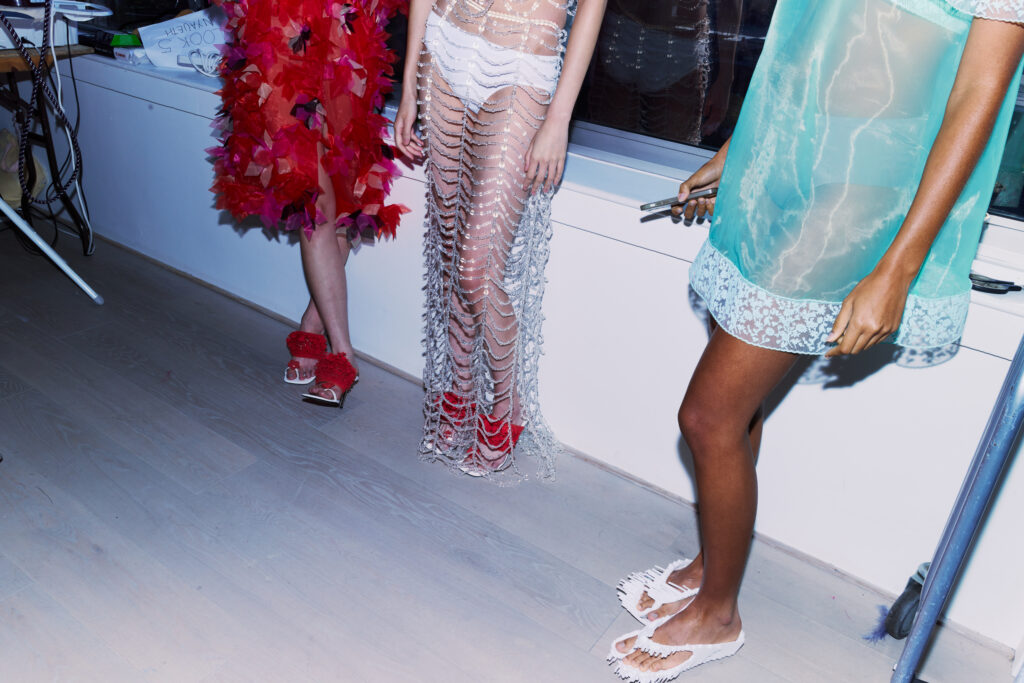
At London Fashion Week, some of the more unusual pieces on the runway came from 3D printers. Chinese fashion designer SUSAN FANG presented her Spring/Summer 2027 Air-Illusion collection at the Barbican Centre Lakeside in London on September 18. Among the collection’s 31 looks were 3D printed flip-flops and lace, along with dresses decorated with machine-cut acetate flowers.
Bambu Lab was the collection’s official technology partner, but the collaboration went beyond supplying machines. The fashion team used Bambu Lab’s desktop systems directly in the studio to prototype and produce runway pieces.
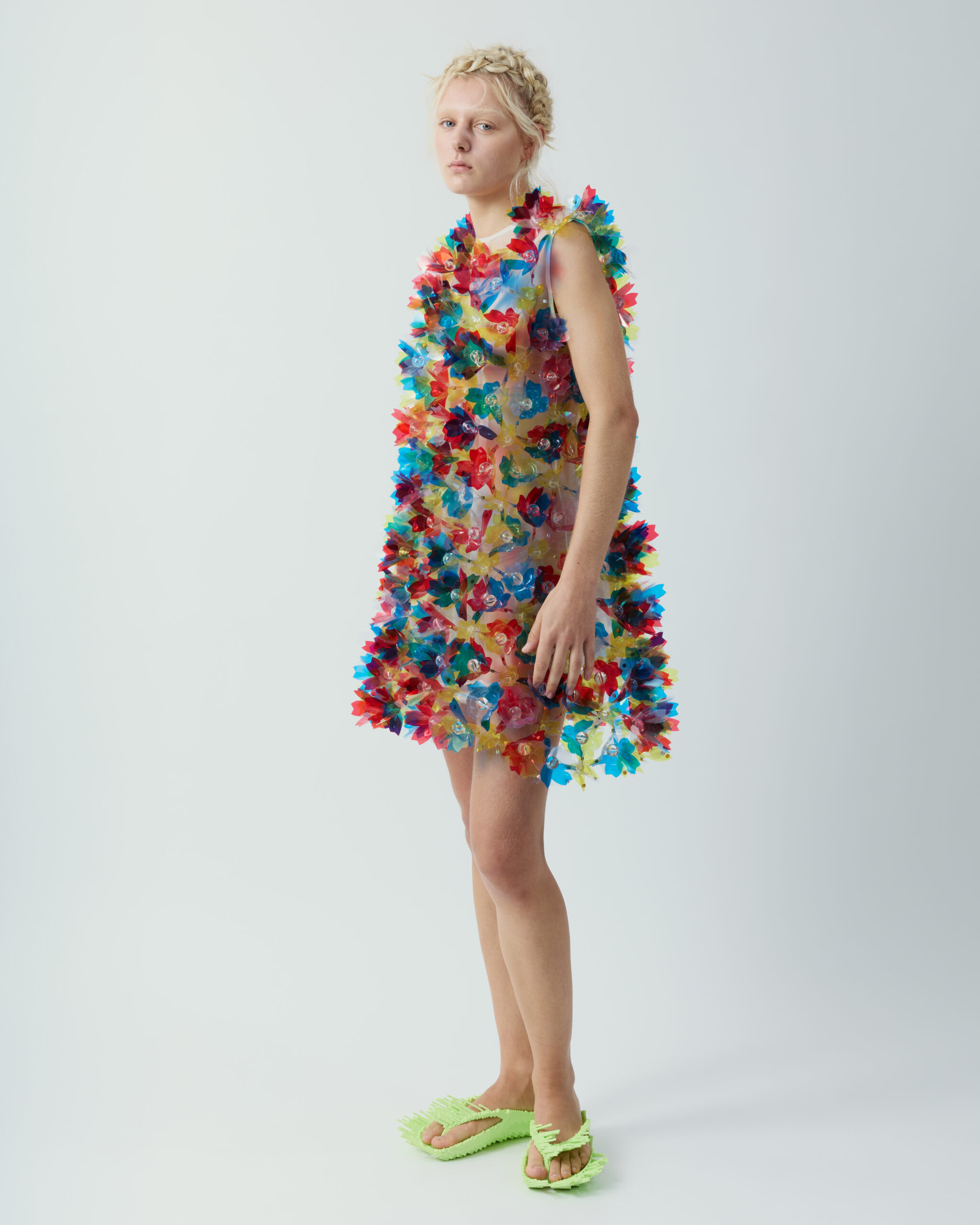
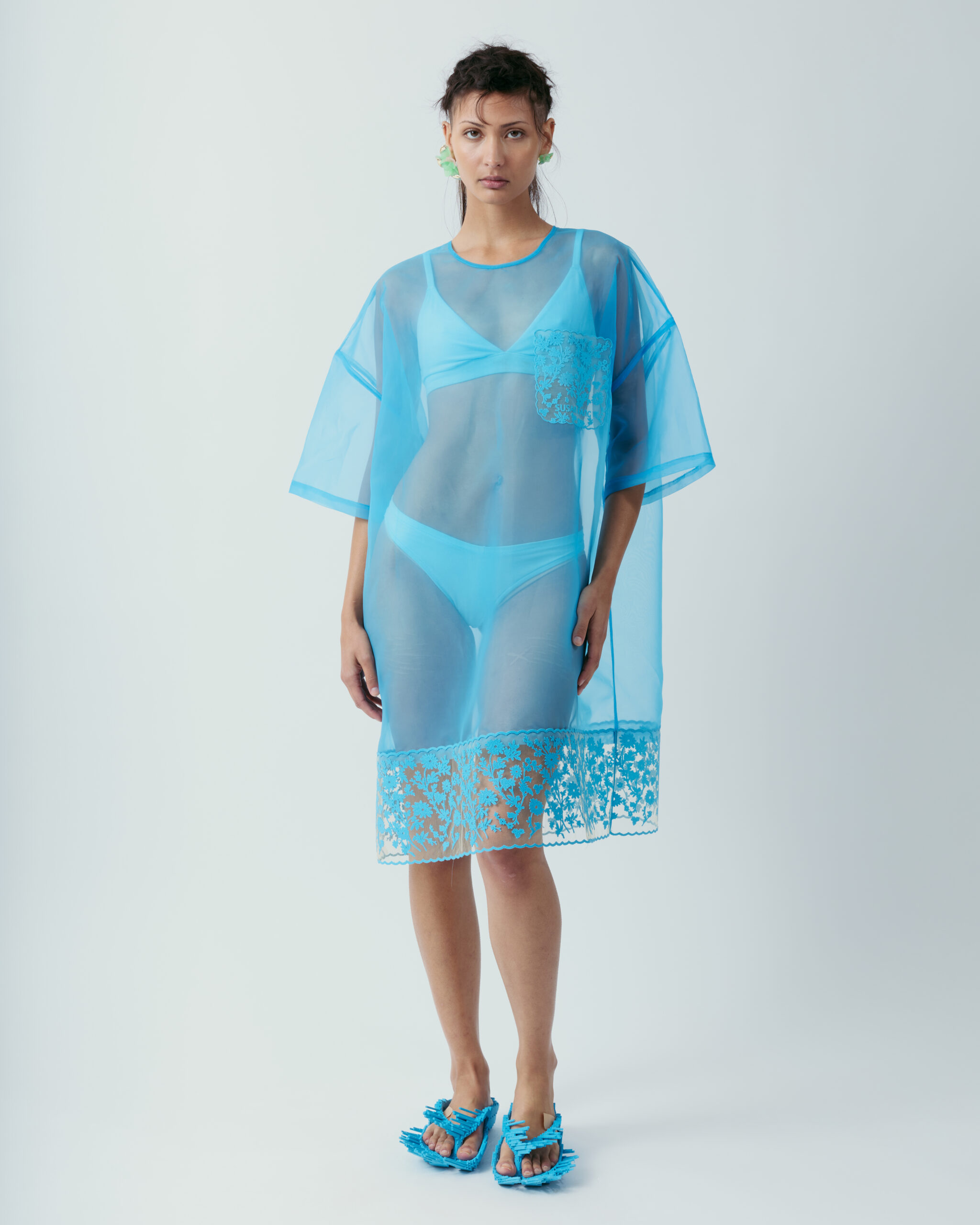
There were nine looks in total. This included three pairs of 3D printed flip-flops, three looks featuring printed lace, and three dresses incorporating machine-cut acetate flowers.
The most flashy example was probably the footwear. Called the Air-illusion Flip Flop, the sandal is built from a grid of small cubes. From one angle, it looks relatively conventional. But from another, its shape seems to distort. According to the design team, that geometry would have been difficult to make using a traditional shoe last and mould.
Instead, SUSAN FANG founder Susan Fang and industrial designer Orelio De Jonghe developed the shoe digitally. They began with a traditional last and flip-flop model in Blender, then used Houdini to create the cube structure. The cubes become smaller underneath the foot so the unusual design can still function as footwear. And the final runway pairs were printed on a Bambu Lab H2D using flexible TPU, with PLA used for support structures. The H2D’s dual-nozzle setup let the team use both materials in the same print.
Instead of making molds or sending the design out for production, the team printed the shoes directly in the studio. That also made it easier to test and adjust the design.

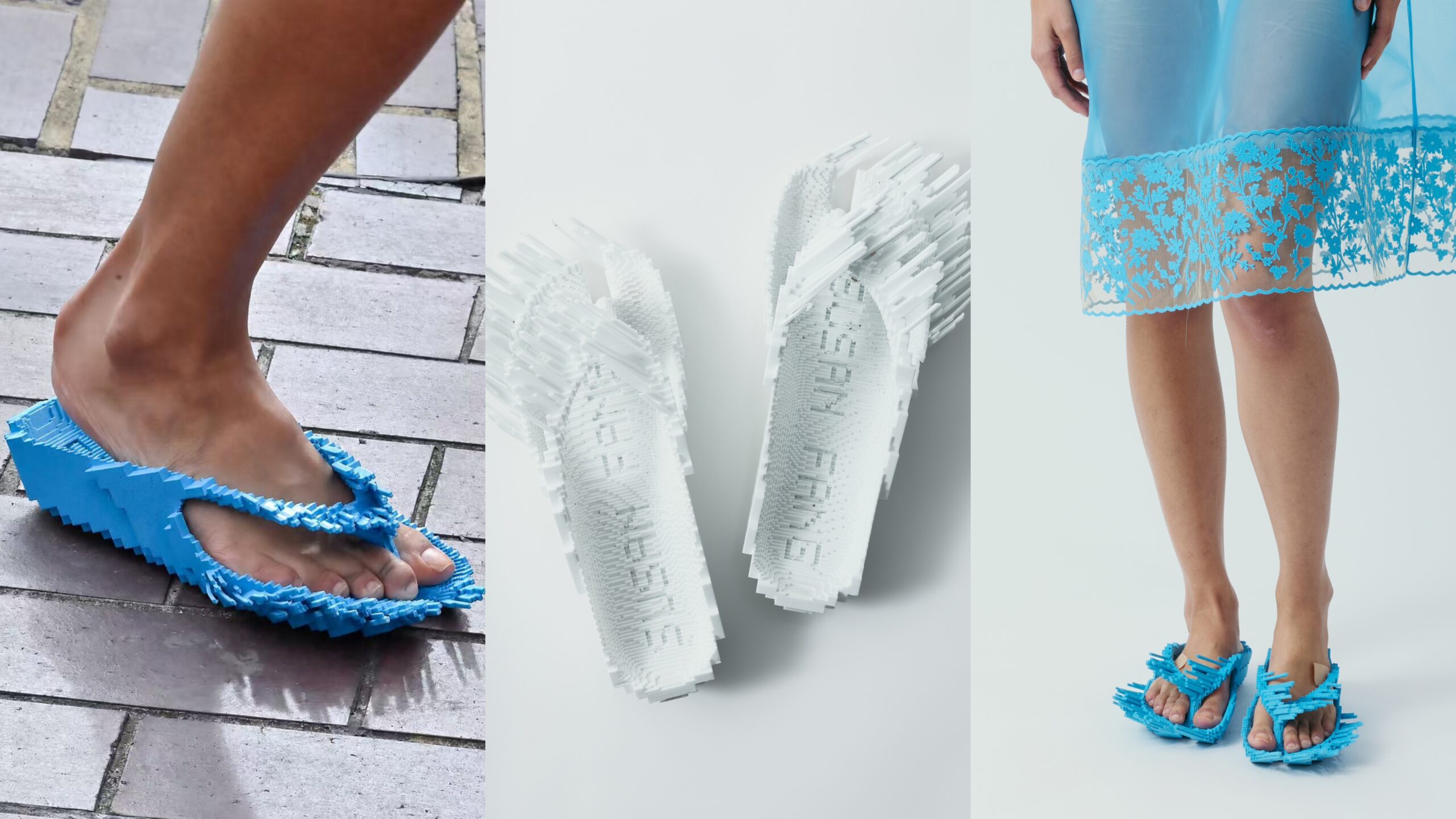
The 3D printed Air-illusion Flip Flop, from digital design to the finished shoe. Images courtesy of SUSAN FANG/Bambu Lab.
Printing Lace Directly Onto Fabric
For another part of the collection, the studio printed neon TPU flower patterns directly onto organza. The pieces, produced on Bambu Lab A1 and A2L machines, became the fashion house’s first collection to use 3D printed lace. Because the printers have an open frame, the fabric could extend beyond the build plate, allowing the team to print the lace onto longer sections of organza.

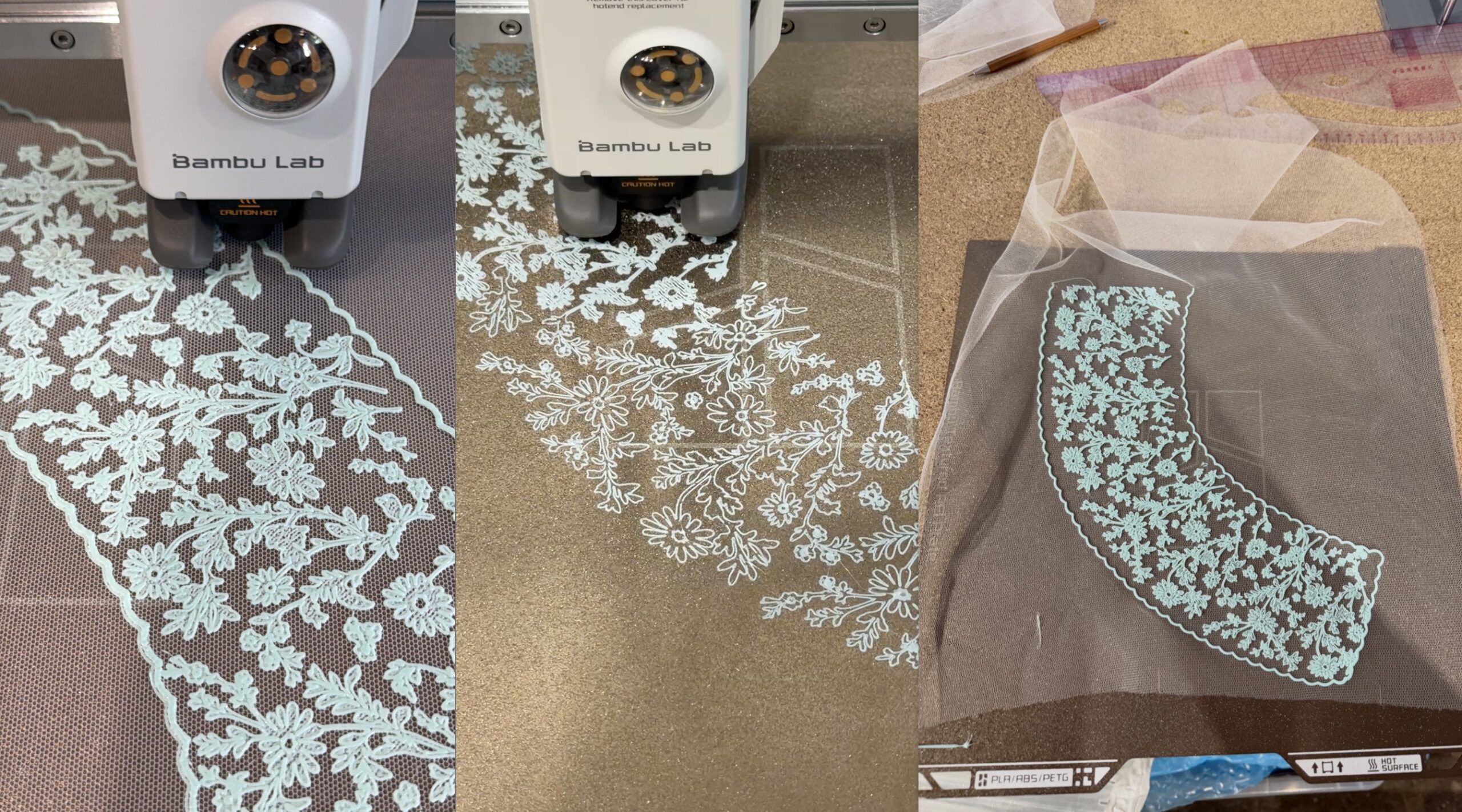
3D printed lace being produced on Bambu Lab printers. Image courtesy of SUSAN FANG/Bambu Lab.
The studio also experimented with another type of digital fabrication. For the collection’s “air-puzzle” dresses, the team used an A2L cutting module to cut geometric flowers from acetate. Bambu Lab says the material could not be processed with the team’s laser cutter and that machine cutting reduced the time required to roughly one-third of what the designers had previously spent cutting the pieces by hand.
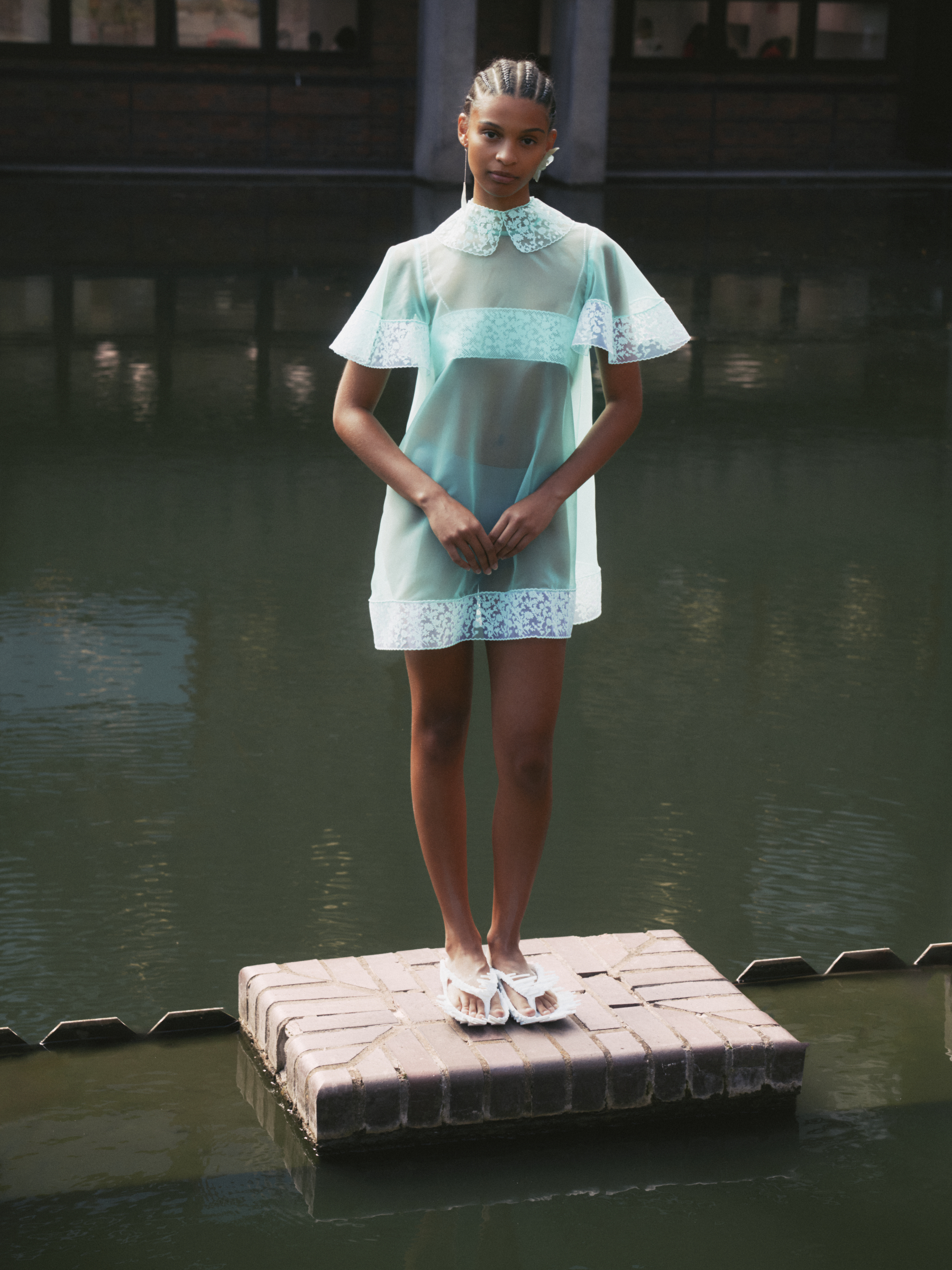
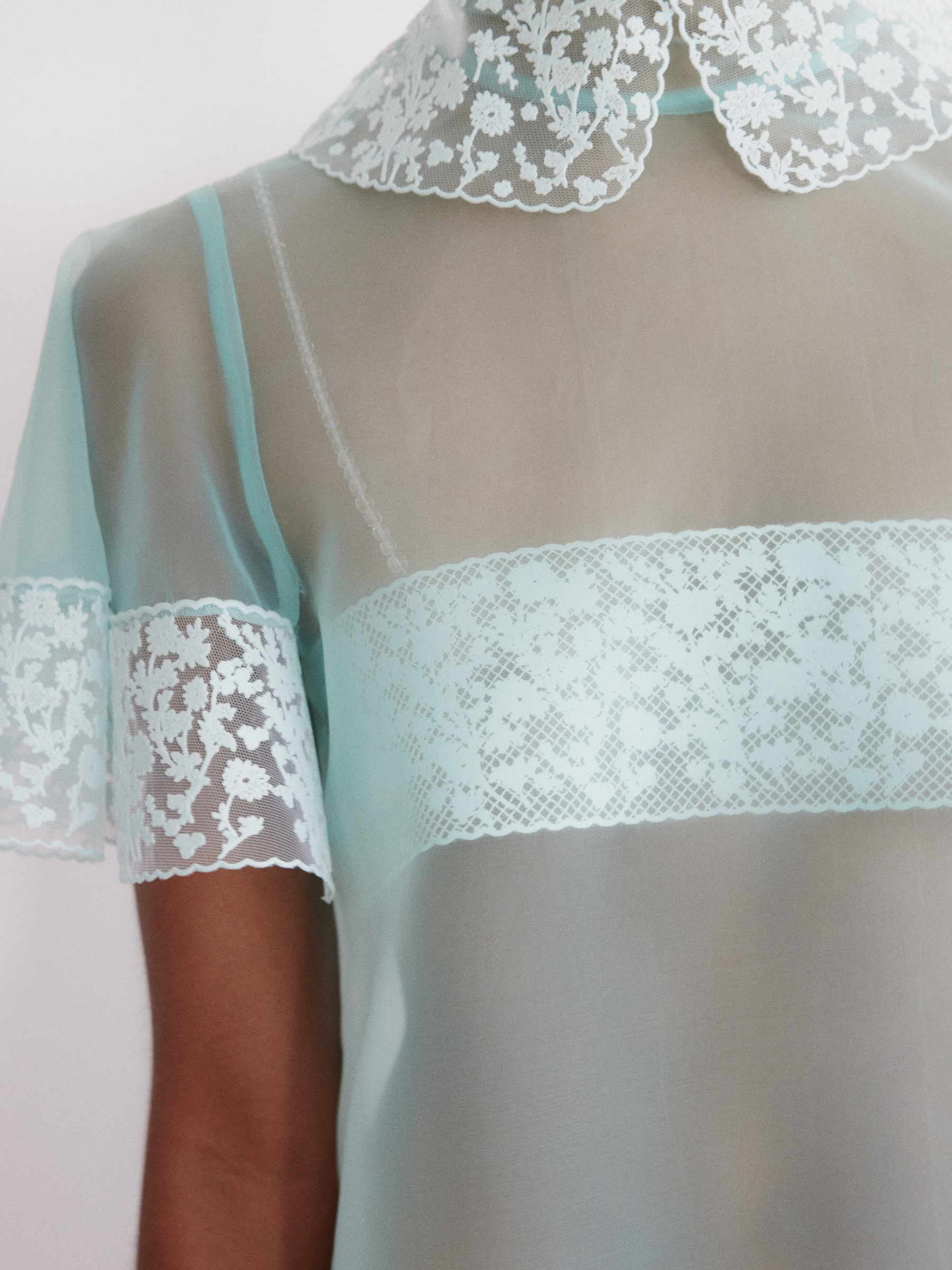
Even smaller accessories went through the digital workflow. Jade earrings were first 3D printed so the team could check their proportions before moving into production.
The designers said they plan to keep using the technology beyond the London collection: “We would definitely continue working with Bambu Lab; it’s a valuable tool for our prototyping and manufacturing, so we will continue using Bambu Lab technology for sure and look forward to what Bambu Lab will come up with next. Bambu Lab really transformed 3D printing quality to be top-notch, and the speed is there to allow it to become a tool that can be considered for professional manufacturing. We look forward to seeing how the technology will keep evolving, and we will be on the front line experimenting with that.”
Even the Invitation Was 3D Printed
3D printing was also part of the show invitations. According to Bambu Lab, guests received an A1 mini Combo 3D printer, along with a digital file, and asked to print the show’s sculptural invitation themselves. The object changes depending on the viewing angle. From one side, it shows SUSAN FANG’s lucky-clover monogram. From another, it looks like a melting heart.
The show’s guest gift also came from the 3D printing community. Bambu Lab held a contest on MakerWorld, its platform for 3D printable designs, and SUSAN FANG chose one entry: a butterfly-and-flower design that can hold a real flower.

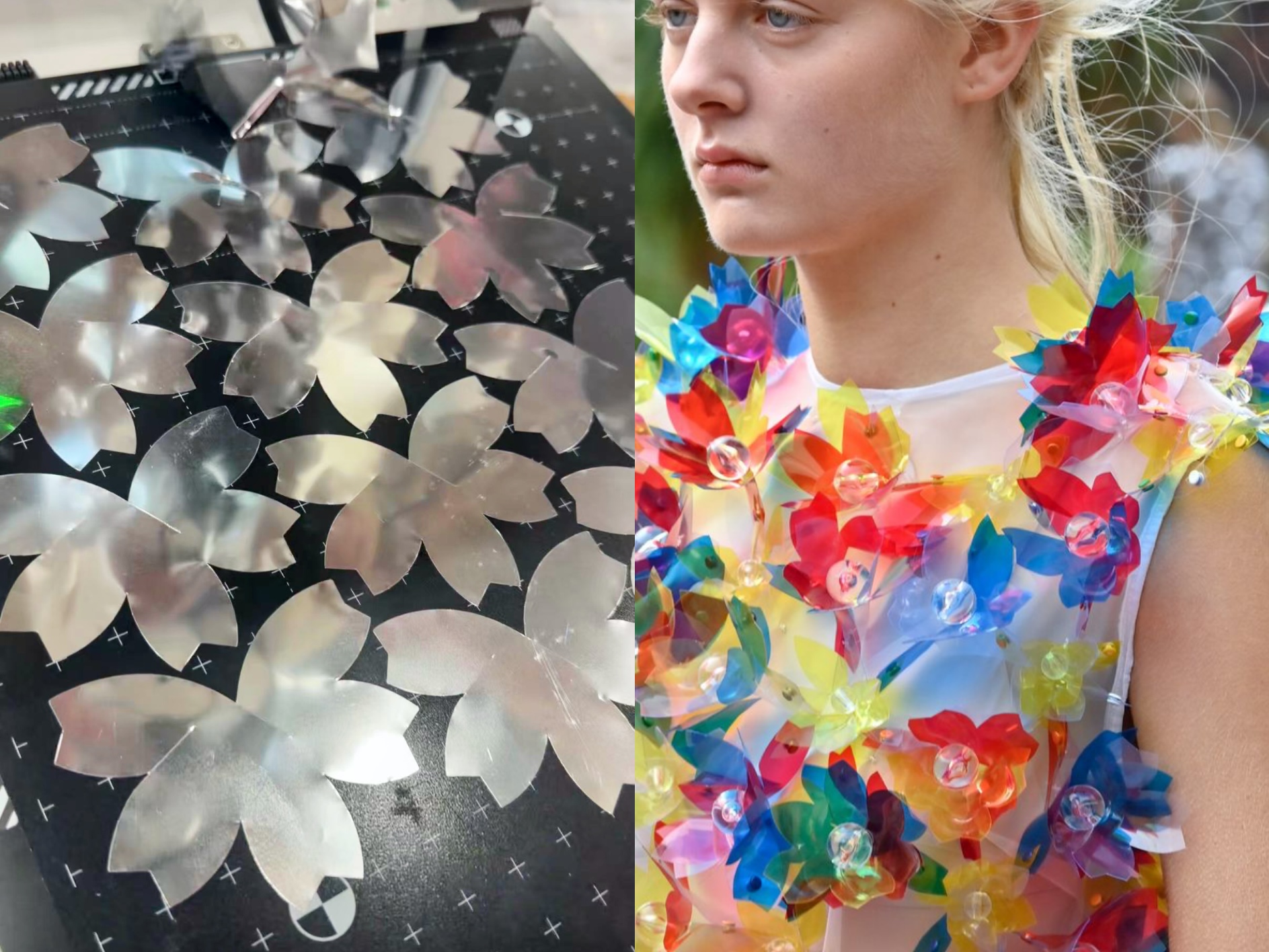
Acetate flowers cut for the Air-Illusion collection and the finished runway look. Photos by Jason Lloyd Evans.
This was not the first collaboration between Bambu Lab and SUSAN FANG. Earlier in 2026, the companies worked together for Shanghai Fashion Week, where the fashion house developed footwear inspired by football boots using the Bambu Lab H2D. The printer was used throughout the process, from early tests to the pairs eventually worn on the runway.
London expanded that experiment. This time, several machines and manufacturing methods were being used side by side: the H2D for footwear, A1 and A2L printers for textile work, and the A2L cutting system for acetate components.
3D printed fashion is not new. Designers have been experimenting with printed dresses, shoes, and accessories for years. What stands out here is that much of the work was done on desktop machines inside the studio.
Fang and De Jonghe said they plan to keep using the technology: “We would definitely continue working with Bambu Lab; it’s a valuable tool for our prototyping and manufacturing, so we will continue using Bambu Lab technology for sure and look forward to what Bambu Lab will come up with next.”