
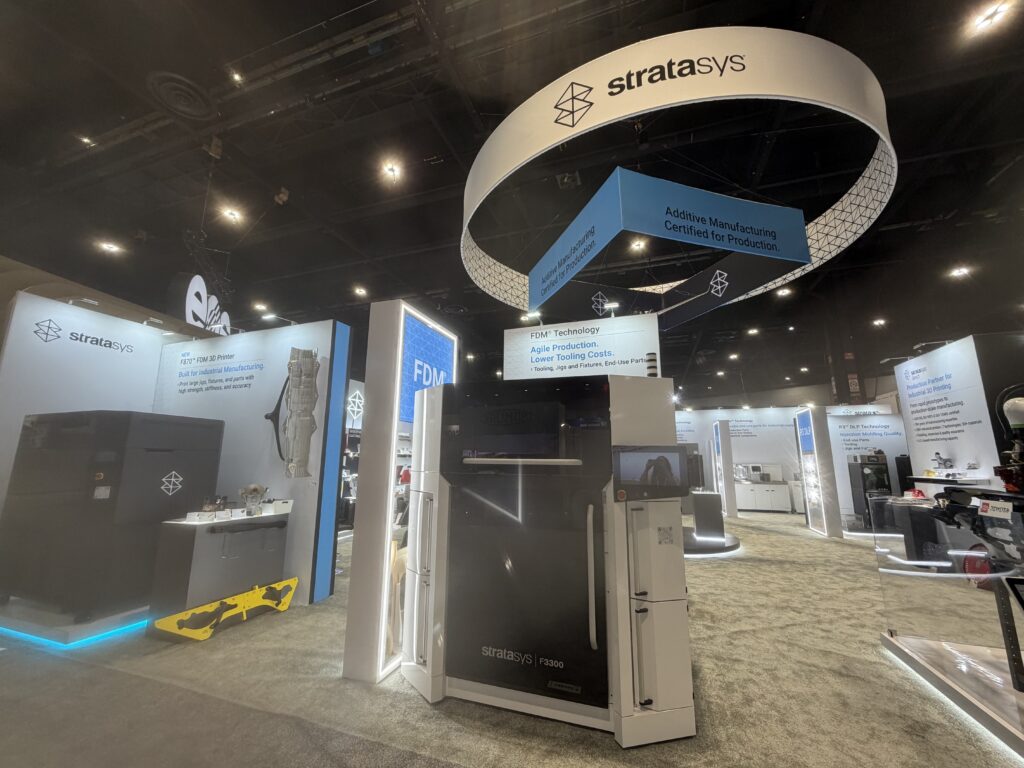
Just ahead of last week’s International Manufacturing Technology Show (IMTS) in Chicago, Stratasys launched the F870, a new large-format, production-grade FDM 3D printing platform designed to drive industrial manufacturing at scale in industries like automotive, aerospace, and defense. The system is already being deployed by top companies like Rivian Automotive in Michigan and Toyota Production Engineering in Kentucky to speed up factory floor manufacturing.
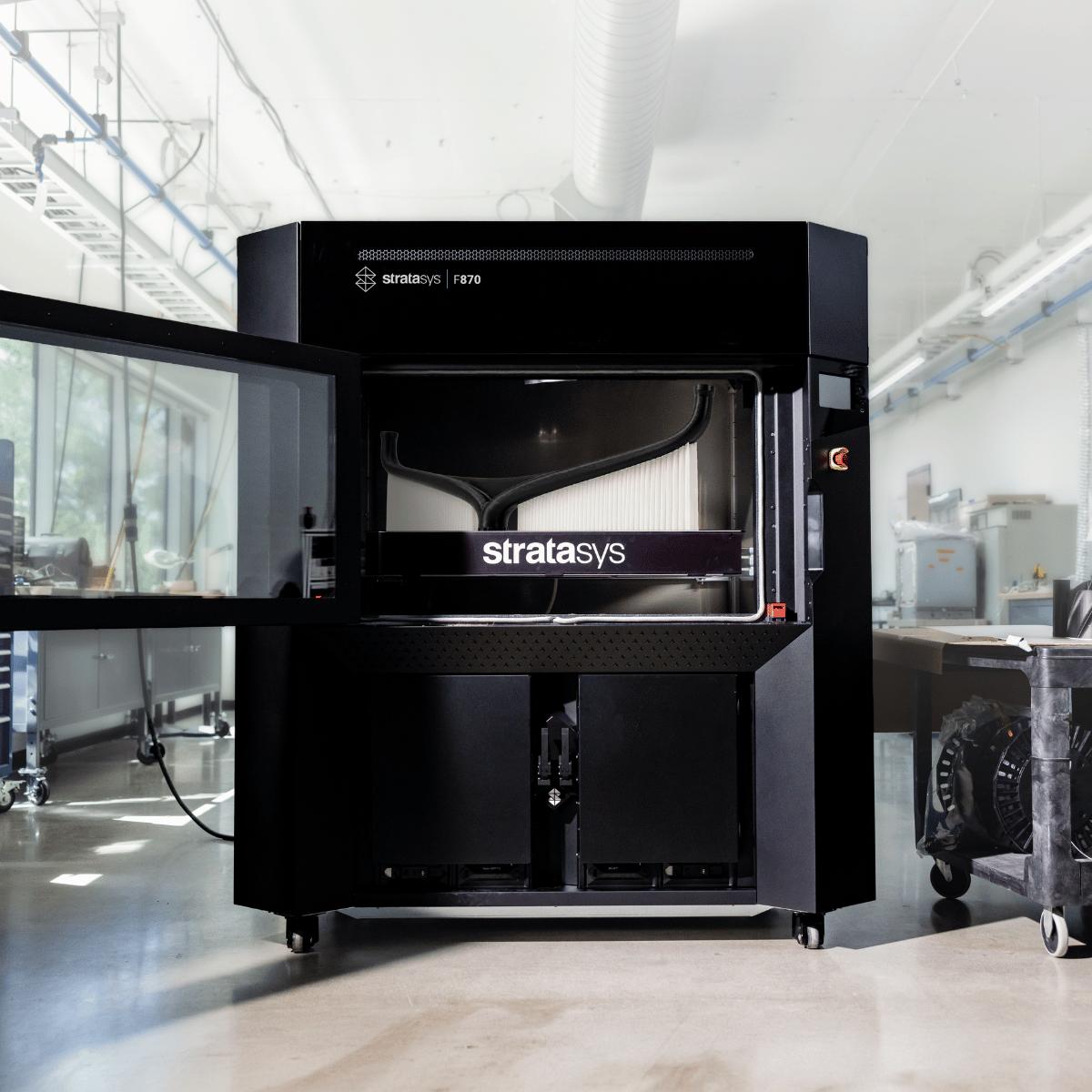
Stratasys F870™ FDM® system, a large-format additive manufacturing platform designed for industrial manufacturers, automotive OEMs, aerospace & defense production lines, looking to scale production on the factory floor. Image courtesy of Stratasys
More and more, industrial manufacturers need larger machines that can fit right into their production environments, reliably fabricating fixtures, tooling, end-use parts, and manufacturing aids at the necessary throughput and size. That’s where the F870 comes in.
Featuring a build volume of a full meter (1000 x 610 x 610 mm) and a heated chamber, the new F870 is said to have the longest heated build capacity in its class of industrial large-format printers, backed by strong, durable materials like ASA, ABS, and Nylon 12CF Carbon Fiber.
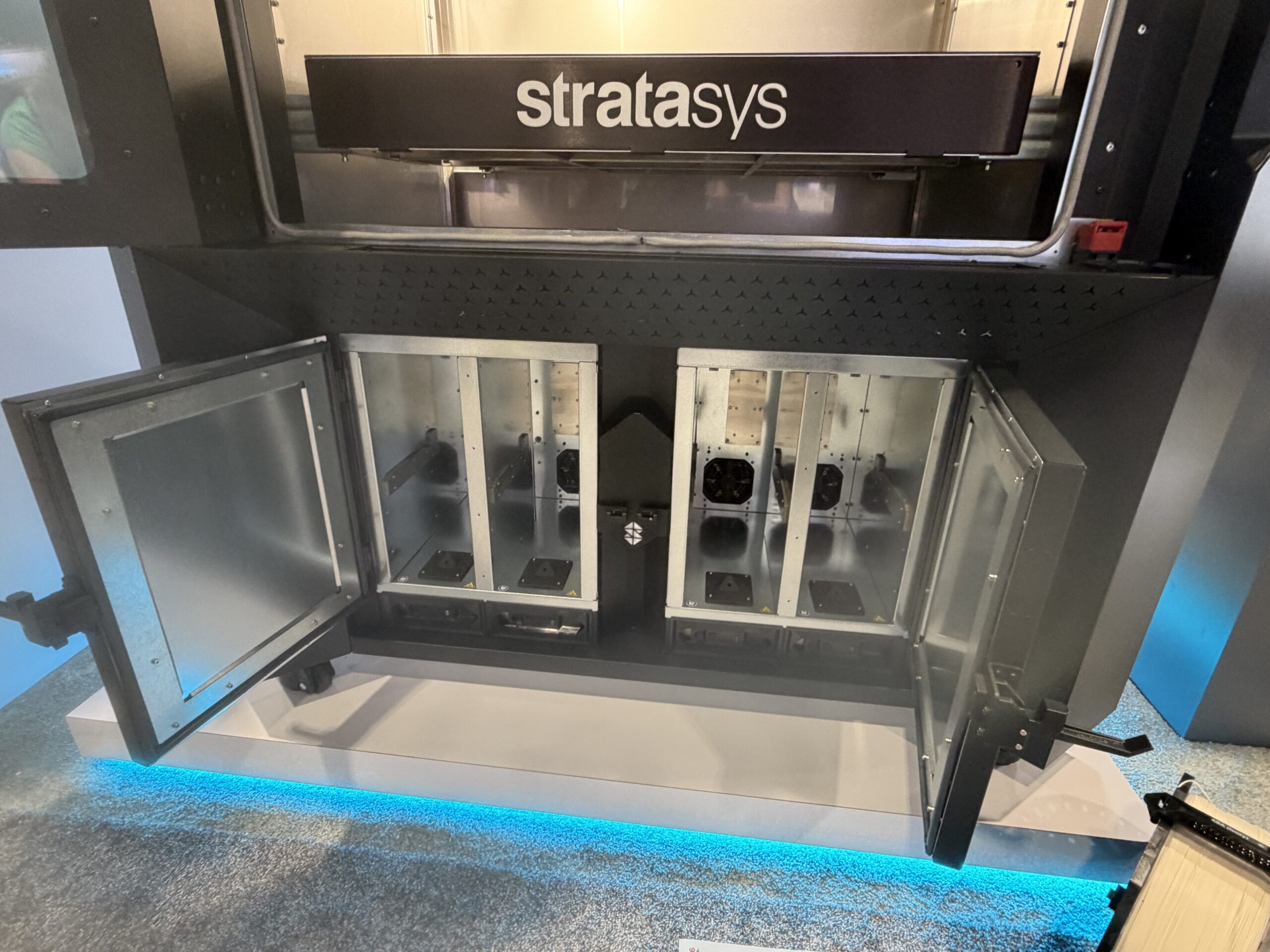
Stratasys F870 material bays at IMTS 2026
Stratasys Application Engineer Thomas Whiting told me that the F870 is the company’s longest 3D printer in terms of the X axis. It features three different printheads and tip sizes for different materials or faster throughput. He showed me the two material bays underneath the build chamber, each of which can hold two 250 cubic inch spools of either print material or support material. Whiting said the bays are heated and can actively dry material.
“You can put a wet spool in, let it sit anywhere from 6-10 hours, so basically overnight, and you’ll have a dry spool.”
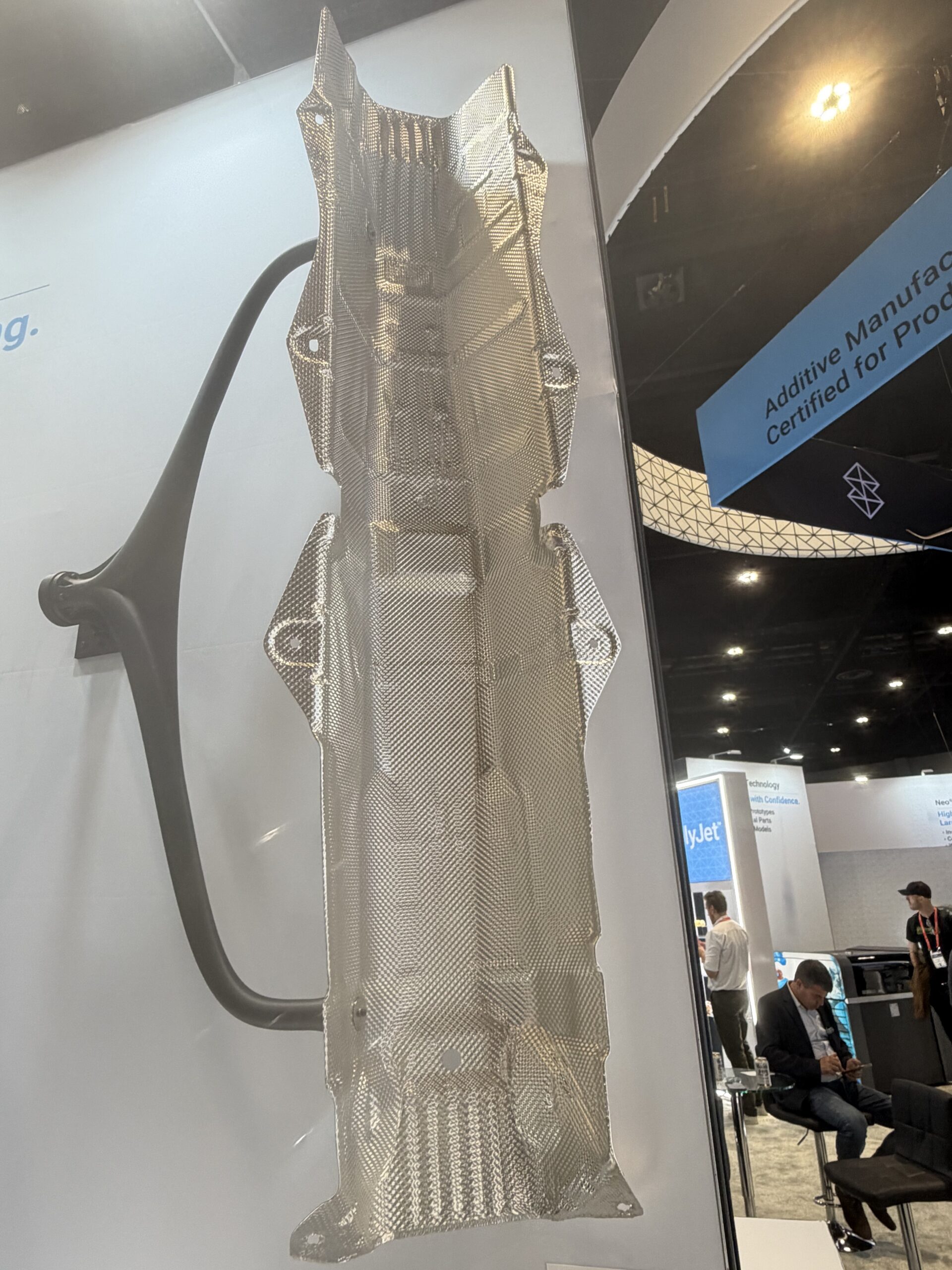
While the new F870 is being used for large prototype parts, as well as jigs and fixtures for the factory floor, its biggest application—literally—is automotive. Whiting showed me a 42″ wide 3D printed robotic end of arm tool (EOAT) that had to print on the diagonal in the machine so it would fit. The EOAT, printed out of Nylon 12CF, is for an exhaust heatshield, featuring integrated internal air channels and mounting features, as well as vacuum cups for gripping.
I also spoke with Fadi Abro, Sr. Global Director – Automotive & Mobility for Stratasys, about the F870.
“What’s unique about this is that we took our strongest material—our Nylon 12 Carbon Fiber—and we put it on our biggest platform. It’s a meter in length. Now, you can make a carbon fiber part that’s as big as the platform.”
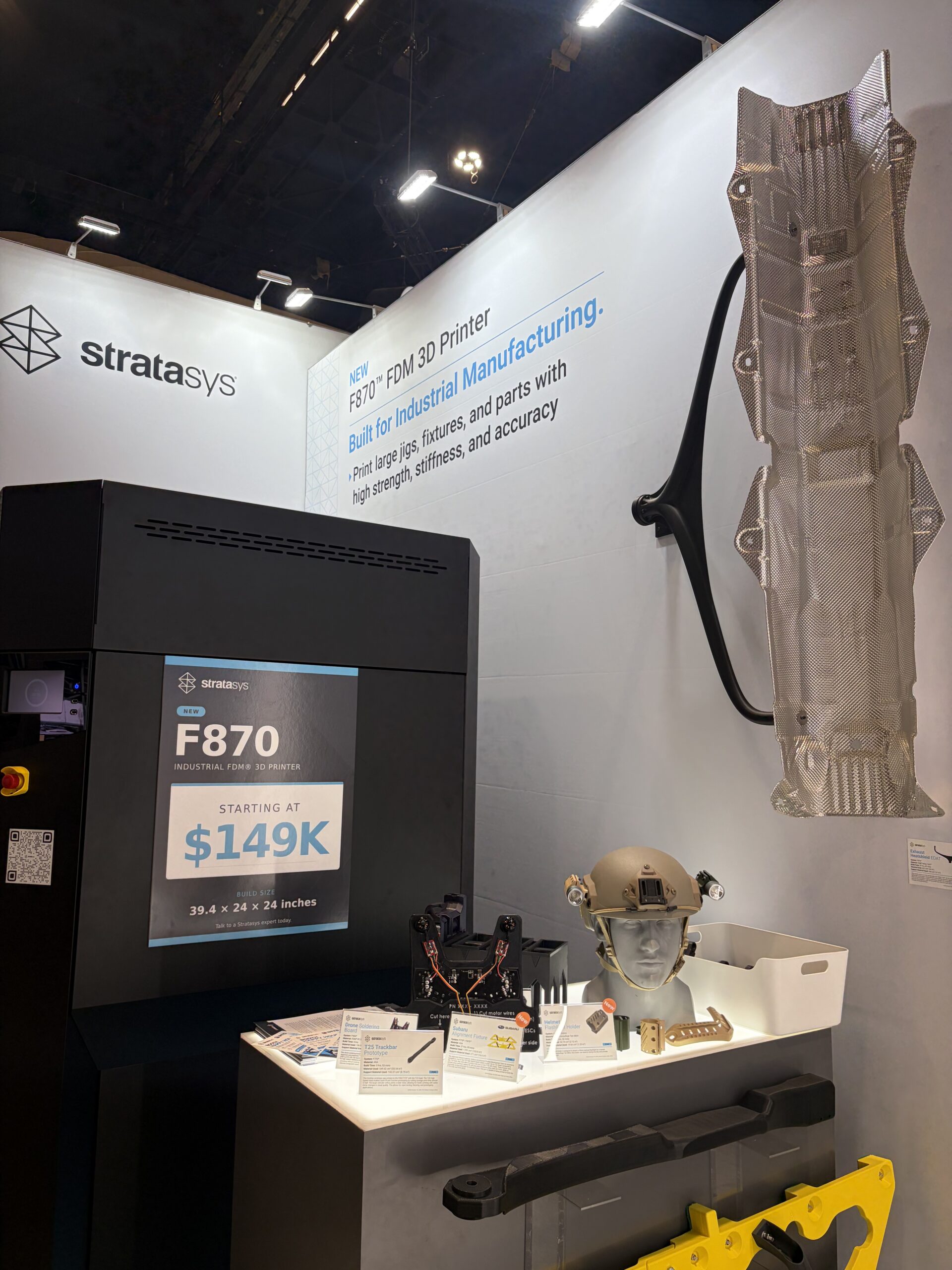
Stratasys says the F870, which starts at $149,000, offers a lower total cost of ownership, so manufacturing customers can more easily expand their use of additive across multiple applications.
“Our simplified message here is strongest material, big platform, economical price,” Abro told me. “Compared to other FDM equipment that we offer, this is a very reasonable price point.”
That’s because not every industrial application requires the same level of performance that’s needed for an industry like aerospace, which uses very high-temperature materials and has to meet very exacting standards. Abro said that applications like automotive factory floor tooling need a system like the F870, that prints with a few engineering-grade materials and has a larger build size but is mostly “bare bones.”
“We try to meet the customers where they are in terms of the performance they expect,” he said.
William (Dallas) Martin, Additive Manufacturing Engineer at Toyota North America, was a beta tester for the Stratasys F870, and told me that they have one in the Toyota factory in Georgetown, Kentucky. Toyota also has multiple F770 and F900 3D printers. Martin said Stratasys really listens to its customers when designing new systems.
“One thing we’ve always pushed on the team at Stratasys is to get us better material, and maybe a little faster – bigger head, bigger nozzle size. They answered all that in this machine,” he said. “They really listen to everything we say.”
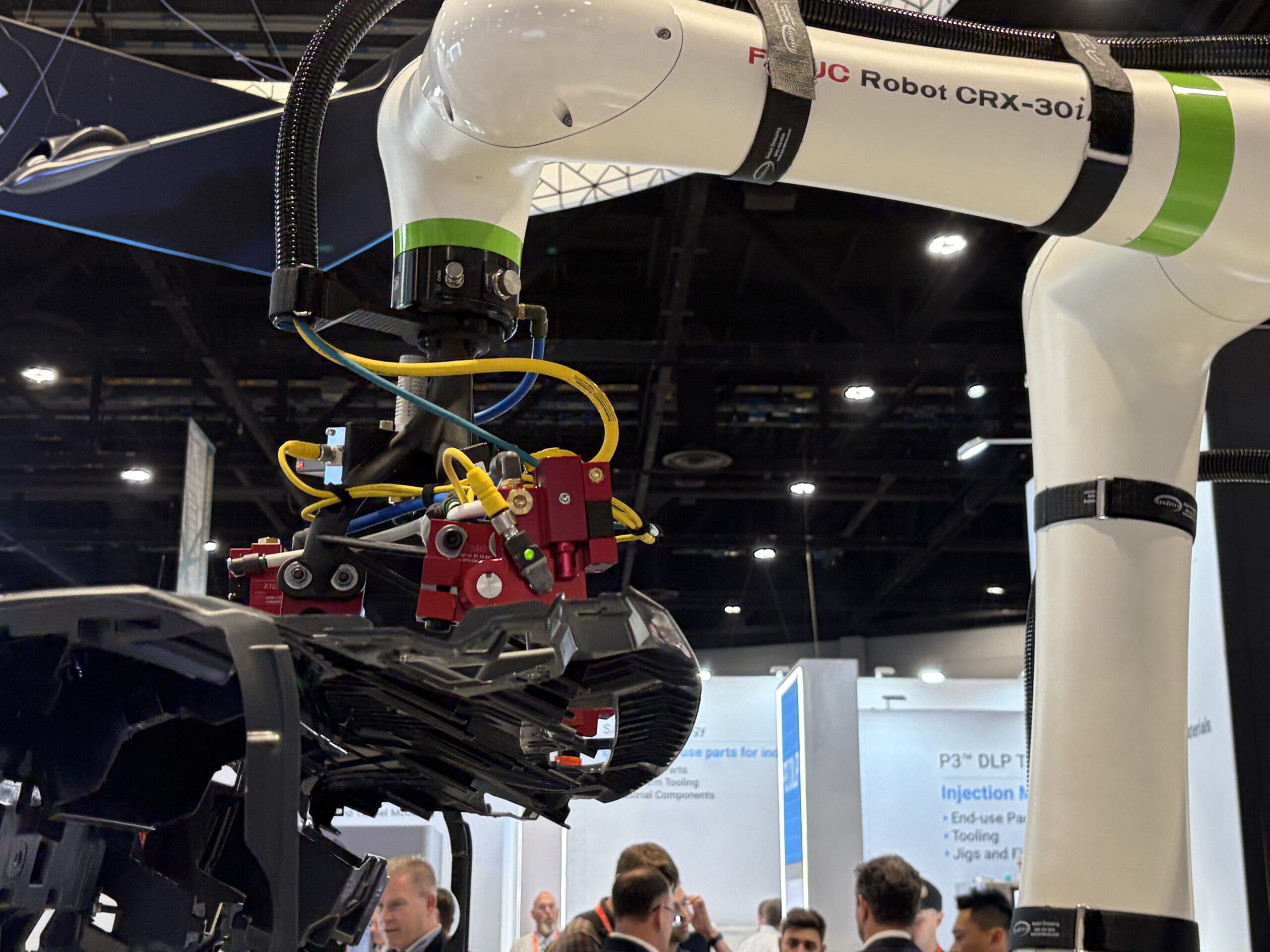
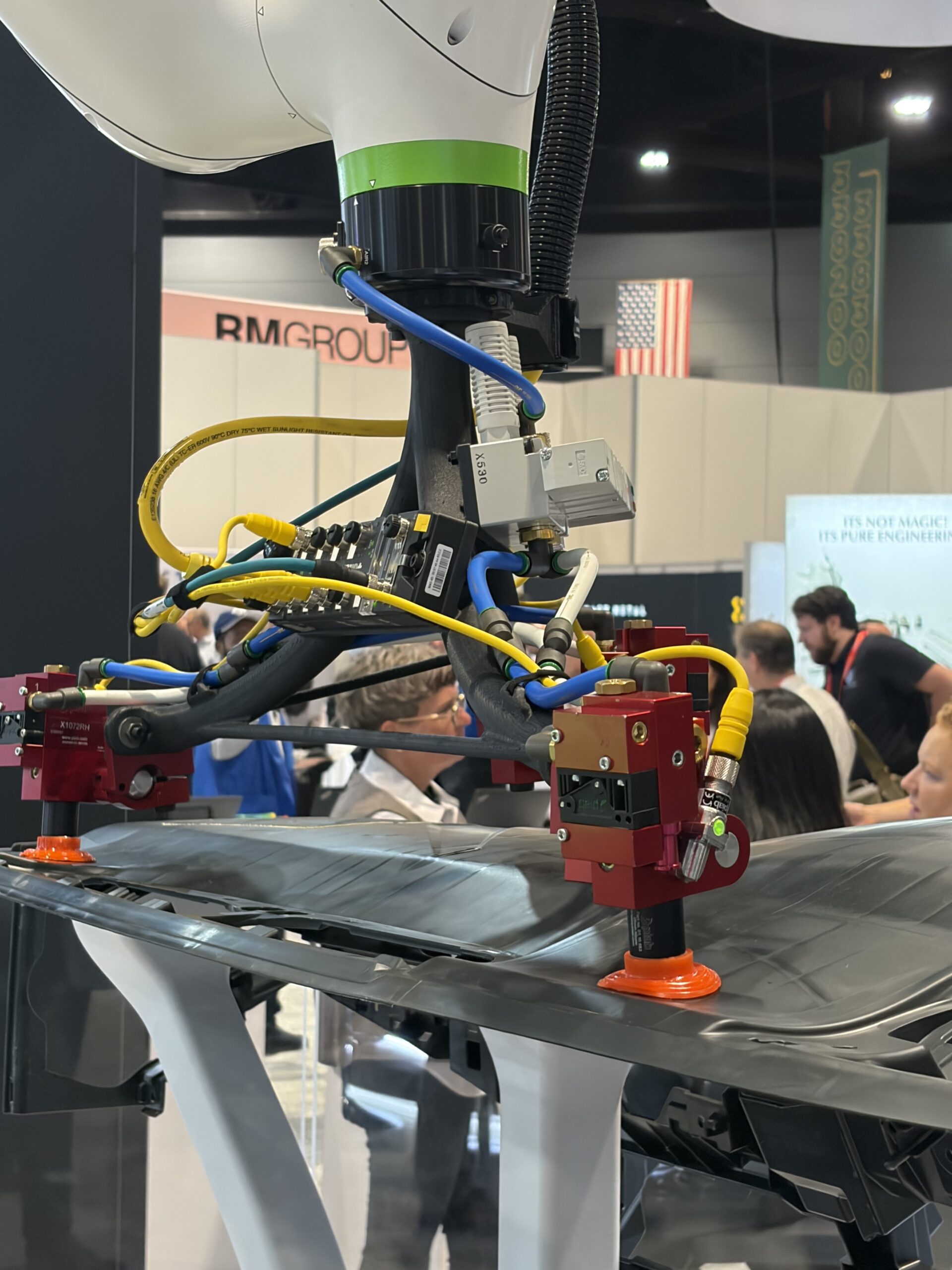
Fanuc robot arm with Stratasys 3D printed interface and Toyota production part
Stratasys had a live Toyota application running at its IMTS booth. A cobot (collaborative robot) from Fanuc was holding on to a Toyota instrument panel, and Abro said the part where Stratasys adds value is right in the middle: the interface between the production part and the cobot.
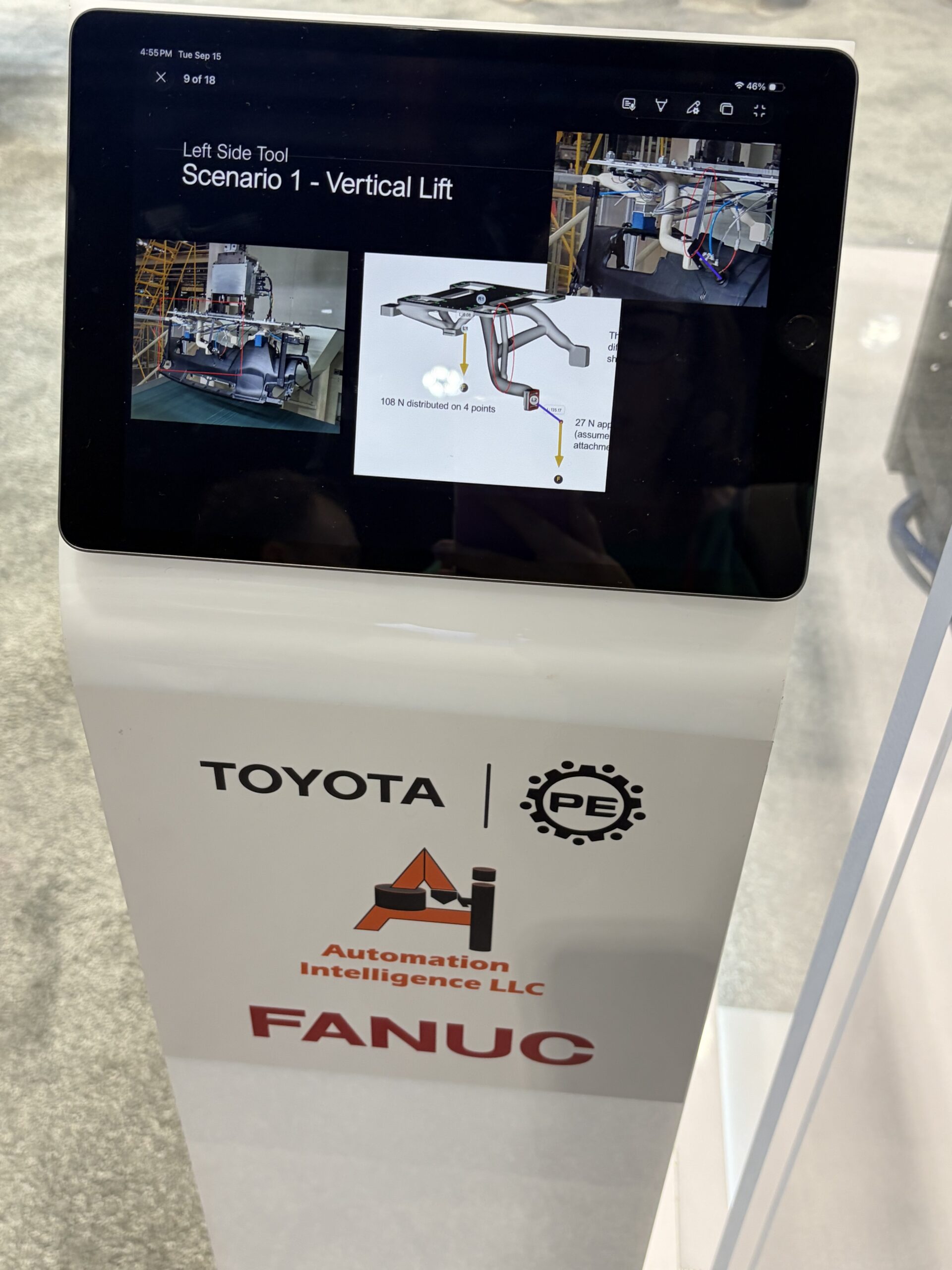
Typically, that interface would be made with welded steel or machined aluminum, resulting in a heavy, costly part, as well as a slow delivery. This EOAT was printed out of strong Nylon 12CF in just 20 hours. Abro said what’s changed recently to make this a viable application is Novineer. Its simulation software can accurately analyze the tool to determine if it’s strong enough to be on the end of a cobot holding a large part.
“What’s been missing is the confidence,” Abro said.
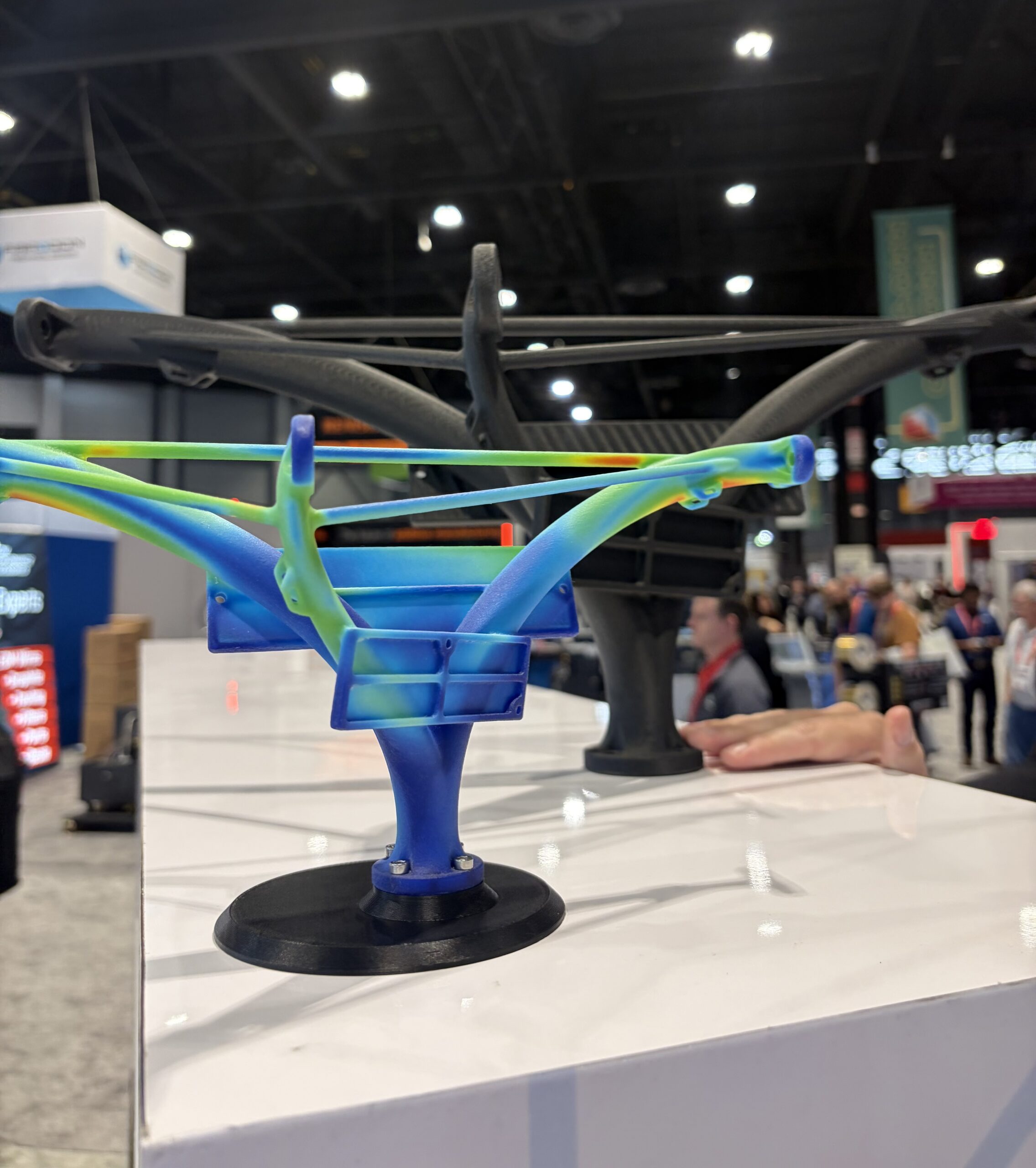
The 3D printed EOAT for Toyota’s cobots
Using Novineer for part analysis eliminates the guesswork for this type of factory cobot application, and “creates the confidence so you can save money and print the part,” as Abro explained. The design of the part is optimized, saving both money and material waste.
Martin says Toyota’s factory in West Virginia has cobots with 3D printed EOATs, as well as 3D printed trays that carry engine assembly parts.
“We’re doubling down on 3D printing at Toyota,” Martin told me. “We see the cost savings, plus the customization and freedom of geometry.”
Another automotive company doubling down with Stratasys 3D printing is its longtime collaborator General Motors (GM). On the first day of IMTS, Stratasys announced that its AM solutions will roll out across more than 20 GM manufacturing facilities to help increase operational efficiency while lowering costs and lead times. This is highlighted in an in-depth video showcase released by Stratasys last week.
Manufacturing teams at several GM production facilities in both North and South America have long used industrial Stratasys FDM technology for applications like tooling, jigs and fixtures, ergonomic factory production aids, protective components, replacement parts, and quality-control tools. Using F900 systems, these are completed and validated onsite quickly, saving time and money.
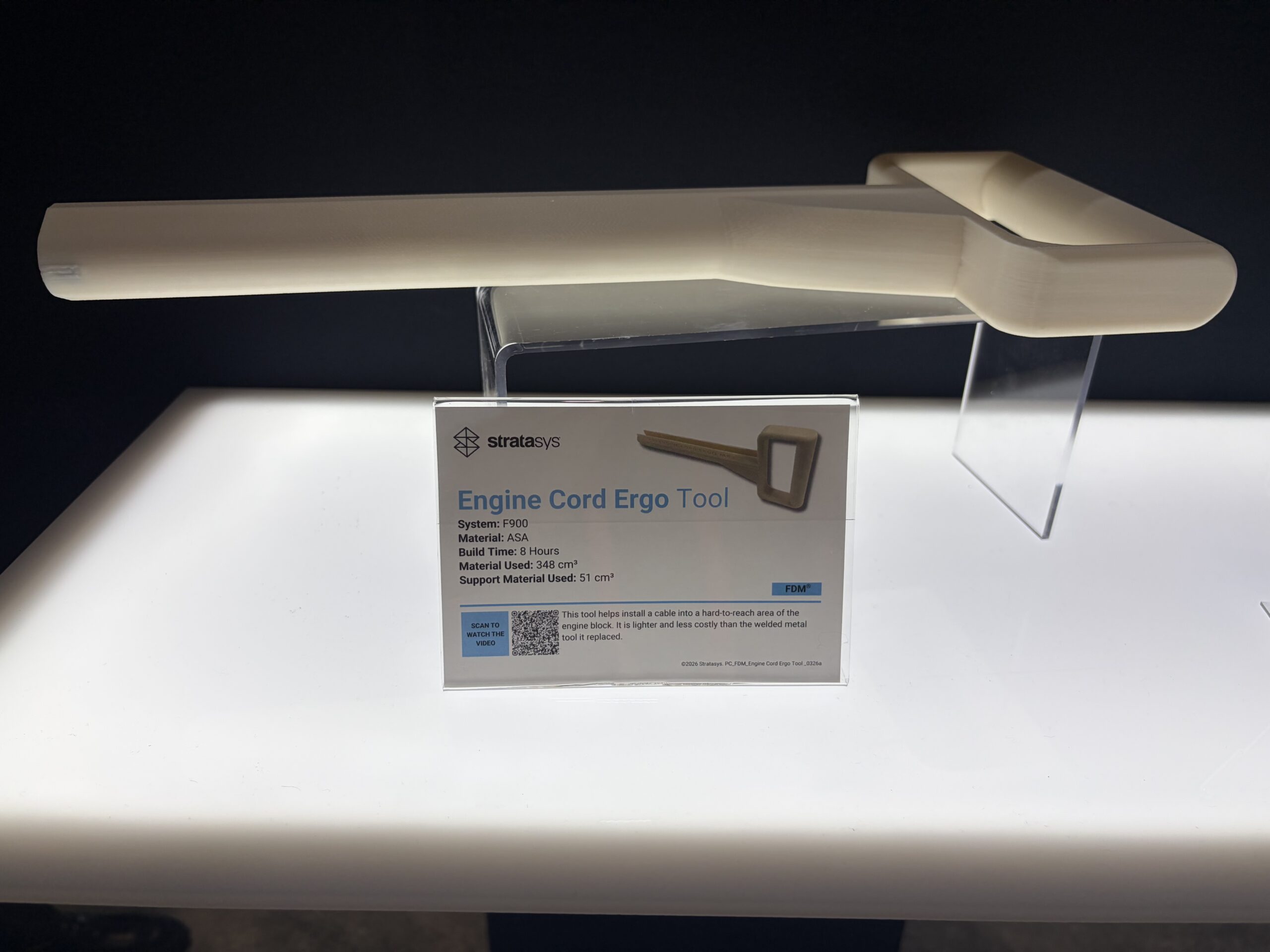
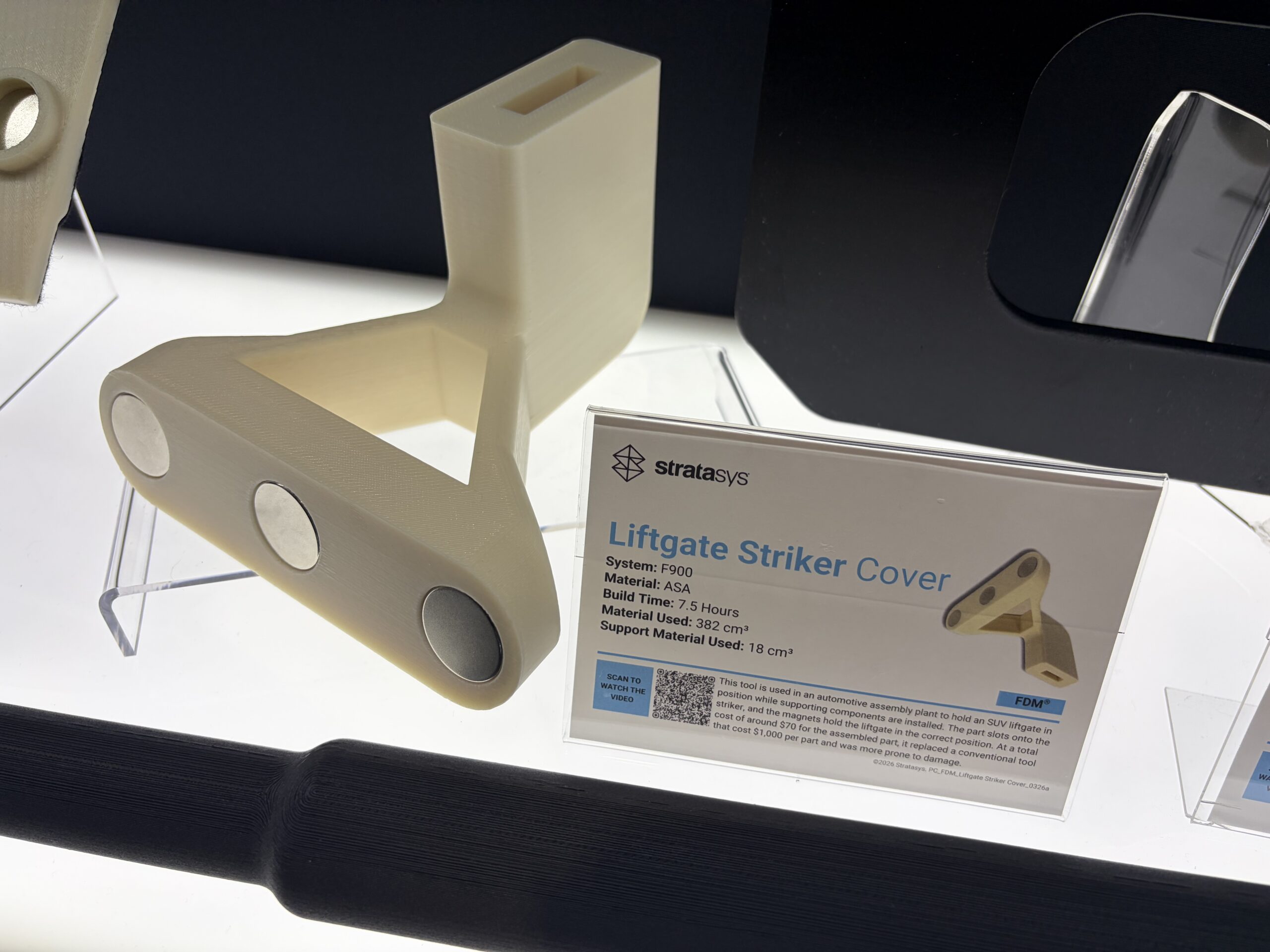
The new 26-minute video features multiple GM employees from North American facilities talking specifically about how they’re using and integrating FDM 3D printing to make their jobs easier. Abro said GM is so unique in its additive adoption because of three things: standardization, scale, and savings. The company standardized on the industrial F900, “the biggest, baddest machine we have.” Then, they scaled across 20+ plants, putting the F900 in all of them. Finally, Abro says that “the scale of the ROI is really impressive.”
“In the video, you’ll hear them say that their expectation is within six months, they’ll pay back on that F900, a multi hundred-thousand dollar machine.”
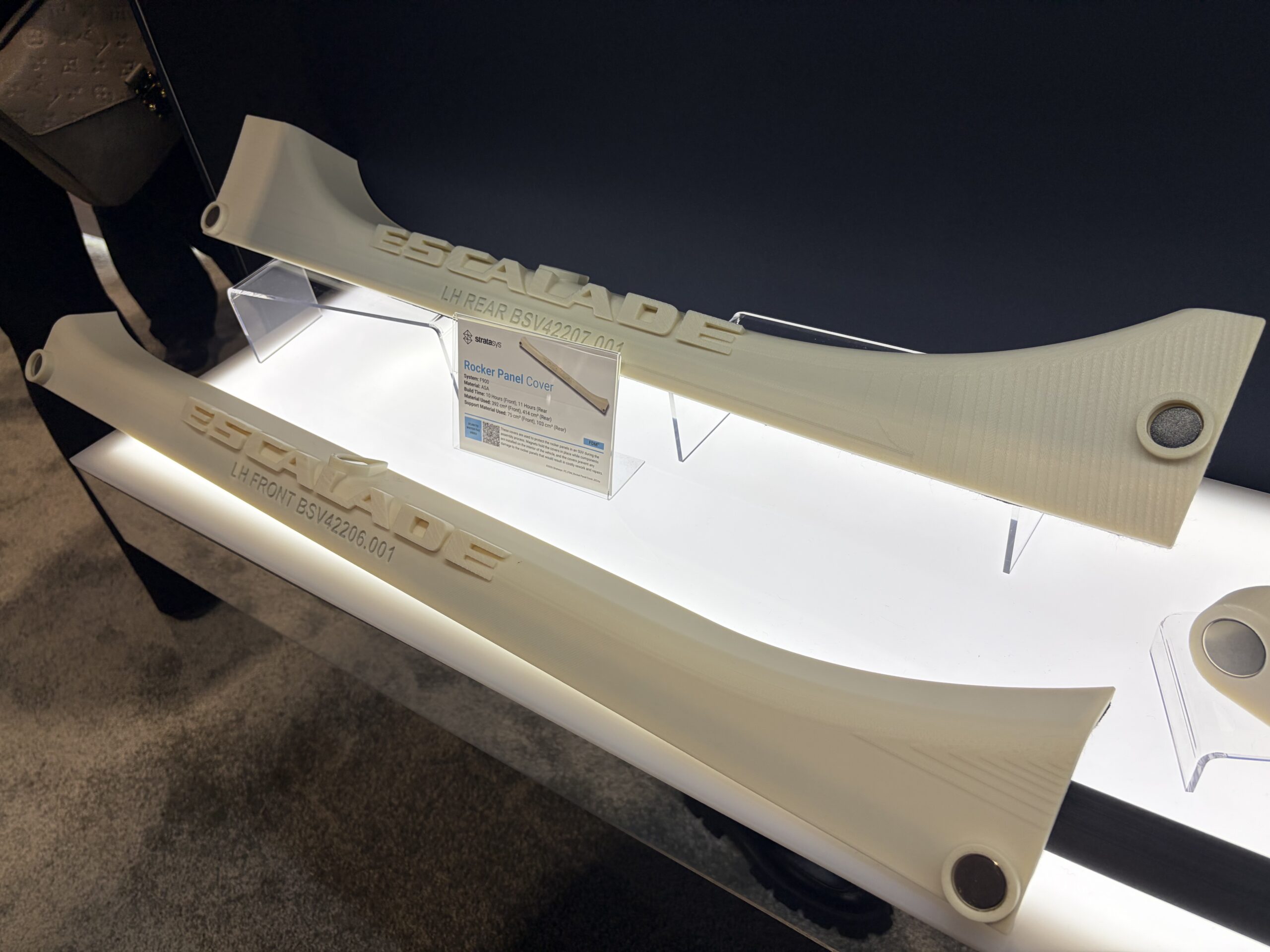
An example of the parts GM is 3D printing in its facilities
One specific example Abro pointed out was a 3D printed rocker panel cover, which goes over the bottom of the car door and attaches with magnets. It protects the lip of the car while it’s being worked on in the factory, so workers don’t scratch the paint on accident. This $30 print has reduced car visits to “the paint hospital” by 80%, which means GM doesn’t have to pay someone to sit there and touch up the paint by hand.
All the GM facilities participating in the roll-out are reporting significant savings and ROI by lowering lead times and tooling costs and improving efficiency.
Images courtesy of Sarah Saunders for 3DPrint.com unless otherwise noted