
An iconic cafe chair helped usher in an era of composite manufacturing and bent wood. The resulting Mosquito bomber, fighter, multirole everything, was an enormous success. This led to waffling between the dream of a multirole aircraft that can do it all and specialized planes for specialized tasks. Both design directions were strongly inspired by the mighty Mosquito.
The Mosquito did more than just usher in composites. A wide range of factories made components, each responsible for discrete processes and parts, much like chairs at Thonet. And with its back against a wall, this weird wooden plane was something Britain could produce without relying on overseas resources or too much rare metal. With a crew of two, it was a bomber that saved on training and lives lost—and being multirole means that fewer trained pilots could easily take on many multiple roles.
But the production system of the Mosquito was also to be copied widely. At the time, of course, every haymaker could be pressed into business making bomb sights, and every pin maker could be making grenades. For some, analogous manufacturing processes could be adopted easily. For those in metalworking or forging, the new geometries were much like the old, even though the products were different. Other assembly businesses adapted to assembling new things. And any kind of metal forming was of course in high demand. But not everyone made metal.


The pièce de résistance is 3D printed. Image courtesy of Bentley MULLINER.
In the UK’s industrial base in 1940, many resources and companies were underutilized. The UK had around 8000 smaller woodworking firms, and 700 large ones. The Timber Control Board focused on the larger enterprises, and many smaller ones went bust because wood imports declined. It won’t surprise you to know that demand for grand pianos during the Second World War was not exceptionally high. And their manufacture was not a particular priority of a beleaguered British government. The Germans were across the channel, the rulers of Europe, and the Battle of Britain raged.
Like the Thonet chairs, a lot of the Mosquito was modular. Like those chairs, it could be mass-manufactured by people with select skills. And parts could be assembled in centralized locations, doing the critical steps. Now hold on to your hat because we’re about to invent Airbus. For other aircraft, you not only needed legions of Rosie the Riveters but also rivets, sheet bending, and the like. For the Mosquito, you could use a lot of woodworking skills to make parts discreetly. These could then be joined to the rest of the aircraft at the center. What’s more, wood milling, turning, and woodworking were underutilized skills. And many small workshops had no work. So these could be pressed into service making aircraft—no workforce development. No retooling. Just do what you’ve always done, but you’re making a plane. From the perspective of the overall British economy, the Mosquito was a cost-effective aircraft that could be scaled quickly. It could also be scaled without additional workforce development or investment in new tooling or machine tools. It was the perfect plane for the industrial base, or more specifically the underutilized portion of the industrial base.

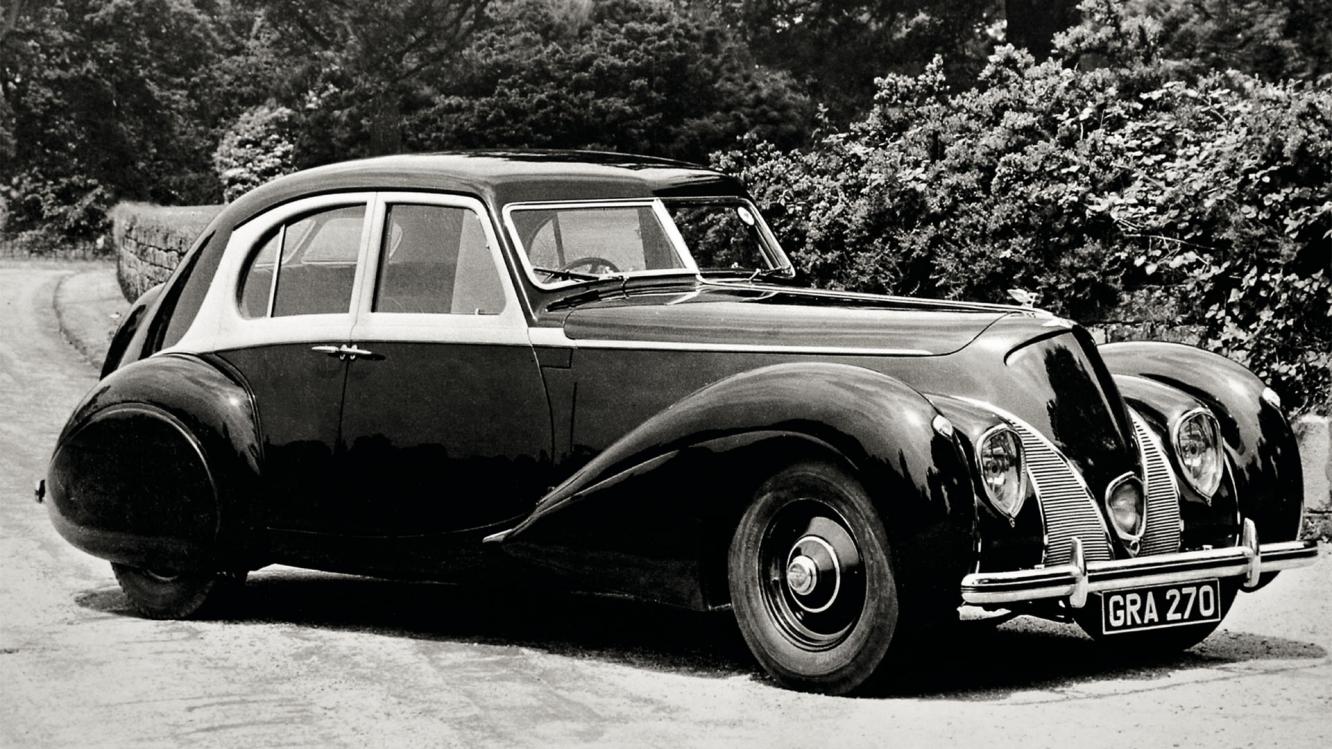
The Mulliner Corniche II. Image courtesy of Rolls-Royce.
Harris Lebus was a London dining room and bedroom furniture firm. In the war, the company made decoy Sherman tanks, Ammo boxes, Horsa gliders, and Mosquitos. Parker Knoll, another furniture maker, had made the Emperor of Ethiopia Haile Selassie’s throne, but now made wings for the Mosquito. Luxury Coachbuilder Mulliner, who built iconic Bentley and Rolls cars, also made parts for the Mosquito, while competitor Vanden Plas made frames for the Mosquito. The list of suppliers is really quite astounding. Decca Records made chrome parts for the plane. Many piano manufacturers were pressed into service because they had experience bending wood for pianos and composite-wood pianos. The largest supplier was a large furniture maker. Overall, no single company was a key supplier. Many people could do the work, and they could do it all over the place.
Mosquito manufacturing was therefore very distributed and resilient. If we need inspiration for a resilient manufacturing ecosystem, we can look no further than the Mosquito. Interestingly, we can stimulate forging, metal workshops, and the like. But we could also make craft, given the manufacturing capacity we do have, and design things to fit what we can do. The idea that manufacturing could be duplicated, outsourced, and then united would come back in aerospace.

The Airbus Beluga. Image courtesy of Airbus.
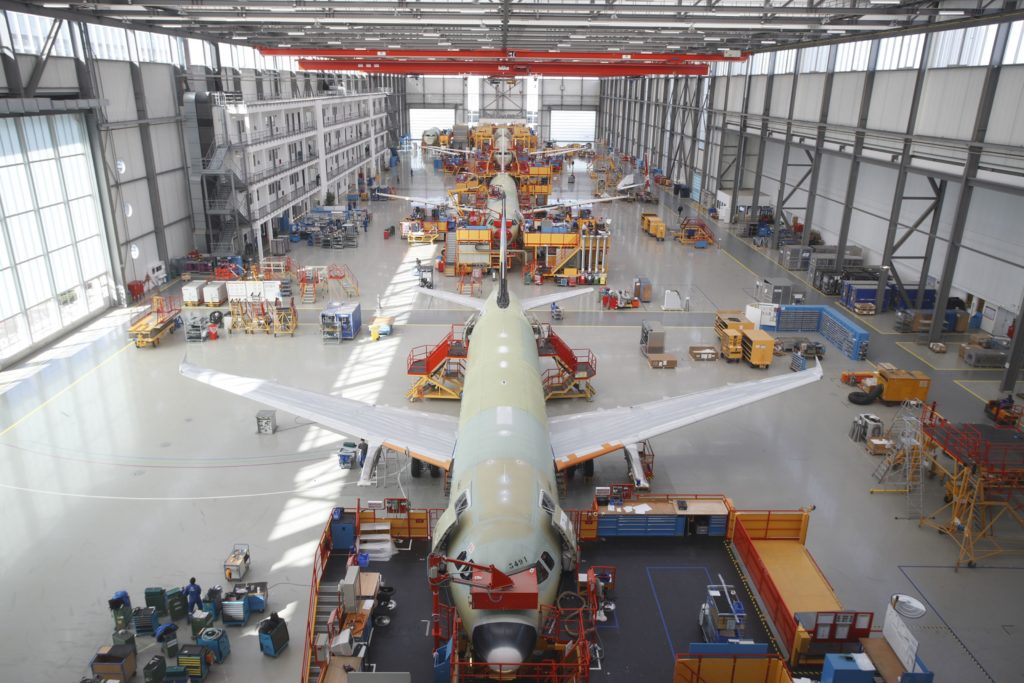
As aircraft grew more complex and many countries could no longer make planes, Airbus was born. To spread the work, keep employment, keep partners happy, and keep skills in the group, Airbus still flies components around for its Airliners. Airbus wings are made in Wales and flown to Toulouse or Hamburg. Bremen and Hamburg make tail sections and nose parts from Saint-Nazaire and Nantes, which also go to Toulouse and Hamburg, where they’re joined by stabilizers from Spain. This kind of distributed work is what made Airbus politically, technically, and financially possible. In wartime, it also had the added benefit of soaking up existing skills and workers while scaling them for aircraft production. By using distributed small factories all over the place, the risk of getting bombed is minimized, while production can continue at other sites if some are bombed. Today, many aircraft and engines are made worldwide to spread costs. Programs outsource local production when possible to kick back to local governments too. But in a battle-tested scenario, a resilient manufacturing approach for a plane of the future should be more mom-and-pop and less centrally manufactured. The production system behind the Mosquito therefore not only explains how many modern aircraft are made but also points to a distributed manufacturing future.