
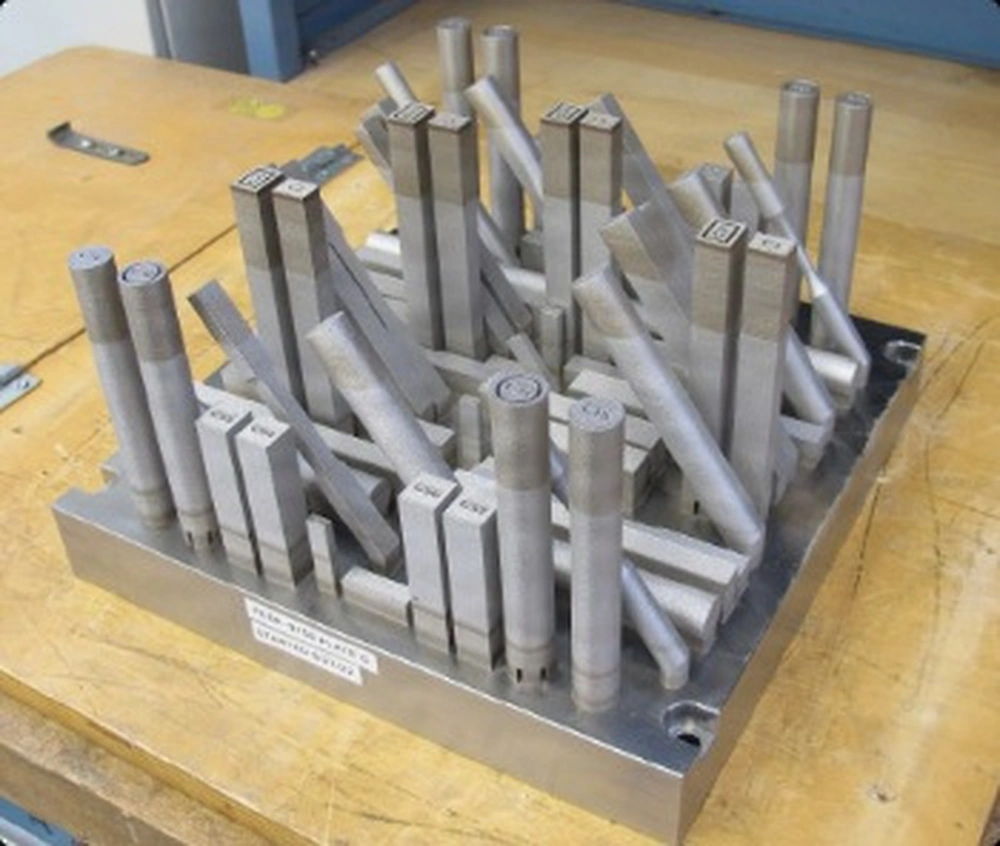
US Naval Sea Systems Command (NAVSEA) has approved the PBF process for 17-4PH stainless steel demonstrated by Naval Undersea Warfare Center (NUWC) Keyport, located in Washington state (one of ten Naval Warfare Centers located across the country). Keyport is the first Warfare Center to have received NAVSEA approval for a metal AM process, making this one of a handful of recent milestones embodying the Navy’s recent AM progress, and signaling imminent scale-up of the Navy’s demand for metal 3D printed parts.
Keyport validated its 17-4PH process on the EOS M290, one of the most widely used PBF systems in the world. The Navy has been working on this project for seven years, launching it as a Naval Innovative Science and Engineering (NISE) project and then transitioning it to a formal qualification project supported by the Submarine Industrial Base (SIB) program.
The Keyport Warfare Center went a step beyond validating the technique: it also tested what might happen to the print process during a power outage. The Navy researchers achieved that simply by stopping the build for 12 hours and then restarting it to gauge the results. According to the research team, who subjected the build to destructive testing following its completion, the stop-and-start nature of the print didn’t affect the final outcome.
The US Navy has effectively underwritten a significant chunk of American metal AM adoption growth thus far this decade. This step essentially represents a transition from “planting season” for the Navy’s AM buildup to the harvesting of experiential gains. Keyport notes that it’s already working towards qualification of 316L stainless. And, now that Keyport has qualified 17-4PH, the benefits won’t go to the Warfare Center alone, but are accessible to the broader Navy supply chain.
In a press release about NUWC Keyport’s receipt of approval for its 17-4PH process on the EOS M290, Bryce Weber, platform readiness and endurance technology lead in the command’s Undersea Systems and Sustainment Engineering Department, said, “This milestone is a key enabler for the NAVSEA organic industrial base [OIB] to begin upscaling metal AM technologies in a meaningful way. Keyport’s processes to achieve this qualification can be transferred to other commands and duplicated. This provides an easier “instruction set” for OIB sites, unlocking the number of qualified machines allowed to print critical shipboard parts during maintenance availabilities.
“These qualification credentials allow Keyport to develop and validate part-specific manufacturing processes that can be digitally shared, creating outsized impact. The Keyport team is known for its agile manufacturing engineering, prototyping and production readiness capabilities to solve parts availability issues.”
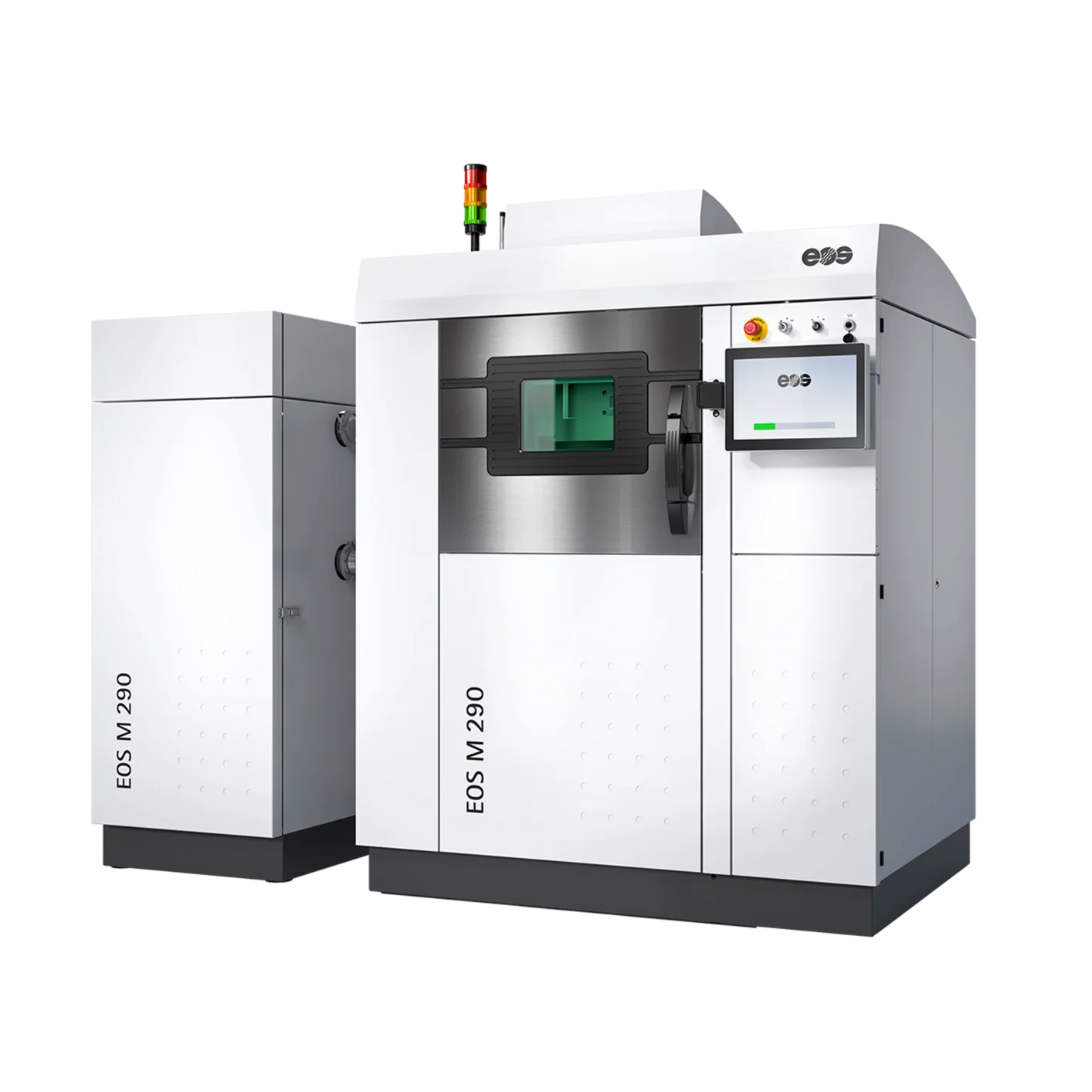
Image courtesy of EOS
Austal USA has already stood up the Digital SEA platform, which allows Navy suppliers to access the technical data necessary to provide the service with metal AM parts. The Barnes Global Advisors (TBGA), meanwhile, has just landed a BPMI contract for setting up a qualifications database for Inconel 625 and 316L stainless for US Navy suppliers, which I suggested will be incorporated into Digital SEA, since the latter is a centralized repository.
So the Navy will soon have qualifications data for at least three metals up-and-running on a digital platform. This should accelerate adoption, not only for these three metals, but, as soon as the operational capabilities of the centralized database model itself is validated, should also accelerate the qualification (and, thereby, adoption) of even more materials, likely at an even faster pace.
This is what progress looks like! Regardless of the actual goal that’s achieved, it’s perhaps more important at this stage in a tech buildup (the final steps from low-level production to full commercialization) to prove that an organization can set multiyear objectives for itself and accomplish them in relatively timely fashion. But the Navy has now done that and, the actual goal that it has achieved is arguably the most important one in terms of setting itself up for future success. You can’t produce parts at scale without qualifying the production process, and you can’t maximize the potential value unlocked by AM parts qualification without a robust digital ecosystem.
One other detail that the Navy mentioned in the Keyport press release is that it’s working on a project to develop in-situ monitoring (ISM) hardware. Phase3D already works with the US Navy and, in fact, has its Fringe Inspection installed at the US Navy AM CoE in Danville, VA — the physical home base for Digital SEA — where it is attached to an EOS M290. If this is what the Navy is referring to, that adds yet another catalyst which should speed up the momentum behind US metal AM adoption.
Featured image courtesy of Frank Kaminski, NUWC Keyport