
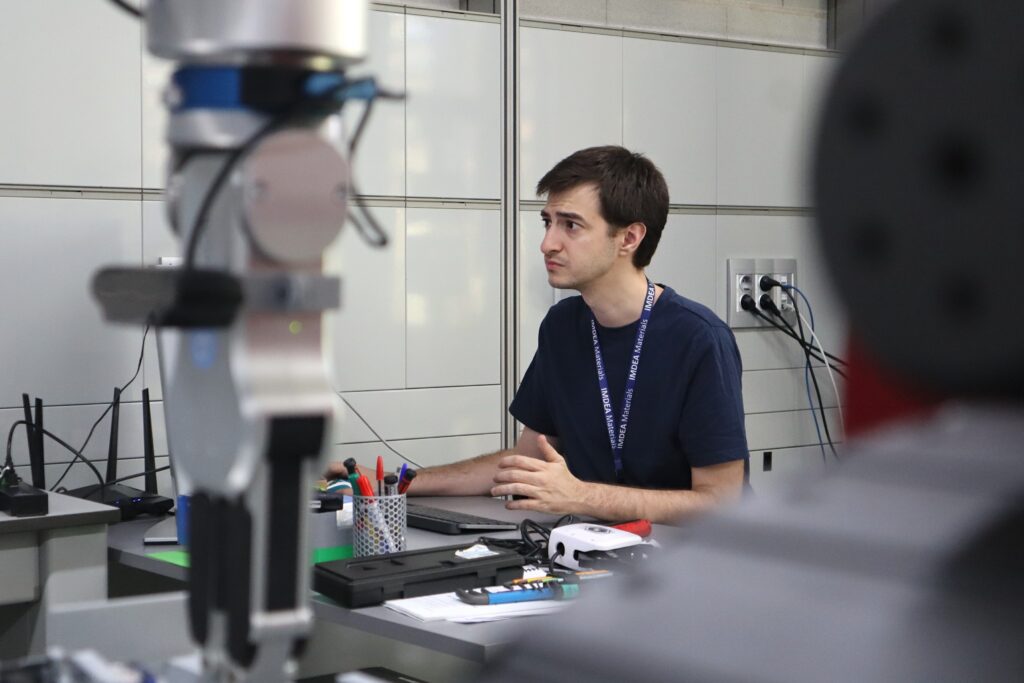
Spain’s IMDEA Materials Institute has worked with Lawrence Berkeley National Laboratory to detect and identify differences in different 3D printers. This could be important in eliminating run-to-run differences in prints and printers. It could make it easier to print the same part with the same performance in Wellington and Medellin.That could make 3D printing for MRO more successful. Also, serialized 3D printing production would be easier as well. And it may be possible to identify printers from prints or to uniquely identify parts.
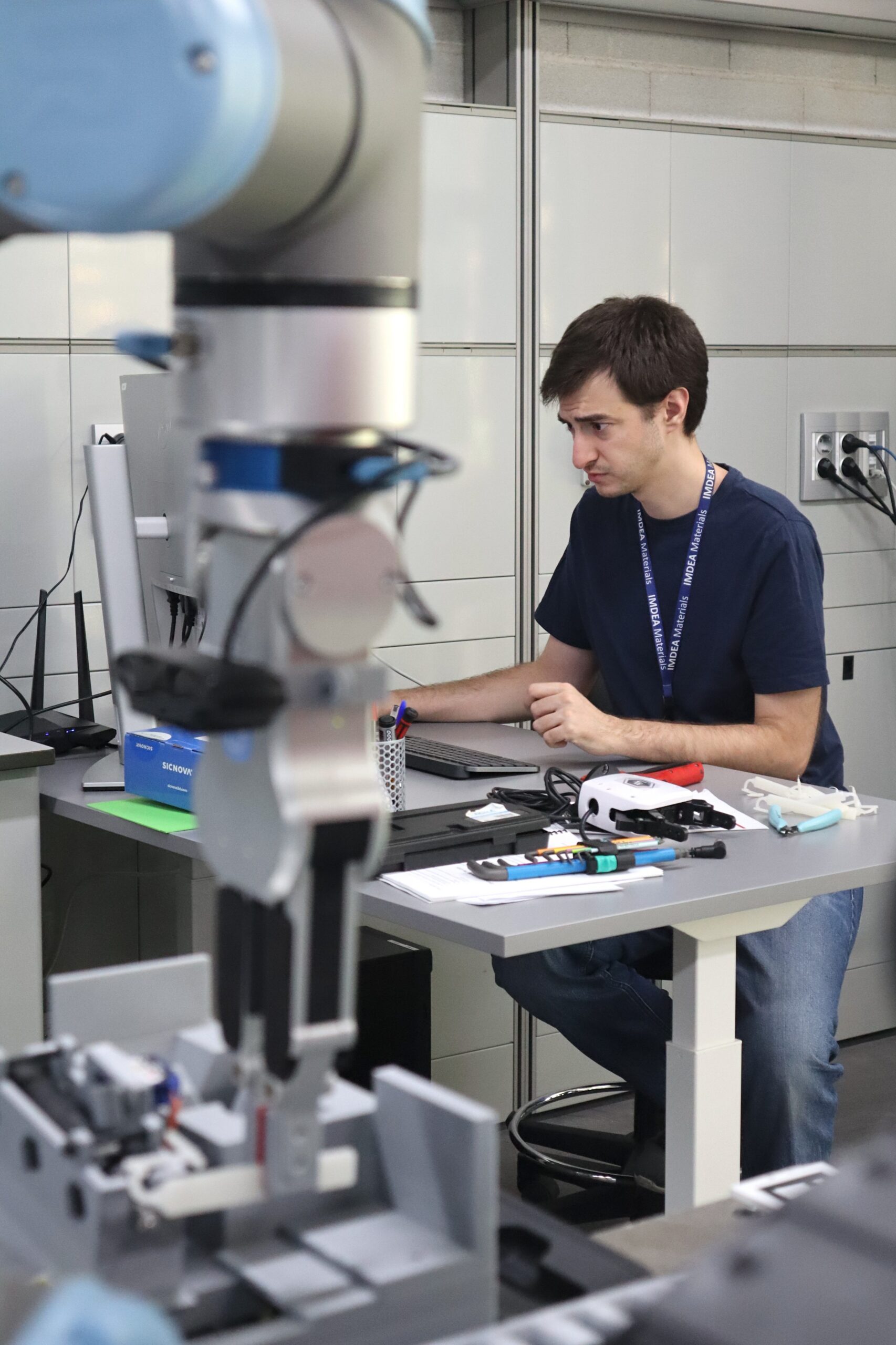
The resulting paper was published in Advanced Engineering Informatics, “Noise-aware optimization in nominally identical manufacturing and measuring systems for high-throughput parallel workflows.” Christina Schenk , Miguel Hernández-del-Valle, Luis Calero-Lumbreras, and Maciej Haranczyk of IMDEA collaborated with Marcus Noack of Lawrence Berkeley National Laboratory’s Applied Mathematics & Computational Research Division.
The algorithm they created categorizes machines and finds individual optimizations to improve results. Specifically well-suited for applications such as print farms, this reduces the differences between machines and makes results more uniform. Statistical differences between machines are determined, which either optimizes similar machines together or will choose to optimize an individual machine if it’s sufficiently different. The study then found that the single optimization path worked better.
“The results demonstrated significantly faster convergence and a substantial reduction in errors in the weight of printed parts compared with treating all machines equally and thus failing to correct appropriately for individual biases. Even mass-produced machines may have their own operational ‘personality.’ Our system learns these differences and uses them to our advantage, determining whether it is more efficient to treat them as a team or as individuals. This not only improves accuracy, but also saves resources by avoiding failed experiments, a key step towards the fully automated laboratories and factories of the future.”
The work was funded by the City of Madrid under the Two-Dimensional Disruptive Materials MAD2D-CM project, which is part of the European Union’s NextGenerationEU funding stream. Further funding was provided by the Spanish Ministry of Science and Innovation through a Ramón Cajal grant, the Center for Advanced Mathematics for Energy Research Applications (CAMERA), and the U.S. Department of Energy’s Office of Science through its Advanced Scientific Computing Research (ASCR) and Basic Energy Sciences (BES) programs.
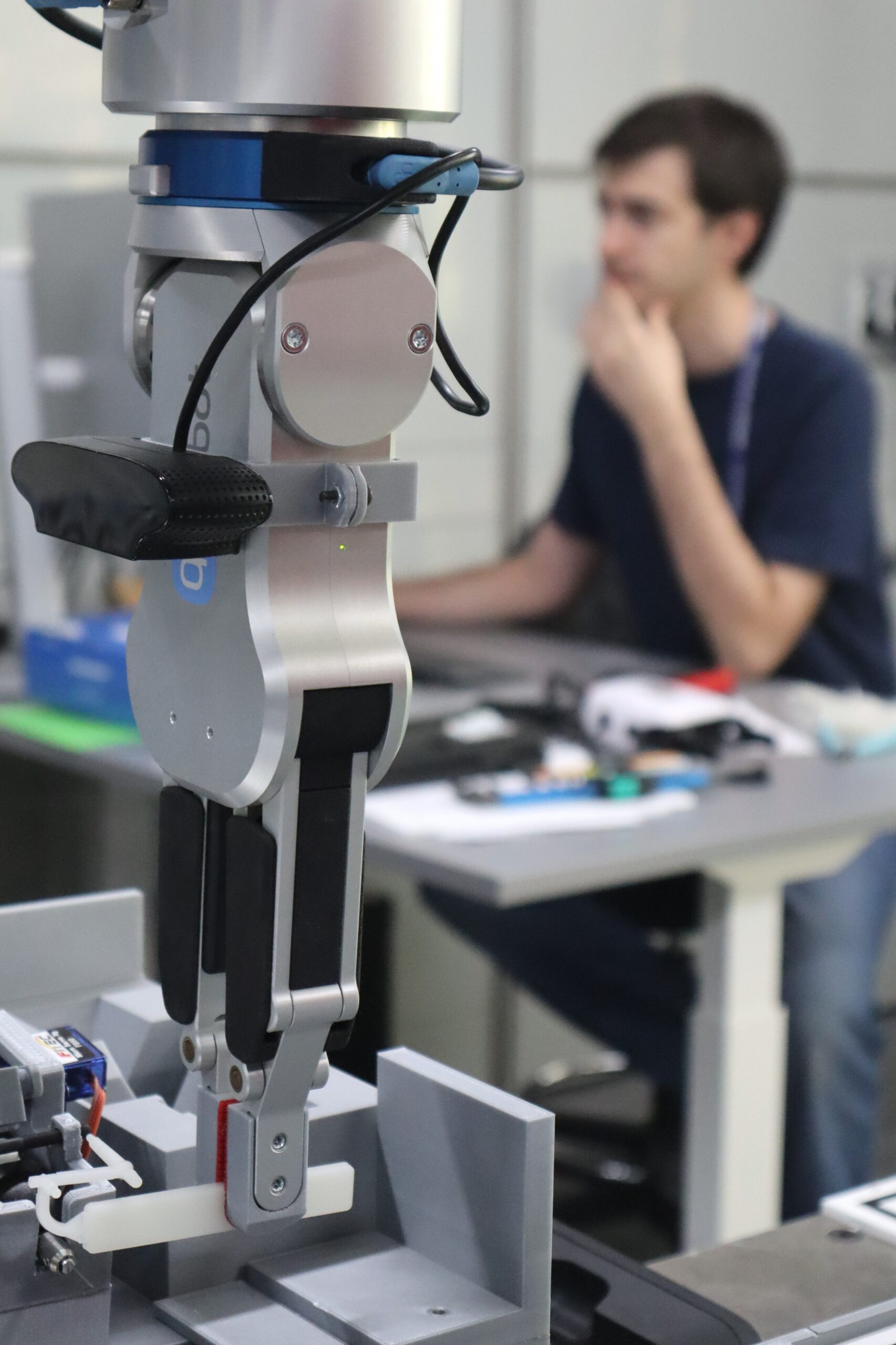
The work looked at machines with close serial numbers, of the same model, from the same brand. The result “demonstrates reduced redundancy, lower resource usage, and improved reliability, along with improved convergence stability and solution quality through the selection of the appropriate optimization strategy based on the degree of inter-device noise heterogeneity. Overall, this framework establishes a general approach for precision- and resource-aware optimization in scalable, automated experimental platforms, demonstrated here on a representative multi-device 3D printing case study.”
The team’s work in this “noise-aware decision-making algorithm” could prove very relevant for services, manufacturers, and print farms. One of the things holding back MRO with 3D printing is lack of faith in reproducibility and repeatability. One key element causing these issues is differences in machines. 3D printers are finnicky things to make, Assembly is manual and QA is more complex than many other devices. Slight differences in where certain sensors are placed, for example, can have big effects on readings. If a printer thinks that it is printing at 204, but in reality it’s doing this at 214, everything goes out the window. The user can adjust settings according to advice or skill, but in reality they’re flying blind. Actually, it’s worse: they think they know what is going on but are really changing other parameters to overcome a misunderstanding around key facts.
An automated approach could really give us much better performance in printers. In service bureaus, high-end industrial machines often have different output as well. These vendors and their clients will be greatly aided by this approach. In print farms, low-cost machines could also benefit from such an algorithm. This seems like interesting work, which could lead to software that could let us make more things using less money.