
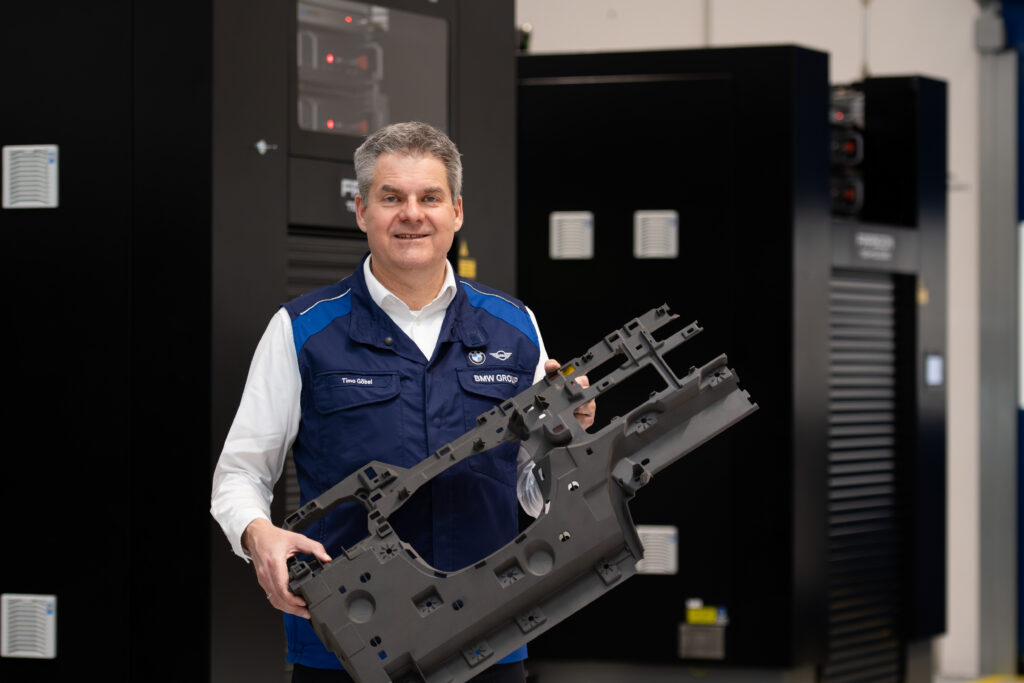
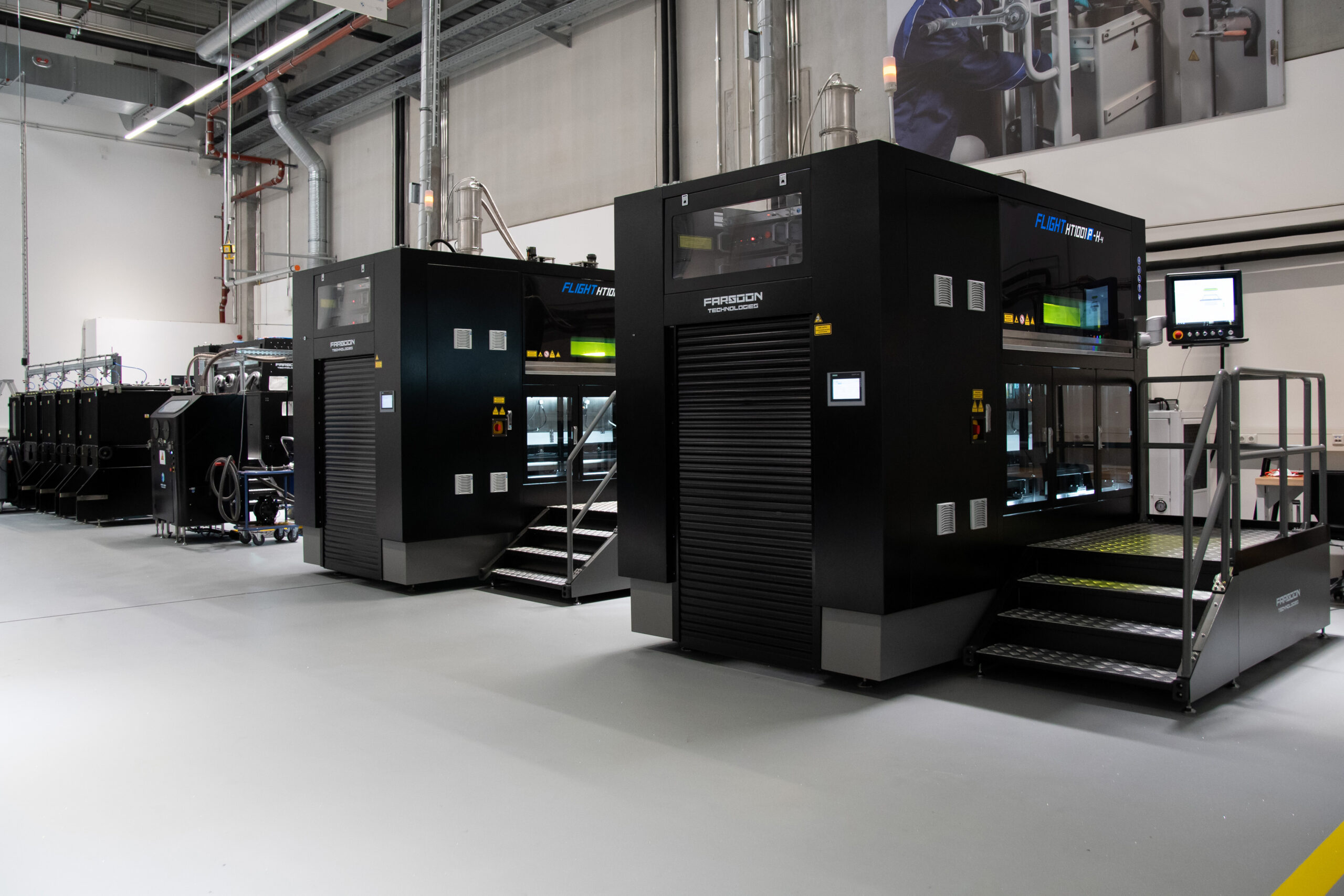
Timo Göbel, the Head of Additive Manufacturing at the BMW Group, spoke at the AM Forum in Berlin about industrializing additive. He had wise words to share, including that we shouldn’t do our own automation but rely instead on established automation providers. He also told us that they didn’t want any balkanized software tooling, so we should play nice with their existing tools. He also said we should be open to low-cost materials and, more broadly, reduce part costs. This is all very sensible, and I’m happy he said it. He also mentioned that a large order from BWM had gone to Farsoon and not Western suppliers because Farsoon was more flexible. Daimler Trucks also had a large spare parts project go to Farsoon because, reportedly, the company was more flexible on opening up data flows from its systems to the truck company.
Among BMW’s metal 3D printers is this TruPrint 5000 from Atlix. Image courtesy of BMW.
The European narrative goes something like this: Chinese companies are subsidized by the government, engage in IP theft, engage in unfair competition, make low-quality products, and European firms should not demean themselves by engaging in a race to the bottom. Let’s sidestep this discussion for now. Whether this is true or partially true is irrelevant. What is relevant to me is that, by believing this, many entrepreneurs and companies are limiting their strategic choices. I actually do think that you should see if you can race to the bottom, because it may just be that you can win. I also think that seeing yourself as a victim removes your agency. Somehow, your failure isn’t your fault, and somehow, you can now explore fewer options for countering the competition. I also think that bemoaning the other’s advantages is irrelevant. I see a lot of inaction and fatalism in the face of Chinese competition and think that this may be very damaging to Europe as a whole. Furthermore, in my experience, there are real advantages that Chinese entrepreneurs and businesses bring to the table. There are real advantages in zeal, flexibility, vision, and speed.
Zeal
I’ve seen a lot of deals won by Chinese firms because they’re just hungrier for success. Chinese firms will try harder and put in more effort for the deal. In terms of application development and customer service, we’ve seen success because these departments do more for customers at no extra cost. We see a real “conquer the world” attitude by firms. Staff often see themselves at the foot of a mountain of opportunity for them and their employers. It’s not just a job but a change for immense growth. A lot of times, individual Chinese teams just seem to work harder to get the opportunity.
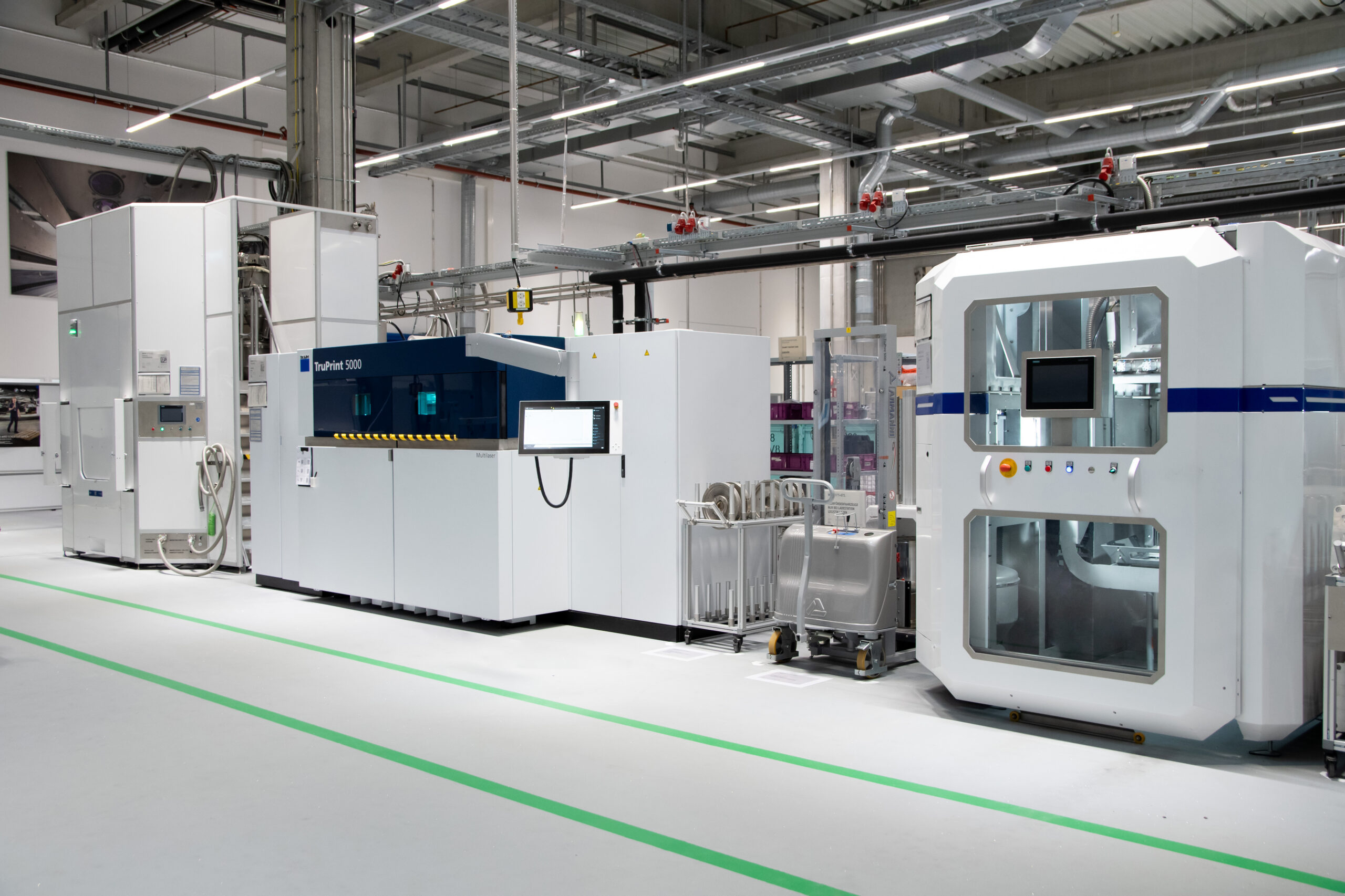
BMW’s metal 3D printer lineup includes this TruPrint 5000 from Atlix. Image courtesy of BMW.
Flexibility
Chinese firms have also shown a lot of flexibility to secure a deal. In customizing the product, introducing new materials, making changes to roadmaps, and adapting to their customers’ circumstances, they seem to do more than that. Western firms will say, “No, we can’t do that,” a lot. That’s not our market, that’s not how we do things, that’s not our style, we’ve never done this before, etc. This then results in hesitation. Sticking to your guns and principles is good. But often companies just say no reflexively and dig in their heels. Sometimes nonsensical policies or entrenched behaviors wreck deals. I’m not saying that you always have to say yes to the customer, but that there needs to be a reason for your no. And you know what? Often, there isn’t a reason, and people say no when they mean “we haven’t done that before.”
Vision
A number of large Western 3D printing incumbents do not have a strategy. Many incumbent firms have no particular plan to win or plan to improve themselves. Visionary thinking by CEOs often rings hollow or is not meaningful for the firm’s performance. Western firms tend to be highly amorphous, with many different power structures in place. Often, there is no real goal for the company aside from continuing to exist. There are a lot of companies being run on autopilot. Chinese firms often do not have a strategy beyond a general idea that “there must be growth.” But, without that mindset, Western firms just sleepwalk and amble, not going in any particular direction.
Speed
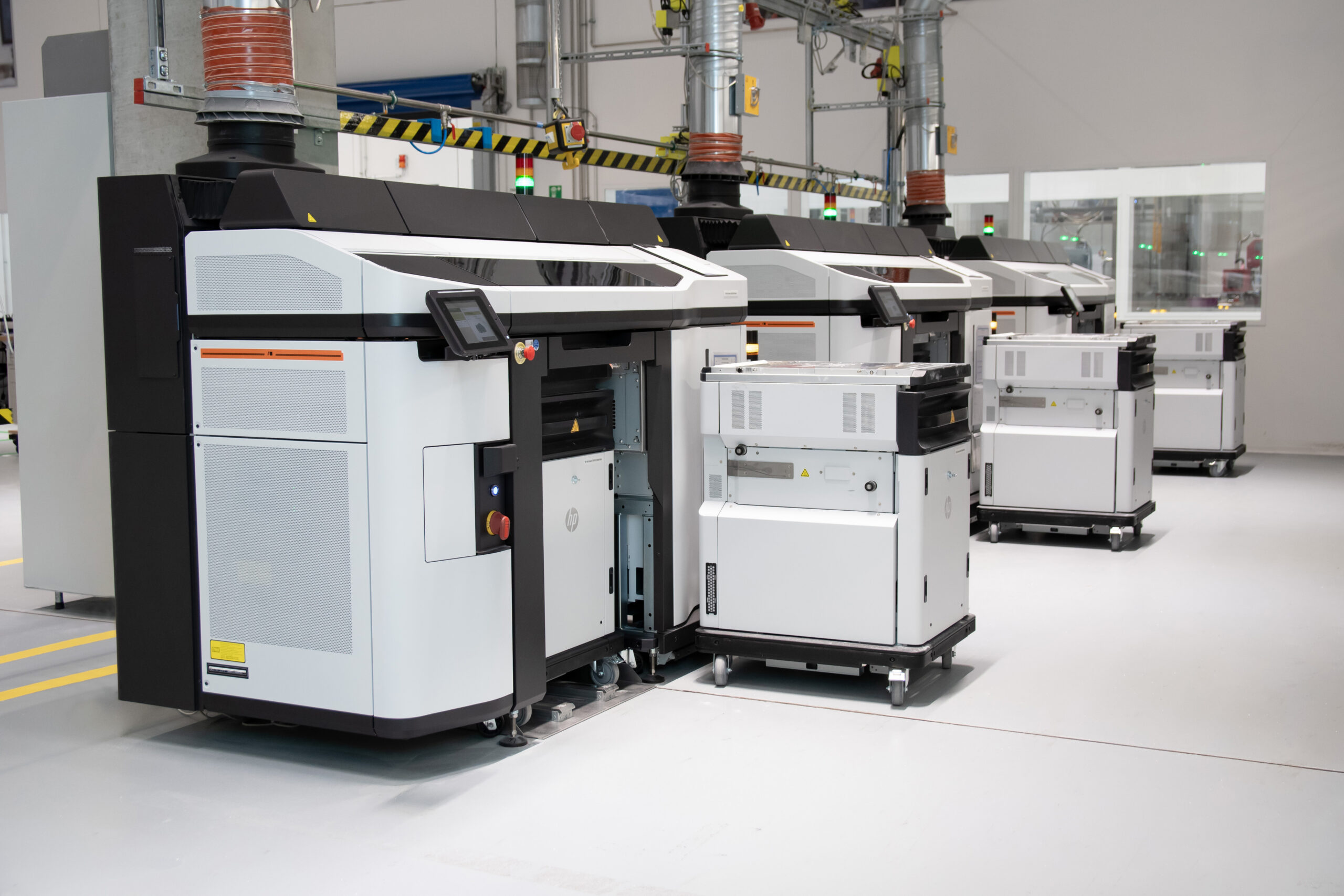
Additive manufacturing systems from Farsoon, HP, and TRUMPF (now ATLIX) inside BMW Group’s AMC. Image courtesy of BMW.
The biggest difference, however, is in the speed of execution. Chinese firms are often just much faster at changes and responses in general. There is a lot of hesitation and structural slowness in many Western firms. Especially in decisions affecting multiple departments, we can see a marked slowness.
Negatives
Now, all of this is necessarily a generalization. And Chinese firms are not better in all respects. The language barrier is difficult, which inhibits effective customer service and application development. Chinese firms are often hampered by not having enough people overseas and by disconnects between home and away teams. Chinese firms can be fickle. Sometimes run by the whims of founders, companies can turn on a dime, but this can also be chaotic. Scrambling for growth, a long-term focus, and increased capability is sometimes not enough of a concern. Sudden firings, changes of direction, and new policies can often confuse customers. Speed often causes quality to suffer, and there is a real problem with long-term performance and part quality in devices.
But my point is that there seem to be real advantages, especially in securing new business, in the Chinese way of doing things. Rather than complain and feel like helpless victims, Western firms should strive to become more flexible, faster, and better aligned.