

Authored by Seurat’s CEO, Co-Founder & Co-Inventor, James DeMuth
As 2026 begins, one truth is impossible to dismiss: manufacturing is not an industrial legacy. It’s national infrastructure, and the United States continues to woefully neglect it.
2025 was plagued by familiar problems. Strained supply chains, long lead times, and intensified global competition. Even in the face of tariffs, critical production capacity remained concentrated offshore.
Yes, there were some positive signals:
- Policymakers are talking more seriously about reshoring and capability.
- Advanced production tools, especially additive manufacturing, are increasingly recognized as strategic.
- Public and private supply chain leaders are realizing they can’t make decisions purely based on short-term profit. They need to find a balance between resilience and cost.
But earnest conversation does not rebuild factories or shorten lead times. 2026 must be the year the United States moves from recognizing the problem to building the solution.
Public + Private Partnerships Have Always Fueled Critical Advancements
America’s greatest industrial advances were never purely private sector achievements. From the interstate highway system and aerospace to semiconductors, GPS, and nuclear energy, the nation built its most transformative industries through deliberate public–private partnerships.

US 101/I-405 interchange is one of the nation’s busiest.
Rebuilding U.S. manufacturing is no different. It needs to be a public mission with additive manufacturing at its epicenter. The Department of War’s 2025 Acquisition Transformation Strategy already pointed the way: expand domestic production, stabilize demand, accelerate private capital, and reduce supply-chain dependency.
The question is no longer direction – it’s urgency.
Even Low-Cost Components Can Break Fragile Supply Chains

Vcg/Visual China Group/Getty Images
2025 delivered another warning shot.
The Nexperia semiconductor disruption, triggered by export pauses on ultra-low-cost automotive chips, forced production cuts across major automakers. These were not advanced components. They were basic inputs.
That is the point.
Supply-chain risk is not hiding in exotic materials or advanced components. It is embedded in ordinary parts when production is distant, brittle, and concentrated.
When Production Is The Bottleneck, Speed And Resilience Are Advantages

Legacy supply chains were never designed for geopolitical volatility, rapid iteration, or the increasing complexity of modern products. Future supply chains must be built differently:
- Digital manufacturing instead of manual backlogs.
- Automated, resilient production instead of brittle, distant suppliers.
- Domestic throughput instead of foreign choke points.
What The United States Must Have in 2026: A Manufacturing Acceleration Strategy
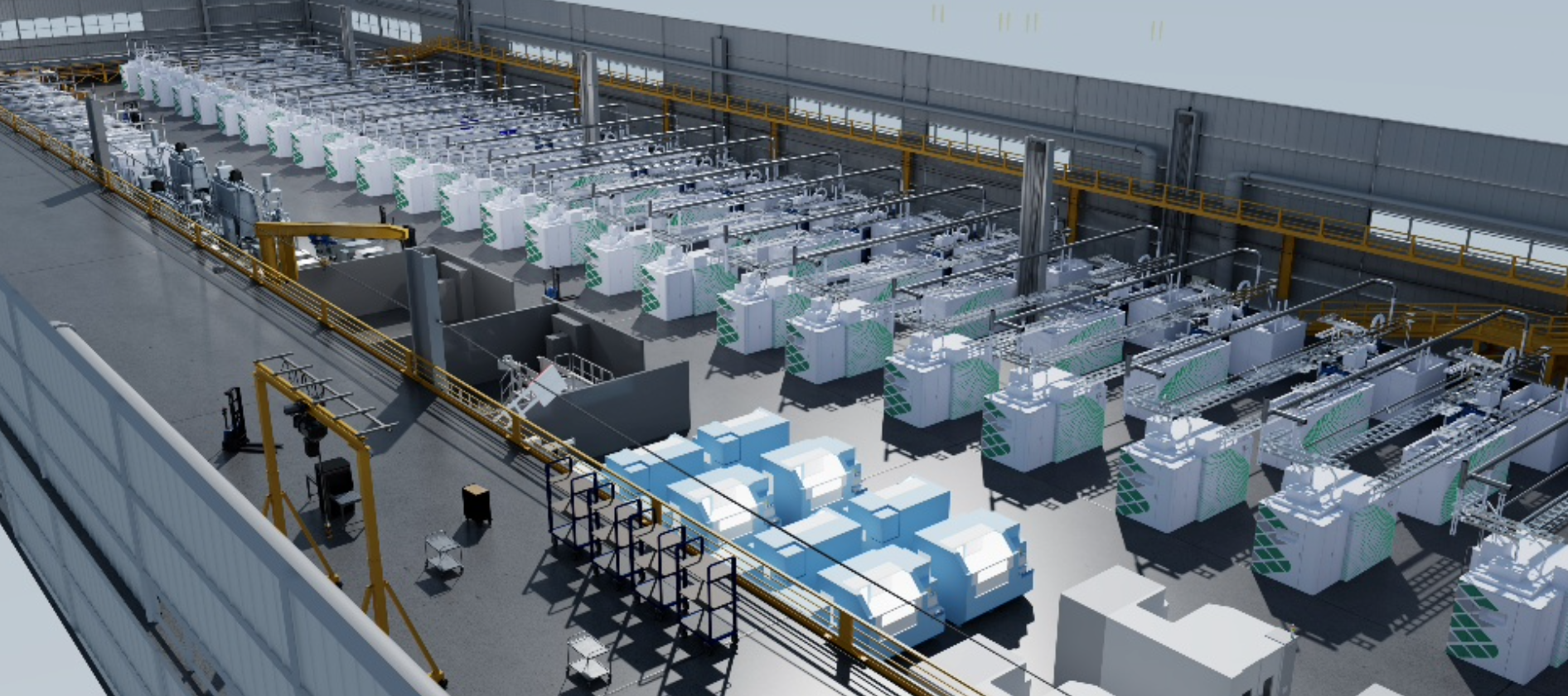
Rendering of Seurat’s Commercial Parts Production Factory
If U.S. leadership in defense, aerospace, energy, transportation, electronics, and medical technology truly matters, domestic production capacity cannot remain optional. 2026 needs to be the year we wake up and treat manufacturing as strategic national infrastructure. Our efforts must be intentional, coordinated, and scaled:
- Not scattered pilot projects.
- Not one-off innovation grants.
- Not complex tax credits.
What’s required
- Factory-scale Additive Manufacturing deployments: Built through public–private partnerships and anchored by federal procurement. Not just prototypes, but large-scale production capacity across all critical industries.
- Strengthen domestic supply of critical inputs: The Nexperia episode showed how even low-tech components can create risk when supply is concentrated. Diversifying and reshoring critical manufacturing inputs is both economically and strategically urgent.
- A 21st-century manufacturing workforce: The next-generation industrial workforce will blend innovation and operational skills. We need automation, engineering, materials science, and system operators. We must enable pathways that support all of them.
- Regional manufacturing clusters: Industrial strength grows when OEMs, suppliers, technology providers, and universities co-locate and collaborate to shorten supply chains and accelerate adoption.
- Metrics that reflect real industrial strength: Success should be measured by throughput, uptime, lead-time compression, resilience, and cost competitiveness.
Manufacturing Is More Than Economics
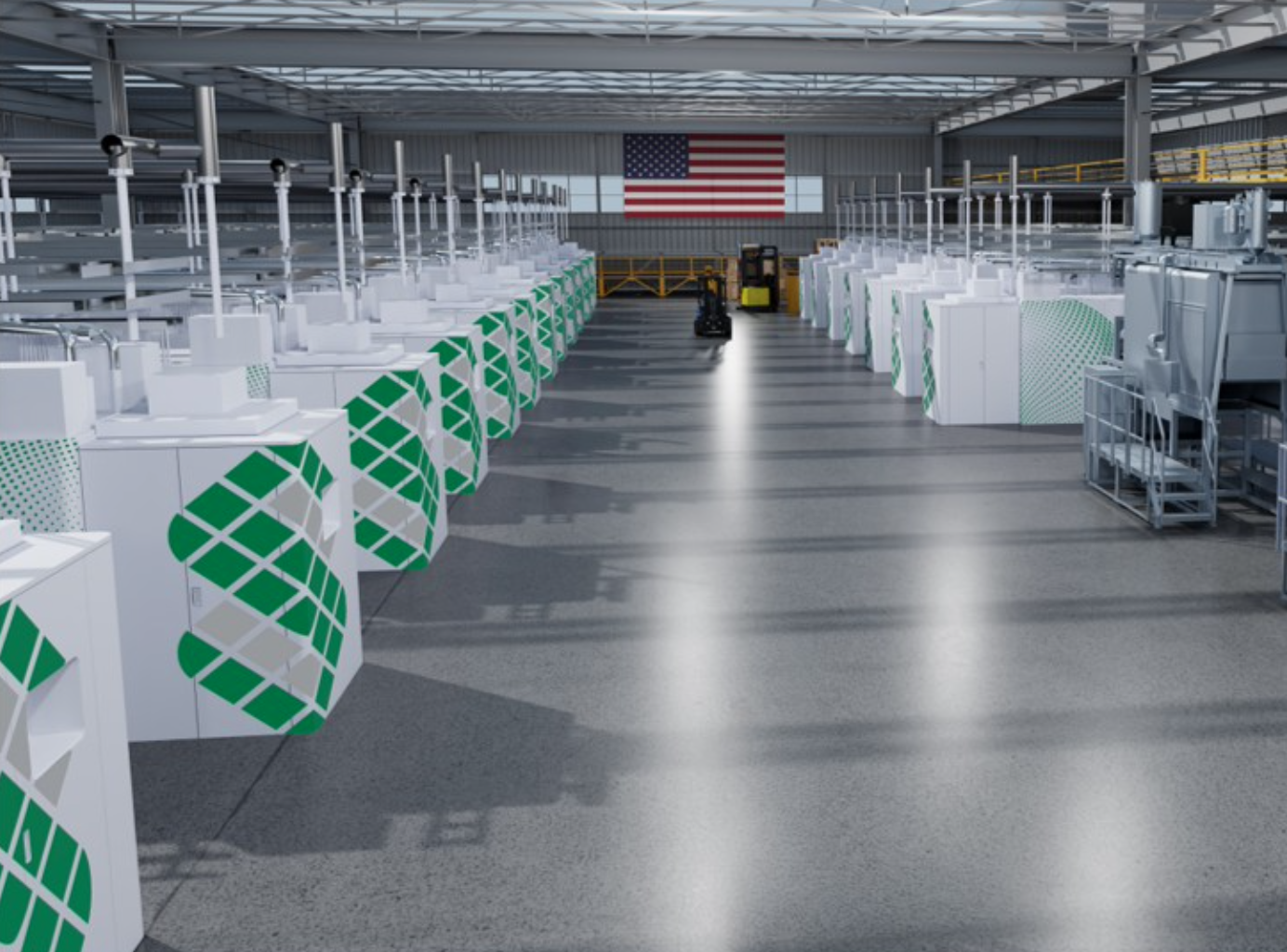
Rendering of Seurat’s Commercial Parts Production Factory
A robust domestic manufacturing base is more than an economic engine; it is the mechanism by which a nation maintains:
- Sovereignty: Owning our critical industrial processes and industries.
- Resilience: Reduced dependency on concentrated foreign supply chains.
- Innovation: Faster development of next-generation technologies and products.
- Security: Readiness and responsiveness in uncertain environments.
- Leadership: The capacity to set global industrial standards and sustain our role as the global engine of invention.
A Resolution For The Year Ahead
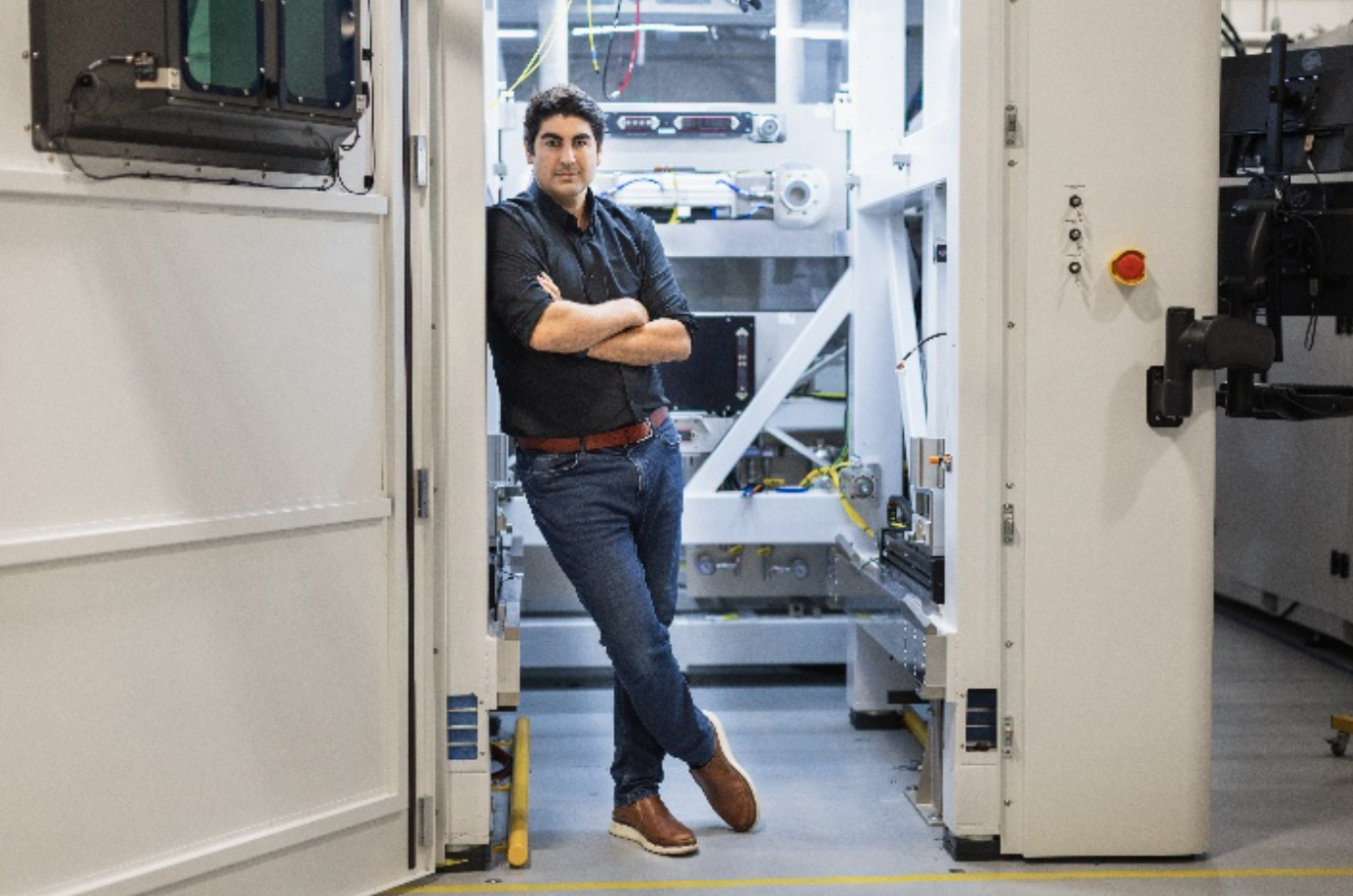
James DeMuth at Seurat’s Pilot Parts Production Factory
In 2026, my hope is that leaders — public, private, and institutional — take concrete actions to treat manufacturing not as a relic of the past, but as the foundation of tomorrow.
The United States has everything required to lead the next industrial era:
- World-class research institutions
- Entrepreneurial energy
- Deep heritage
- Emerging technologies that finally allow us to compete on speed, cost, and scale
If we treat advanced manufacturing as the strategic infrastructure it truly is, then 2026 can be the year the United States moves from discussing industrial renewal to actually delivering it.
To engage with us on this mission, please reach out at info@Seurat.com.
James DeMuth, Co-Founder and CEO of Seurat, holds an MS in Mechanical Engineering from Stanford University with a focus on energy systems and high-temperature gas dynamics, and a BS degree in Mechanical Engineering from Santa Clara University. He has co-authored 83 patents and 13 academic publications in the fields of additive manufacturing and power generation.
Prior to founding Seurat, James was at Lawrence Livermore National Laboratory where he worked on the Laser Inertial Fusion Energy project, and co-invented and developed the core of Seurat’s breakthrough technology in Additive Manufacturing.
James will be speaking at Additive Manufacturing Strategies (AMS), a three-day industry event taking place February 24–26 in New York City. He will participate in the panel “Best Practices for an Aligned Investor-Founder Relationship” on February 25. Seurat is also a Lanyard Sponsor for the event. Registration is open via the AMS website.