Bike saddles are one of the three parts of the bike that meets your body, and these are often blamed for being uncomfortable when riding. Yet, bike saddles are very important since they take most of your weight as well as determine your comfort. Bike saddles also position you over the pedals, which helps you control the bike.
Adaptive Image via Cycling Tips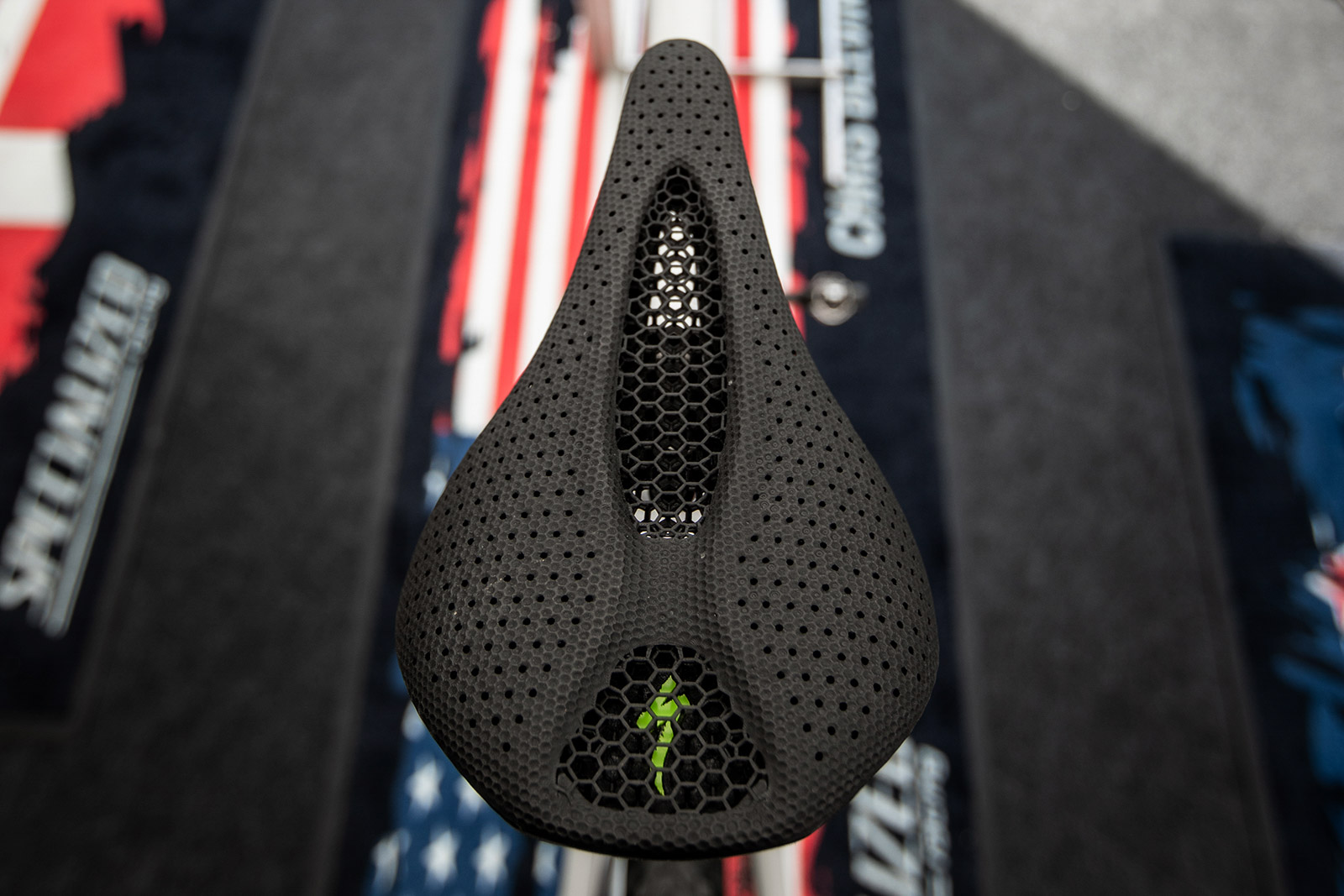
Bike saddles are responsible for a sensitive and intimate part of the body, this is what riders often complain about. But these saddles are not to blame. Riders are responsible for choosing an adjustable saddle to suit their anatomy. To get the right saddle for your bike, there are many factors and preferences to consider, such as gender, body structure, riding style, and weight.
In August, Specialized announced the S-Works Mirror saddle after experimenting with a new way to produce bike saddles. Expected to launch in 2020, these saddles abandon conventional foam padding and are 3D printed with a polymer lattice structure that is attached to a conventional carbon composite base. Specialized explains that “the printed structure incorporat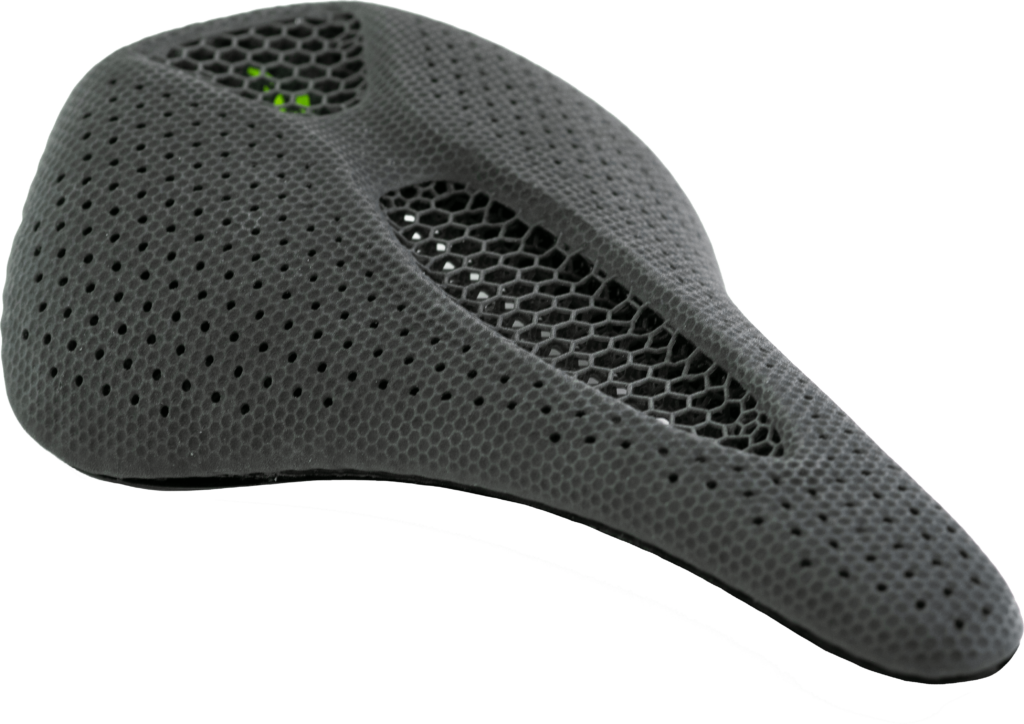

Specialized has partnered up with Carbon, using its Digital Light Synthesis (DLS), to make this saddle happen. Carbon uses a UV light to project a series of cross-section images of the product into a bath of their own resin. The UV light partially cures the resin into the desired shape that later slowly emerges. With the help of oxygen pumped into the bath of resin, a small barrier is formed between the liquid and the part that is being printed. The oxygen allows the part to be completed precisely, and the saddle is then thermally cured.

Carbon didn’t only partner with Specialized, but also with Fizik on creating the Adaptive, a new saddle technology that was announced at Eurobike 2019, in September. Fizik was founded in 1996, and since then it has been creating saddles, shoes, bar tapes, and component designs for cycling. Now, with Adaptive, Fizik can add their very first 3D printed equipment to their cycling products portfolio.
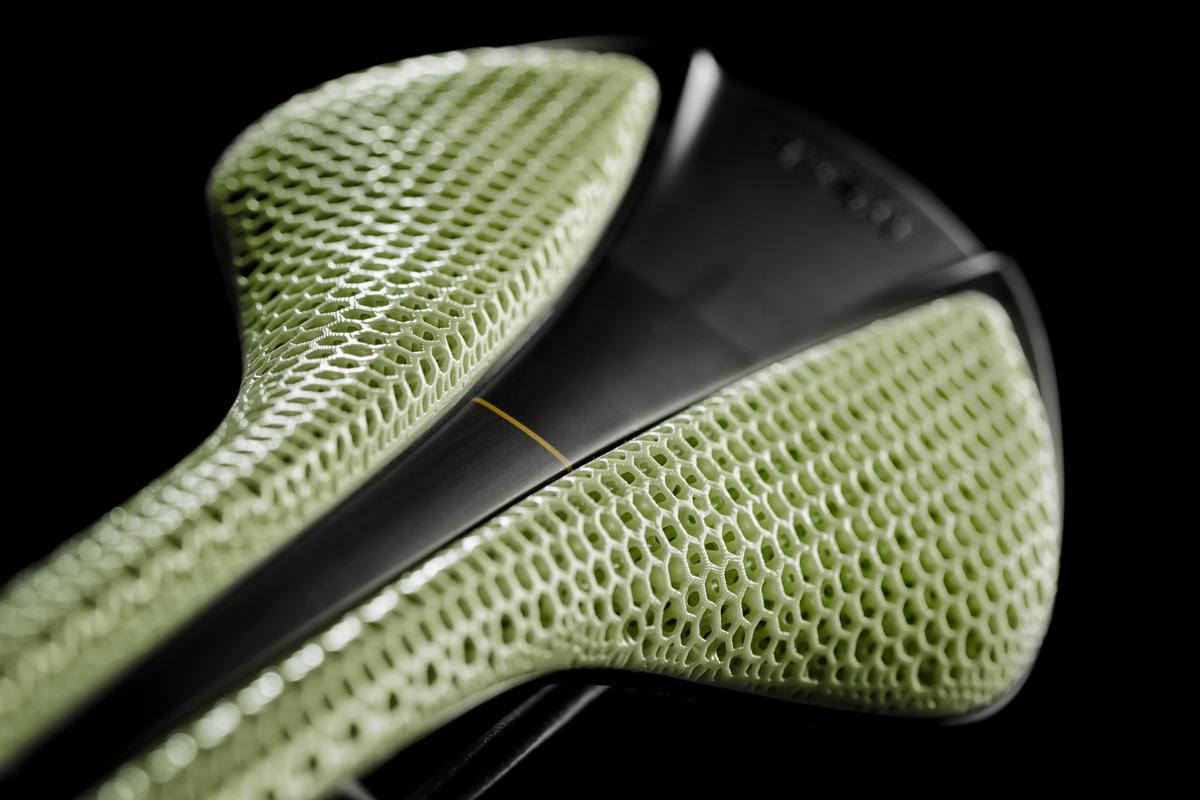
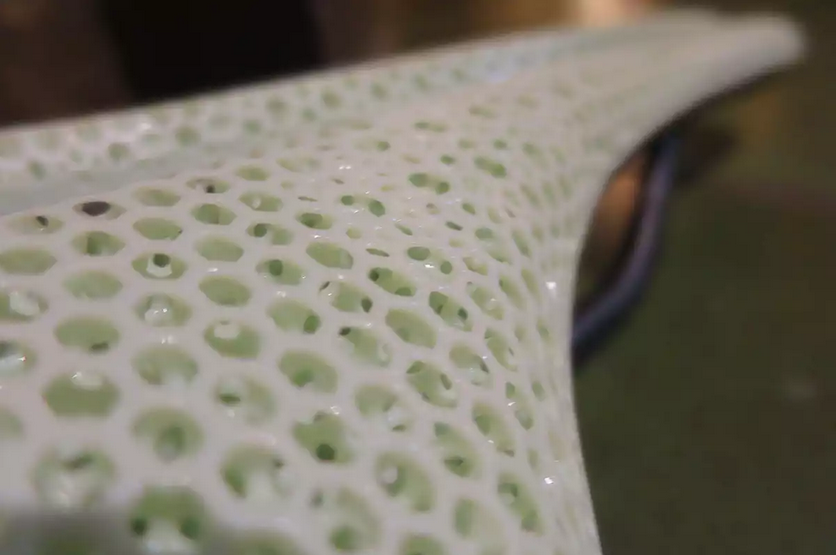
Fizik’s team of sports engineers, scientist, and designers tweaked the properties of the saddle using Carbon’s technology to address the most important factors: stability, comfort, shock absorption, and power transfer. These factors are usually limitations that arise from manufacturing methods.
Bike saddles aren’t the only ones being 3D printed. Take, for example, pulley wheels: German company SLM Solutions 3D printed this specific bicycle part, designed by CeramicSpeed, to improve performance in cycling. Or take Prova Cycles, a company that builds and welds custom frames by hand to perfectly fit the rider. And let’s not forget about Urwahn, which in July announced the release of the Stadtfuchs Bicycle with a 3D printed stainless steel frame.
Join the discussion of this and other 3D printing topics at 3DPrintBoard.com.
[Sources: Cycling Tips, BikeRadar]