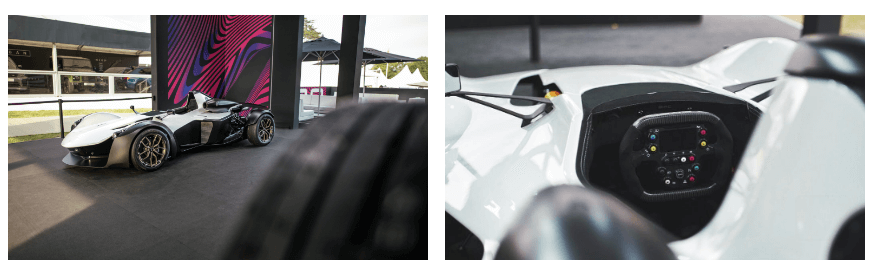
A recent announcement between Royal DSM and Briggs Automotive Company (BAC) should garner interest from the realms of both automotive and technology as they move forward to showcase the benefits of 3D printing and additive manufacturing for cars with development that has the potential to be extremely exciting—all to be found soon in the Mono R, a super car created initially by BAC.


“The BAC Mono is the perfect showcase for the potential of 3D printing to reshape the automotive industry. Additive manufacturing offers unparalleled options for small-series production and customization of cars, and we are excited to work together with BAC to optimize our materials for car manufacturers,” said Patrick Duis, segment leader Automotive at DSM Additive Manufacturing. ”This brings us another step closer to Manufacture Tomorrow.”
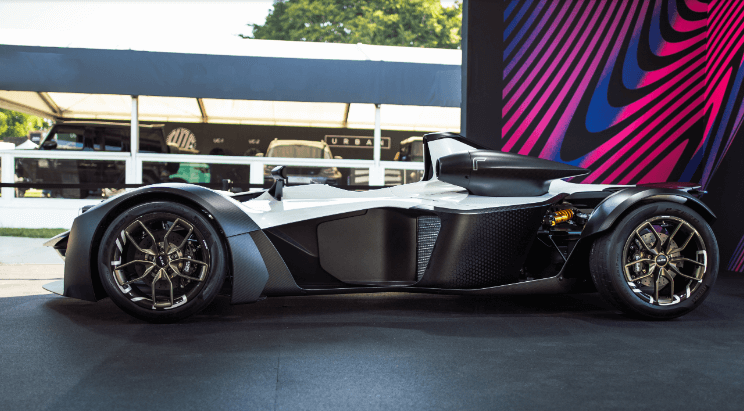
The series of new 3D printed parts to be contained in the Mono R includes 3D printed grips for the steering wheel, which are completely driver-specific—along with 3D printed air inlets that are lighter and stronger. Lightweight is the theme for this project too, with the Mono R weighing in at a record low of 560kg. The two companies also plan to continue developing new parts and are exploring organic shapes and hollow internal structures that again are light but strong.
DSM is currently acting as support in the design of parts that can be 3D printed, also providing polymers suitable for automotive use.
“We pride ourselves on being the ultimate pioneers at BAC and joining forces with DSM means we can once again lead the way – this time in terms of additive manufacturing,” said Ian Briggs, Design Director of BAC. “Keeping the car as light as possible is of paramount importance, and by using 3D printing we not only keep the kilograms down, but also keep sustainability and safety on the up. We’re excited to see how our work on Mono R can translate to the automotive industry.”
Along with developing parts that are high-performance and recyclable, BAC also looks forward to helping the environment further as they can reduce emissions and their footprint overall as parts are created on-site, on-demand—without complex shipping requirements.
The automotive industry has been engaged in 3D printing and additive manufacturing for decades, but that doesn’t make their continued announcements regarding innovation any less exciting—from the restoration of a long-lost BMW to the fabrication of parts for F1 racecars—and even 3D printed RC cars. What do you think of this news? Let us know your thoughts! Join the discussion of this and other 3D printing topics at 3DPrintBoard.com.