“People often think of bioplastics as single-use with low-value functionality, but our products are incredibly high-functioning with exceptionally high heat resistance while being lightweight,” said ABC3D CEO Darrel Fry. “As an example, our goal is to be able to 3D print something like a piston for your car from this material – there’s such high heat resistance, and it’s also very strong.”
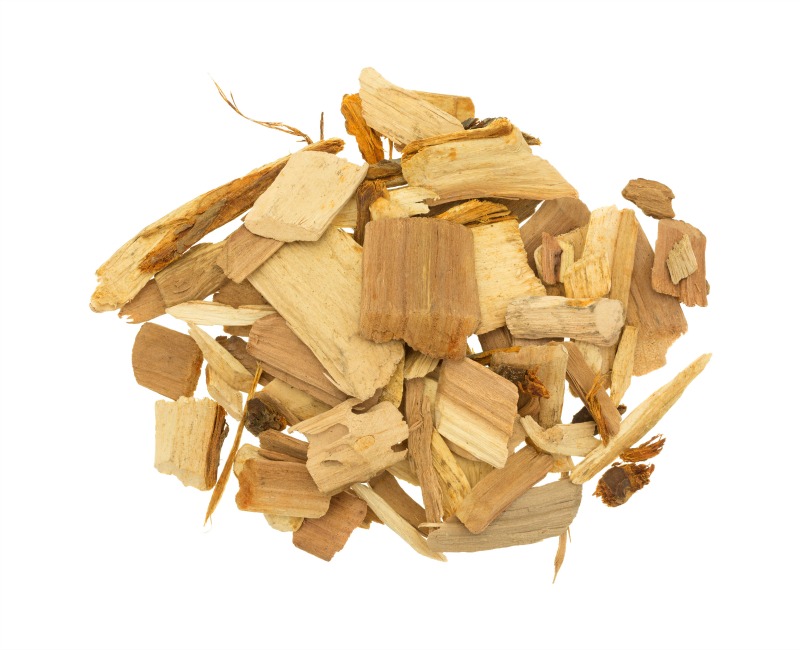
According to environmental scientists Kim Klassen, ABC3D creates its plastics by extracting the resins from wood chips.
“Using a closed-loop manufacturing system, we are able to produce a sustainable product that is non-toxic and renewable,” Klassen said. “The process uses green chemistry and starts with wood chips from the forest industry that are mixed with a solvent and put through a series of pressurized heating and cooling phases to extract the resin from the wood chips. All solvent from the manufacturing process is put back into the system to be reused again.”
ABC3D was founded by Hélène Bélanger and Ross Prestidge, who spend more than a decade researching the process of extracting the resin from wood chips to make bioplastic. The company is now operating a pilot plant and is currently scaling production, intending to have 3D printer filaments available for retail sale in the first quarter of 2019. ABC3D has demonstrated its process to a 10 tonne scale per day of wood chips, with the goal of reaching a commercial scale of 60-250 tonnes of wood chips a day in the next two years.
“We are targeting to have our sales in 3D filaments start in the first quarter of 2019 and then roll out a number of different filaments with additional characteristics such as carbon fibre reinforced filament, conductive filament and filaments that are reinforced with other wood fibres, beyond our first products, which are a blended traditional printing filament,” Fry said. “Our company is proving that from wood we can make sustainable, economical, high performance plastics.”
ABC3D is using hardwood trees to make its products, so it’s not competing with the forestry industry, according to Fry.
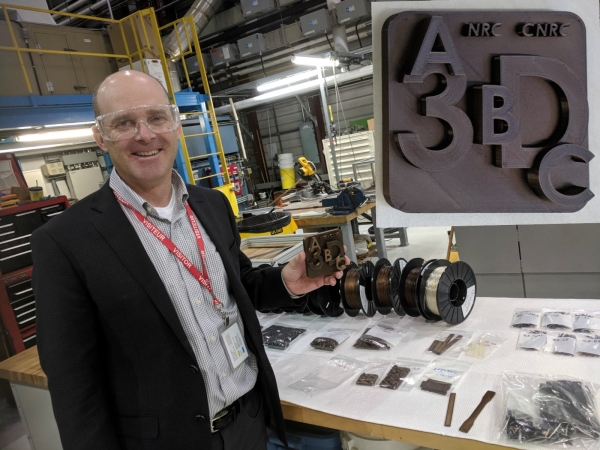
Darrel Fry
“There currently is no viable market for those hardwood trees,” he said. “We’re actually helping to create a new market for fiber. The cost to the forestry companies is already there to cut down and process unwanted species, so what we’re saying is, they’ll still have those costs, but now they’ll have an opportunity where they can continue to harvest that tree, take it out of the forest, and bring it to market.”

ABC3D’s eco-friendly interests go beyond just reducing the reliance on single-use, carbon-based plastics.
“If we have extreme weather events happening all the time, it’s going to interrupt every part of society,” said Klassen. “So, climate change, above all other environmental concerns, is important and that is what this company addresses through product development, through sustainable bioplastics made from renewable resources. Our products are carbon negative, so that’s not just reducing the impact on climate change, we’re actually helping to remove greenhouse gases from the atmosphere.”
Discuss this and other 3D printing topics at 3DPrintBoard.com or share your thoughts below.
[Source: Canadian Biomass]