“Whilst some design tools do offer support for the user, none are able to select appropriate manufacturing parameters to ensure mechanical properties of the finished part,” the researchers state. “This is due to the lack of a robust method that is able to predict how a 3D printed part will behave.”
Previous work has been undertaken to achieve this through complex computational models that try to simulate the interactions between individual rasters and print layers.
“However, as previous work has found that mechanical properties can vary greatly in identical prints, and also that variation between printers and materials is significant, this paper presents an alternative approach that generates a best approximation of a part’s behavior through classical stress analysis based upon a knowledge base of empirically deduced part behaviors,” the researchers continue. “These can then be validated through physical testing of the manufactured part. In doing this, it can be considered to be a virtual-physical design method that exploits the affordances of each domain.”
“Behavioural models allow a simulation of a part’s behaviour,” the researchers explain. “The simulation is carried out with classical analysis and a knowledge base of manufacturing parameters and how these affect the properties of printed parts. These define, for example, the expected geometric accuracy for a given printer, material and set of manufacturing parameters.”
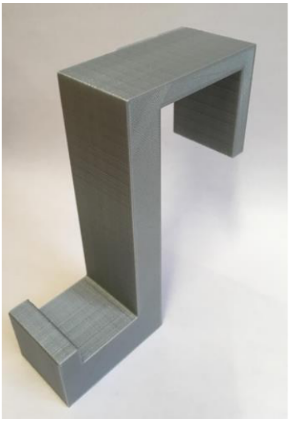
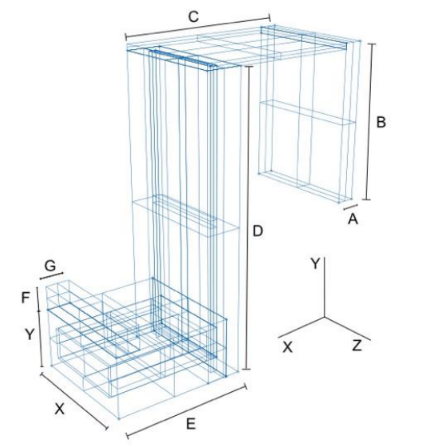
The knowledge base would be constructed using experimentally determined data. Simulation, parametric models and physical testing would be repeated until a satisfactory part is made. The researchers tested their methodology by designing a load bearing, modifiable hook. The best generated design was 3D printed and tested to see if it met the user’s requirements. If the part’s actual behavior differs from the predicted behavior, the analytical model describing the part’s behavior is updated, and the simulation and physical testing cycle is then repeated. Their methodology, the researchers state, greatly reduces the skill level required and meets the requirements of a democratizing design methodology.
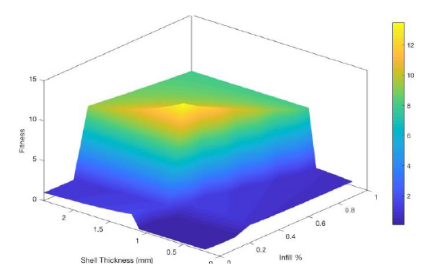
2:1 aspect ratio hook solution space with respect to the objective function
Further work will include:
- Manufacturing and validating the behavior of parts generated in the paper
- Using existing literature to expand the knowledge base
- Incorporating statistical models for printed part properties
- Exploring more complex design problems
Authors of the paper include Mark Goudswaard, Ben Hicks and Aydin Nassehi.
Discuss this and other 3D printing topics at 3DPrintBoard.com or share your thoughts below.