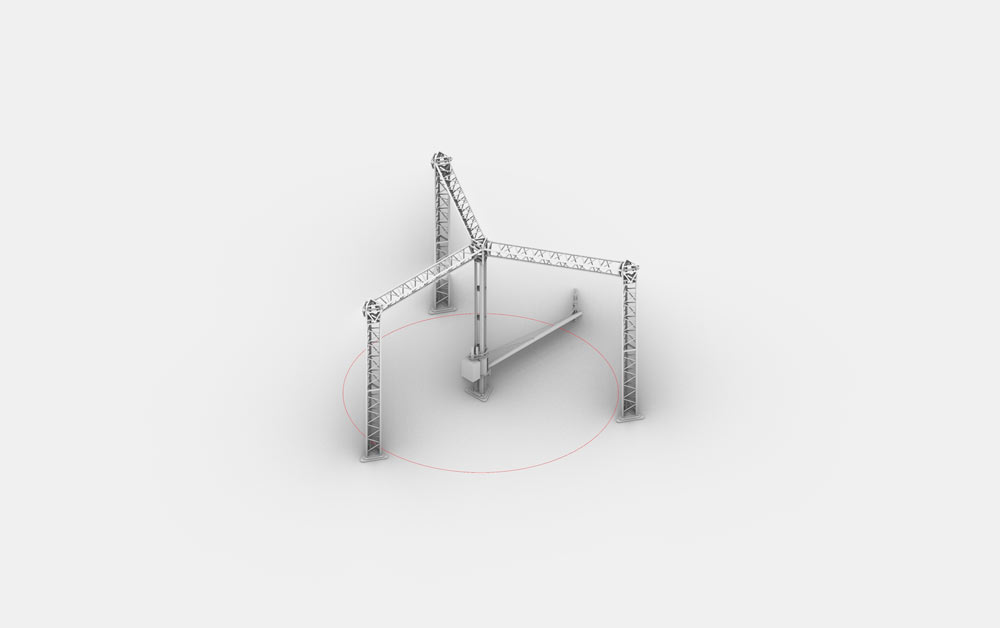
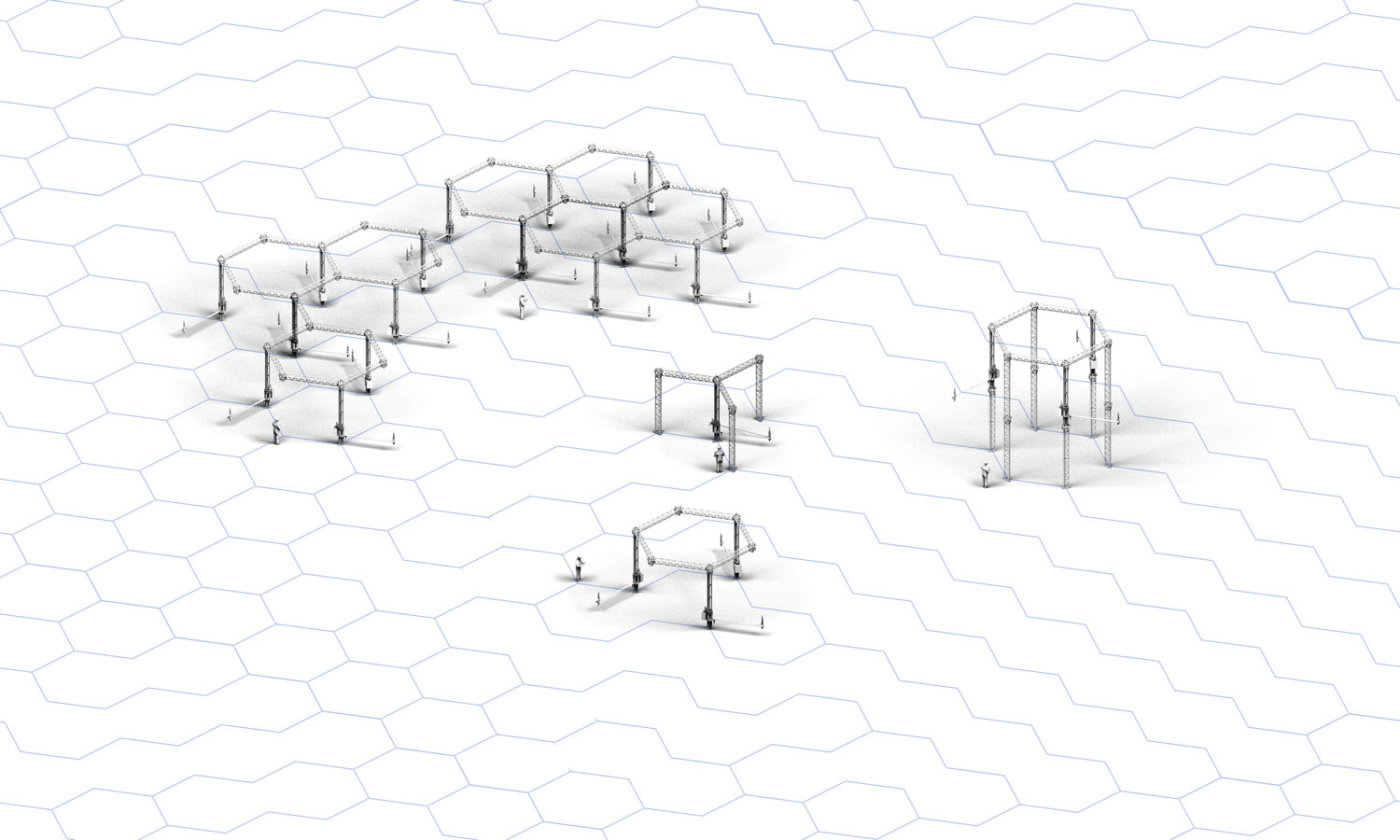
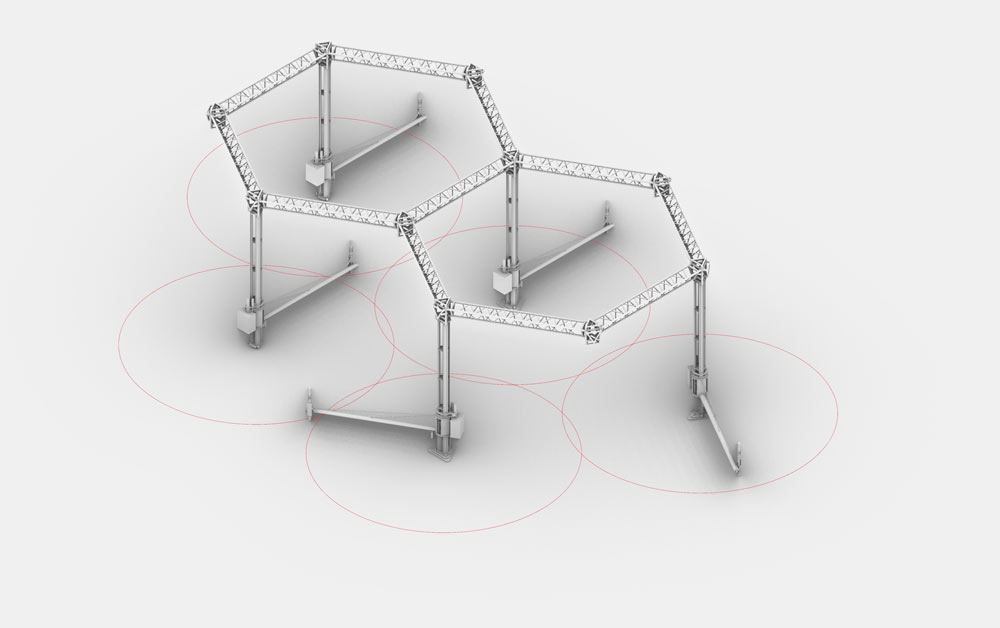
“It is not necessary to ‘cover’ the entire area involved in the construction with the printing area of the WASP Cranes because they can be reconfigured and can advance with generative attitude depending on the growth and shape of the building,” WASP states. “More WASP Cranes, when working together, have a potentially infinite printing area and can be set by the on-site operators following the evolution of the architectural project.”
The first structure 3D printed with the WASP Crane is called the Gaia Module, a livable tiny house complete with insulation and coatings. The structure is 3D printed from soil, with rice husks and straw added to the interior of the 3D printed walls.
An entire program will take place on the 6th and 7th of October surrounding the introduction of the WASP Crane and the Gaia Module. Visitors who travel to Shamballa will be able to enter and experience the Gaia Module, and can attend information sessions on the village of Shamballa, large-scale construction and green building, 3D printed hydroponics and more. You can learn more about the event here.
The village of Shamballa is a long-term project – you can’t build an entire village in a day, after all – but has been making excellent progress, and the WASP Crane is another addition to the arsenal of 3D printers working to construct the world’s first entirely 3D printed town. WASP has done some truly remarkable things with its 3D printers, and the company is now opening up its site to the public so that they can see the progress that has been made and the tools with which anyone can build their own self-sufficient living spaces. You can see the WASP Crane in action below:
Discuss this and other 3D printing topics at 3DPrintBoard.com or share your thoughts below.
[Images: WASP]