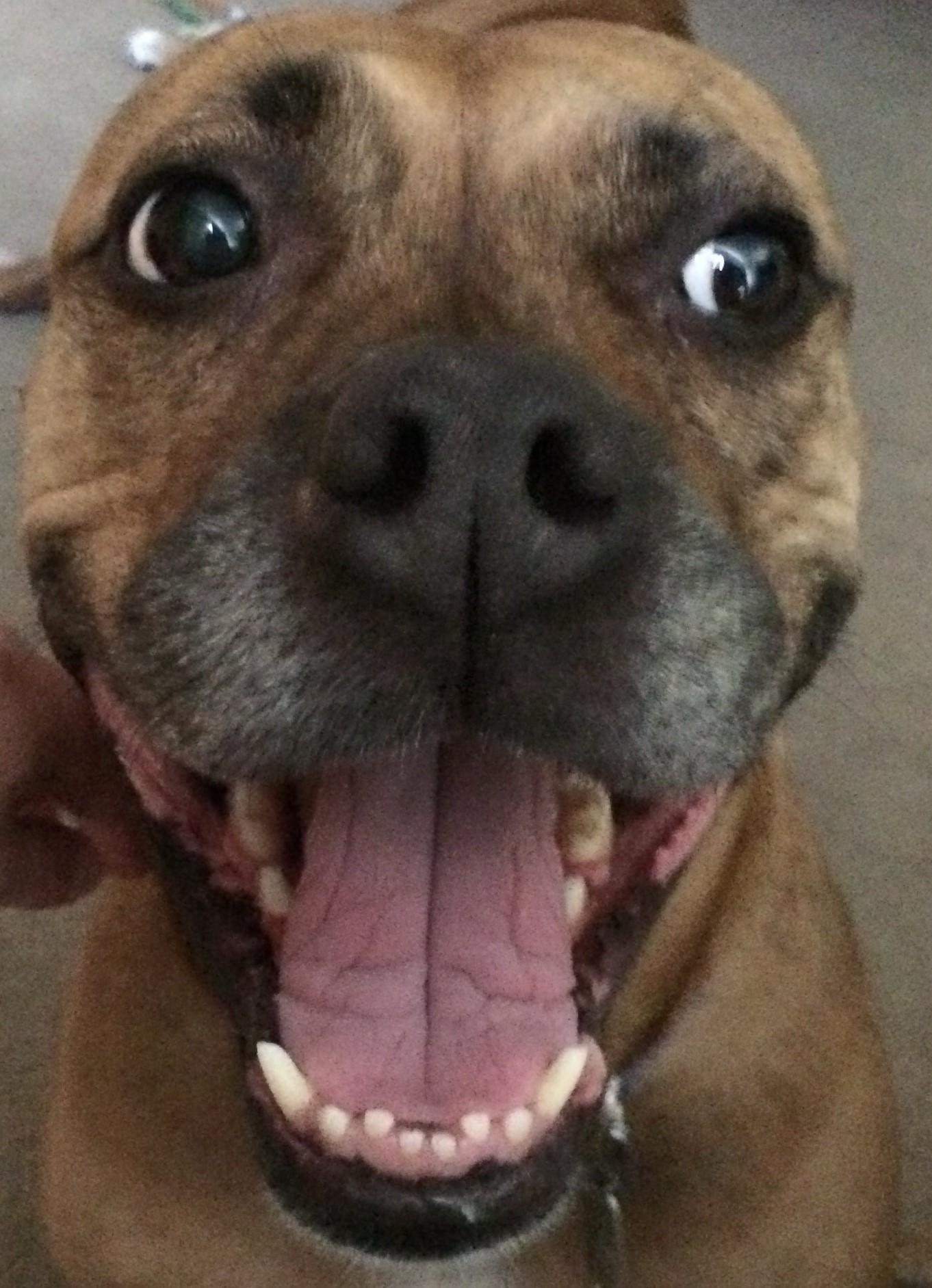
My dog Gracie, boxer-pit bull mix and lover of wontons
My dogs go crazy when we bring Chinese food home, because they can smell the wontons my husband will eventually feed them. They won’t give him any peace until he finally deposits said wontons into their bowls (note, we rarely give them ‘people food,’ but wontons are a special exception). We all know dogs have an incredible sense of smell; it’s their own animal superpower, like the way a cat’s tongue works is unique to cats.
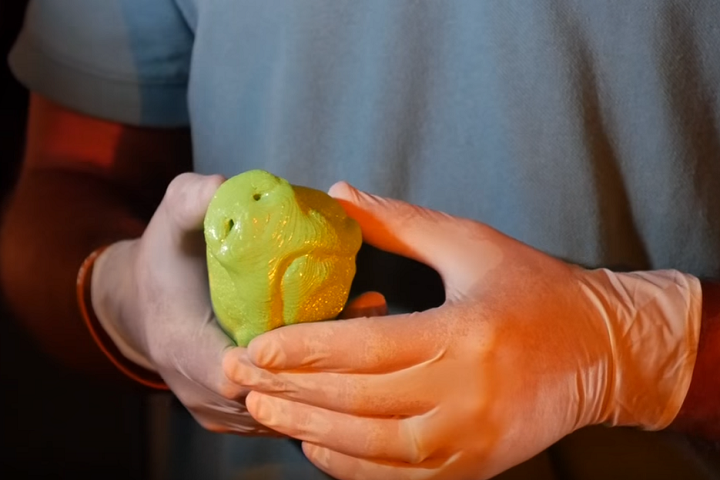
A dog’s nose isn’t just a wonton-detector, though – dogs have been trained to sniff out all sorts of things, like bombs, drugs, and other contraband. Humans have been trying to harness the power of a dog’s nose for a long time, but even the best electronic scent-detection devices, which try to emulate dog noses, aren’t quite up to snuff. But new research involving a 3D printed dog nose is being used to improve drug and bomb detectors.
A dog’s nose contains almost 300 million smell receptors. Compare that to the mere six million smell receptors a human nose has, and it’s no wonder that a dog’s sense of smell is over 40 times better than ours. Biomimicry is the study of nature to find solutions for human technical problems. Matthew Staymates, a mechanical engineer and fluid dynamicist with the National Institute of Standards and Technology (NIST) was the lead author on a recently published paper that offers new insight into how a dog’s nose works, and how it can be applied to modern detection equipment. Working with other NIST colleagues, the U.S. Food and Drug Administration, and the Massachusetts Institute of Technology’s Lincoln Laboratory, Staymates thought that the fascinating sniffing skills of the canine snout had something to do with its anatomy.
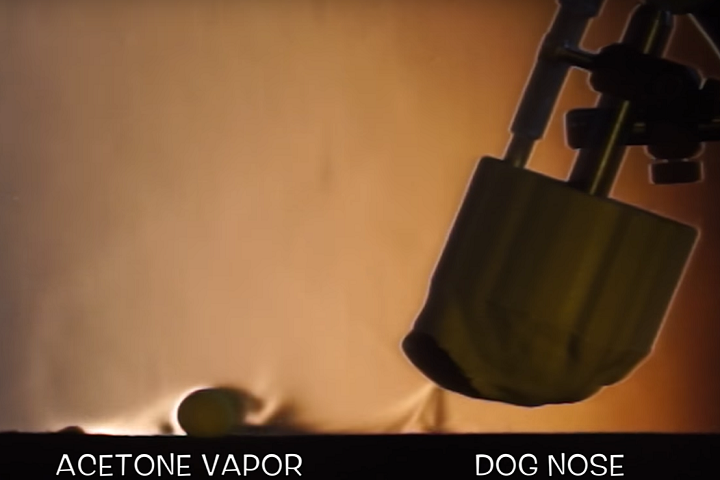
“He’s kind of reaching out and pulling a new plug of fresh air from ahead of himself,” said Staymates. “He inhales it then immediately and he analyzes it with a pretty amazing chemical detector. And he does this about five times a second.”
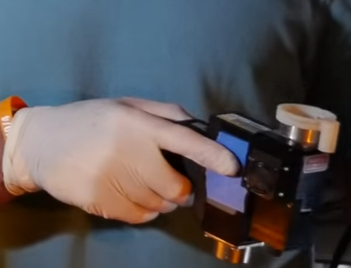
Additional upgrades may include incorporating more bio-inspired design principles to the new detectors, including the use of heated air jets during the sniffing. Just think, it only took a great idea, optical imaging, and 3D printing to upgrade the devices that help keep us safe at airports. This is definitely not the first time that 3D printing and the animal kingdom have combined to make our lives better, and it certainly won’t be the last.
Here’s a video of Staymates explaining how a dog’s nose really works:

Discuss in the 3D Printed Dog Nose forum at 3DPB.com.
[ISource: CBC News / NIST]