
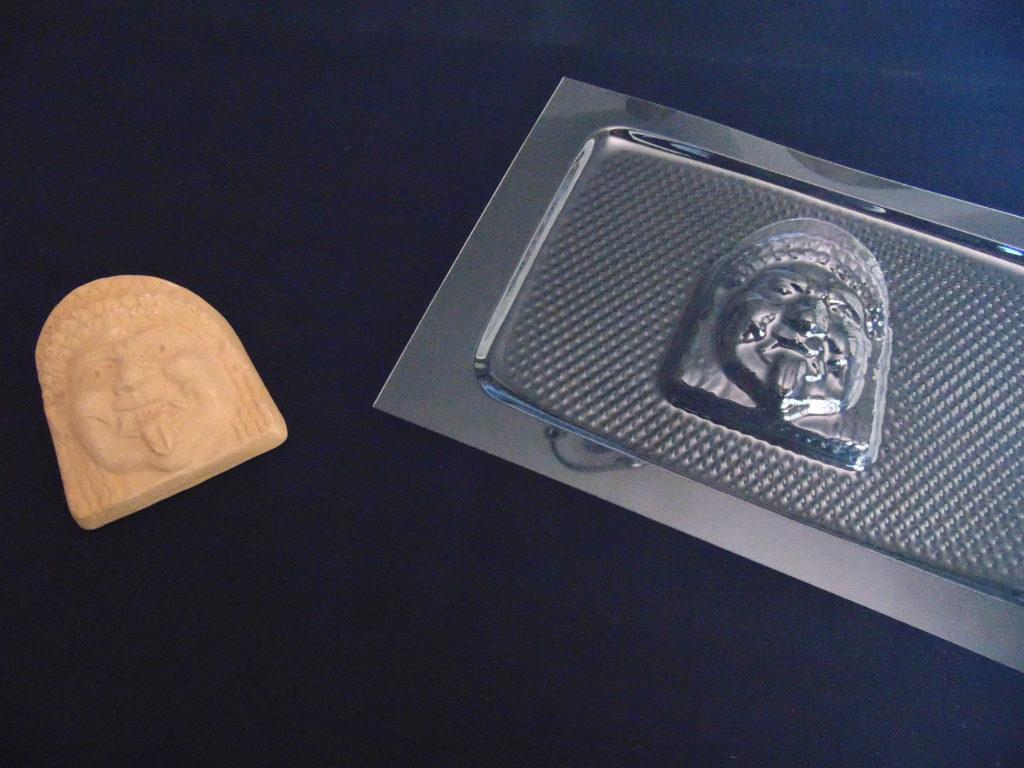

Thermoforming is a process that has been around for a long time, used frequently for the creation of molds. A sheet of plastic is heated until it becomes pliable, at which point it’s formed into a mold. It’s a common industrial practice, but Robot Factory has designed a personal thermoforming machine that can be used in smaller settings for small-batch production. The 3D FORMING system can be utilized to create either molds or finished 3D objects, and it’s a simple method of turning 3D printed objects into molds.

The 3D FORMING machine is basically two trays, one at the top and one at the bottom. A thermoplastic sheet is placed on the bottom tray and raised so that the thermoplastic can be heated by the heating element at the top. In the meantime, an object, 3D printed or otherwise, is placed on the bottom of the machine. When the thermoplastic is heated enough to be malleable, the user pulls it down on top of the object, instantly forming a mold. A vacuum then cools the object almost instantly so it can be removed. You can see a demonstration of the process below (the actual thermoforming process is demonstrated at about 3:20, after a machine setup demo):

The system can be used with multiple types of thermoplastic materials in sheets from 0.2 to 1mm thicknesses, such as polystyrene, polycarbonate, polypropylene, polyethylene, polyvinyl chloride, polymethylmethacrylate, and ABS. Each 3D FORMING machine comes with 12 sheets of PETG and 12 of HIPS, both food-safe and recyclable.
“The goal achieved is a very attractive system for all those who might use this technology, in total safety, for develop teaching tools, for design of tools for pastry and gastronomy, for packaging design, for handmade gift, and so on… And at the same time we give a tool that is simple, easy to use, that requires a minimum time of training,” said Andrea Martini, CEO of Robot Factory.


Other applications include the creation of orthodontic molds, eyewear, toys, and even education. As Robot Factory notes:
“In the context of teaching this device can be a great aid for the creation of learning objects usable in case of dyslexia, visual impairment, and in general in cases of learning difficulties. In the schools in which there are already 3D printers, 3D printed objects can be used as templates for the thermoforming.”
Robot Factory is also planning to implement a pilot program in several Italian schools to test the educational possibilities of the machine. You can learn more about the 3D FORMING SYSTEM, and request additional information, here. Below, you can check out a couple more demos, about how to make molds for chocolate and plaster. Discuss in the 3D Forming forum at 3DPB.com.

