
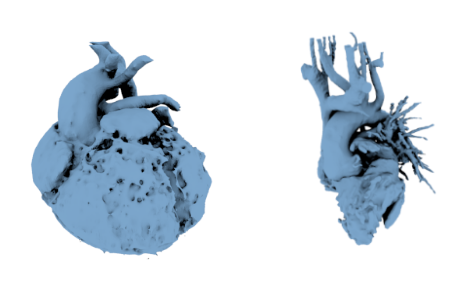

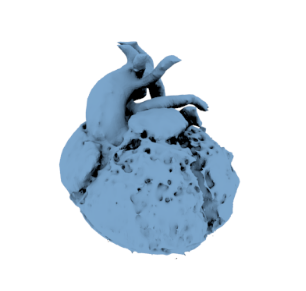
3D model of a heart with neonatal pulmonary atresia VSD. [Image: Dr. Matthew Bramlet]
“There are many physicians utilizing 3D modeling for the treatment of congenital heart disease, but there aren’t any best practices for utilizing the technology,” said Dr. Matthew Bramlet, Director of the Jump Advanced Imaging and Modeling Program at OSF HealthCare. “Establishing a peer-review process will drive standardization and increase the quality of 3D digital models around the world.”
Dr. Bramlet is working with the AHA-Midwest Affiliate to generate interest in the creation of accuracy and quality standards for the library, and to transition it to a national AHA-backed database. Recently, representatives from AHA and NIH met with physicians specializing in 3D modeling from OSF, the University of Illinois College of Medicine at Peoria, the George Washington University School of Medicine, the University of Washington and Rutgers New Jersey Medical School for a roundtable discussion on the initiative.
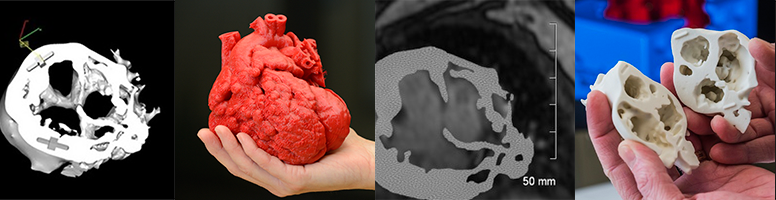
The gathering, which took place in Chicago, was part of the Cor Nexus Series developed by the AHA and OSF. The series of quarterly gatherings, which have been leading up to the Heart Innovation Forum on November 3, was launched as an effort to bring together cardiology experts to discuss tangible solutions to heart disease and stroke.
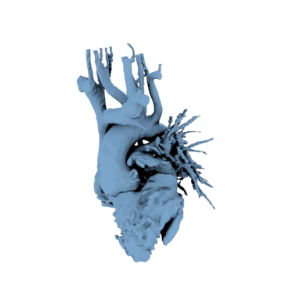
“Our hope is to provide a platform for idea sharing and collaboration while leveraging our community of experts to reduce the barriers to life-saving technology,” said Liz Andrews, Senior Vice President of Health Strategies at the AHA-Midwest Affiliate. “By defining and establishing standardized processes for the use of 3D modeling in diagnosing and treating heart patents, we know we can improve surgical outcomes and better educate the next generation of healthcare professionals.”3D model of a heart with Hypoplastic Left Heart Syndrome [Image: Kevin Gralewski]
Dr. Bramlet and the NIH hope that the 3D Heart Library may also spur the development of similar online libraries for other organs and parts of the human anatomy as the use of 3D modeling continues to expand to other areas of medicine, such as orthopedics. We’ve seen so many heartwarming cases of lives being saved by 3D modeling that it’s heartening (yes, puns intended, not sorry) to see the technology becoming such an integral and permanent part of the medical field. Discuss in the 3D Heart Library forum at 3DPB.com.