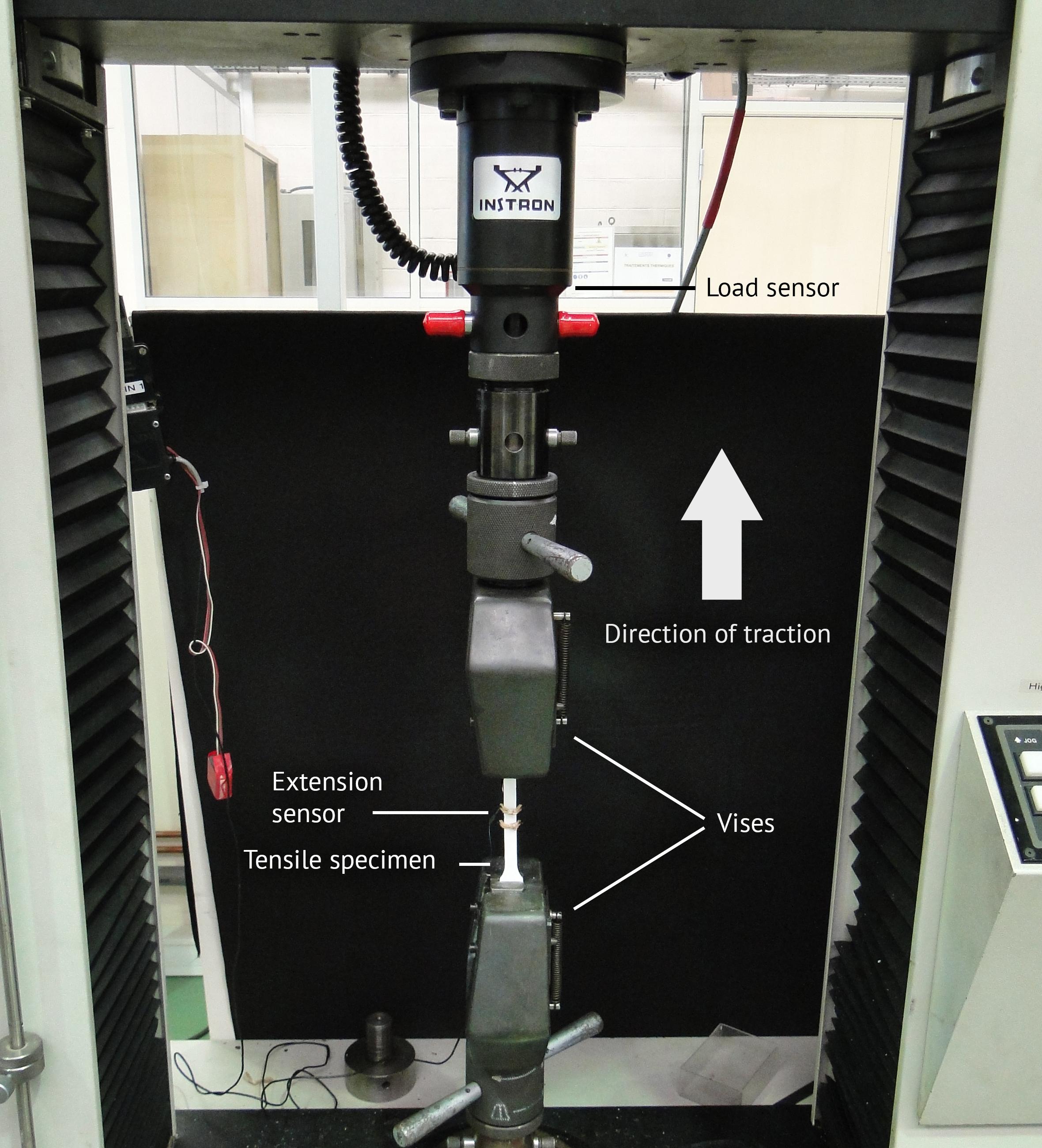
The folks at Sculpteo were interested in exploring and documenting information about the elasticity of the raw material that is fed into the 3D printer. While some information about this is provided directly by the manufacturers, the team at Sculpteo argues that the data is highly dependent upon which production process is used and wanted to set about detailing the nature of a material’s elasticity in a more exhaustively detailed manner.
Knowing the elasticity of a material is what helps to calculate, during the design phase, against the possibility that any given piece will rupture or break. The most common method for its calculation is the Young’s modulus, also known as the traction or elastic modulus. Young’s presents data about the amount a material can be deformed in relation to the amount of force required to deform it.
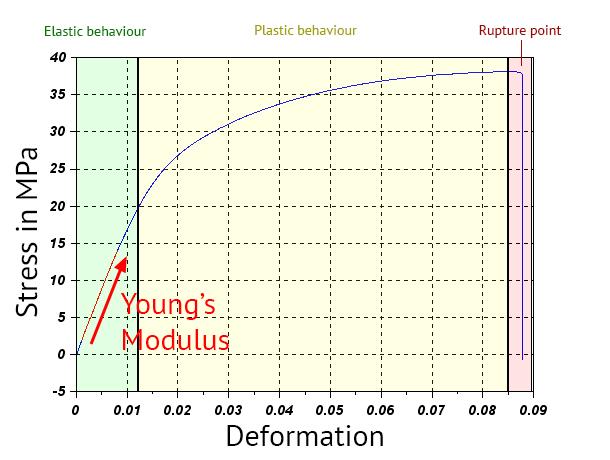
Once the deformation makes a permanent change in the shape of the material, it is exhibiting plastic behavior. Moving past those first behaviors and continuing to apply greater force causes an increase in deformation, leading to a rupture in the material.
The test Sculpteo selected to perform was the tensile test, which they explained in a blog post about the experiments:
“A tensile test is an experimental measure, where you try to elongate an object, while measuring the strength you are using to do so. The elongation process is made with a constant speed, until we reach the breaking point. This gives us everything we need to draw a force curve based on the elongation. Thanks to those values, we are then able to deduce the elasticity modulus of the material, and its elongation at the rupture point.”


After the tests, the team did not feel sufficiently satisfied to make a statement about the Young’s modulus of the flexible plastic, but did obtain results for the other two materials. The black plastic was found to have a greater elasticity than the white plastic, and the two applications—dyeing and the application of smoothing beautifier—had no noticeable impacts on the materials’ performance. Let’s discuss this further over in the Sculpteo Evaluates 3D Printing Materials forum at 3DPB.com.
