
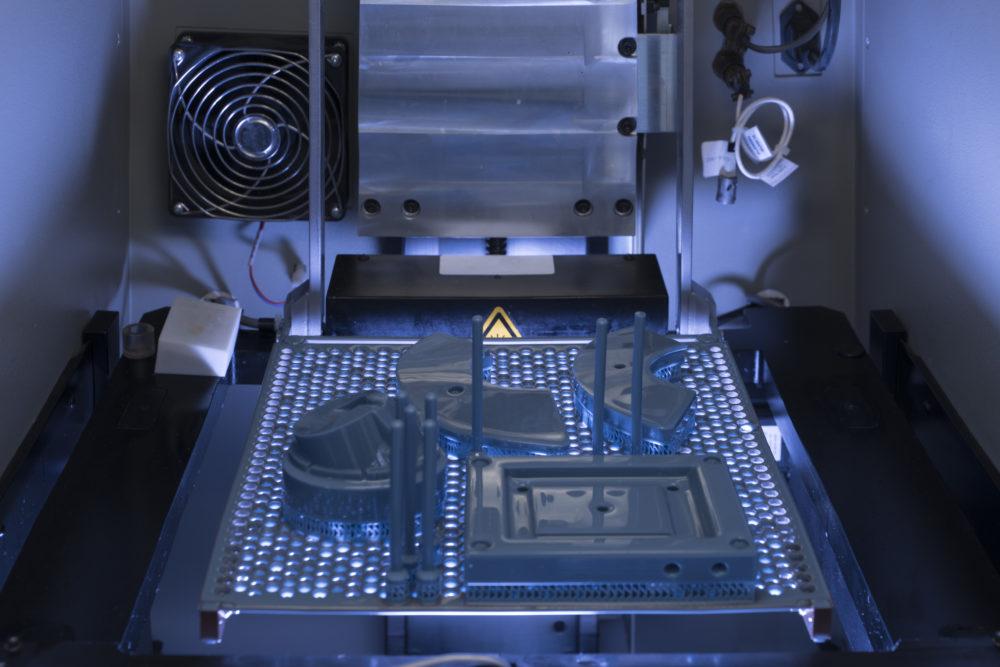
Freshly 3D printed components and prototypes.
The BMW Group Additive Manufacturing Centre at their Research and Innovation Centre has committed itself to taking the most advanced 3D printing technologies available and finding ways to apply it in the production of their vehicles. With the Rolls-Royce Phantom, that included parts as varied as 3D printed hazard-warning light holders, center lock buttons, electronic parking brakes and sockets. This year’s model of the Rolls-Royce Dawn will be using 3D printed mounting brackets for wires, hoses and fiber-optic cables, and they expect to instal thousands of them throughout the production cycle. Rolls-Royce Motor Cars’ parent company BMW expects to begin rapidly expanding the use of advanced 3D printed parts across their entire range of vehicles.
“Additive technologies will be one of the main production methods of the future for the BMW Group, with promising potential. The integration of additively-manufactured components into Rolls-Royce series production is another important milestone for us on the road to using this method on a large-scale. By utilising new technologies, we will be able to shorten production times further in the future and increasingly exploit the potential of tool-less manufacturing methods,” said the BMW Groups head of Production Strategy, Technical Integration, Udo Hänle.
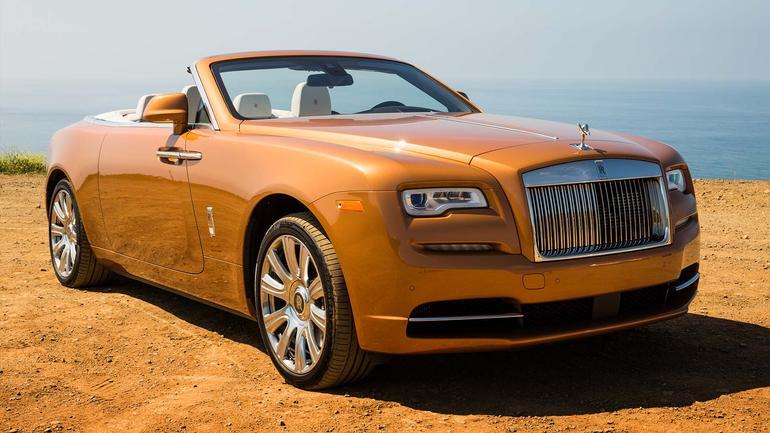
The 2016 Rolls-Royce Dawn
According to BMW, the advantages of using 3D printed parts became visible early on in the process, especially when it came to the production of components with complex geometries. They were able to manufacture parts significantly faster than using traditional production methods, and were able to do so while maintaining their high quality standards. In fact, many of the parts that were manufactured for the Phantom, and now the Dawn, were simply impossible to producing using conventional manufacturing technologies. As BMW starts to expand the use of additive manufacturing, they are focusing on cutting-edge planar 3D printing technologies.
“Planar technologies are central to the use of additive processes in series production. The most recent example can be found in the preliminary trials of the HP Multi Jet Fusion technology. The process will initially be used in prototyping, but we plan to extend it into series production over the long term,” explained the head of BMW Group’s Additive Manufacturing Centre, Jens Ertel.
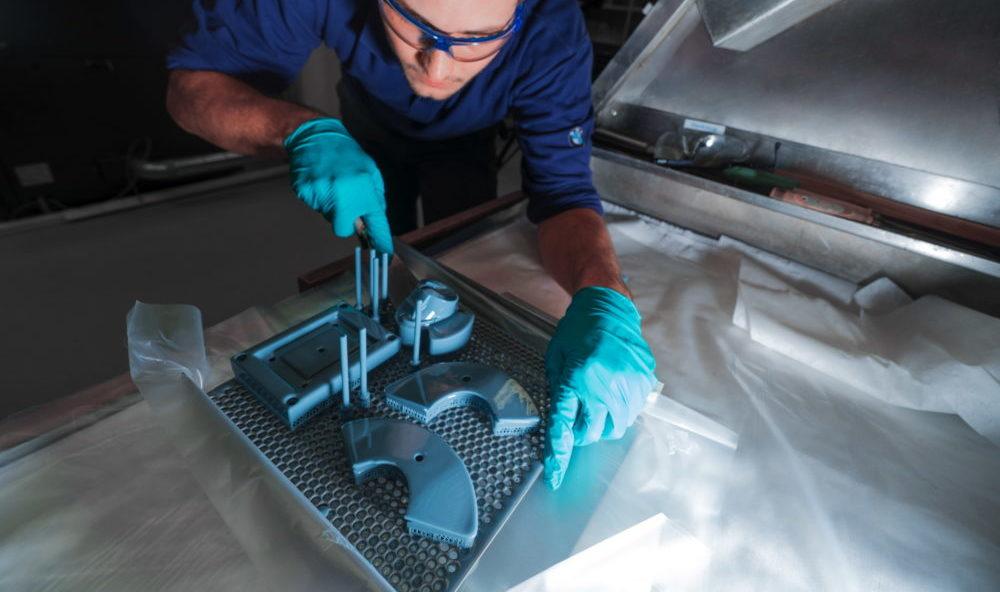
Removing parts manufactured using planar 3D printing technology at the BMW Group Additive Manufacturing Centre. [Image: BMW]
Currently, the Additive Manufacturing Centre team manages more than 25,000 orders for 3D printed prototypes, and they manufacture more than 100,000 components for multiple divisions within the BMW Group each year. They also use 3D printing to produce custom manufacturing equipment and specialized tooling for vehicle assembly lines. They have also been using additive manufacturing to produce custom or short-run components since 2010 when they 3D printed a water pump wheel that is still used in their DTM silhouette racing cars. Depending on the application being used, the Additive Manufacturing Centre team typically is able to manufacture parts as varied as design samples, small plastic holders, metal chassis components and prototypes for functional testing in a matter of days. Discuss further over in the BMW Using 3D Printed Parts forum over at 3DPB.com.