Recently, the 3D Systems printing ecosystem was utilized by the Polich Tallix Fine Art Foundry in Rock Tavern, New York, a museum dedicated to helping artists develop and produce their own work. If you happened to visit the museum, which has been operating for nearly 50 years, you would have no choice but to notice the the grandiose sculptures being casted, fabricated, and now, even 3D printed.
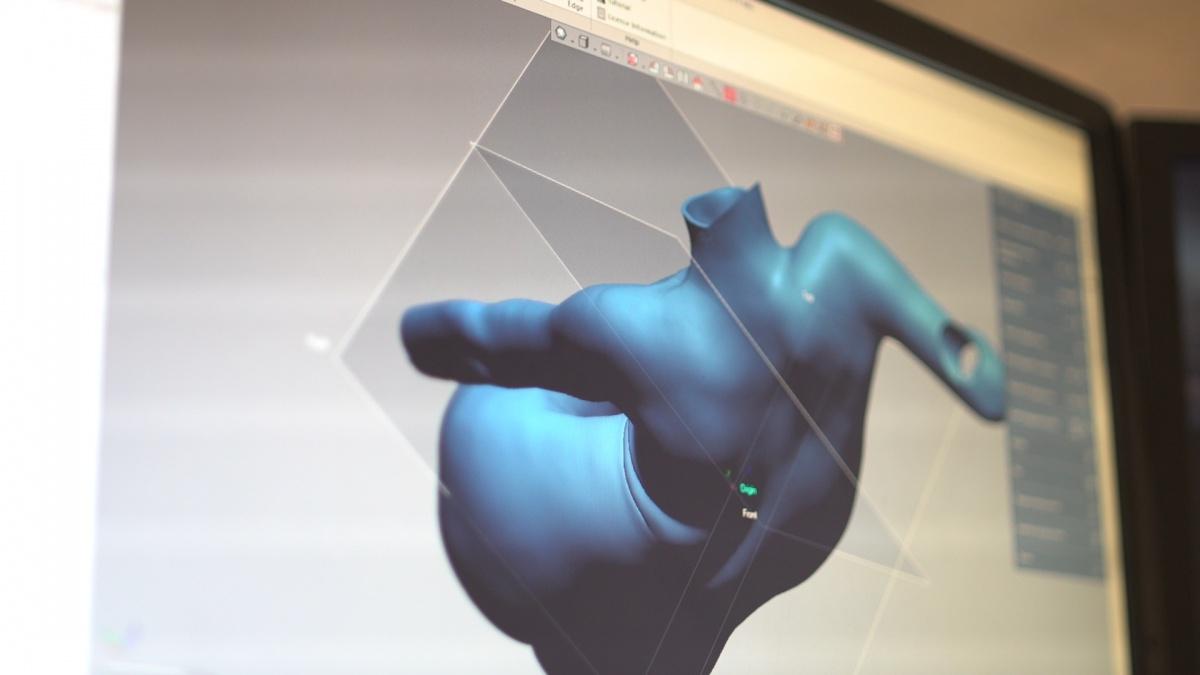
Polich Tallix has developed an expansive digital production sector, implementing a complete digital workflow that is handled by their 3D Artist and Production Specialist, Daniel Plonski. Their process starts with a 3D scan of their client’s idea or artwork, which is then transferred into 3D Systems’ Geomagic software, a comprehensive reverse engineering software that swiftly prepares 3D scan data for CAD modeling. In Polich Tallix’s case, they use Geomagic as part of a scan-to-print workflow, making surfaces from points, matching 3D scans, filling holes, and more.
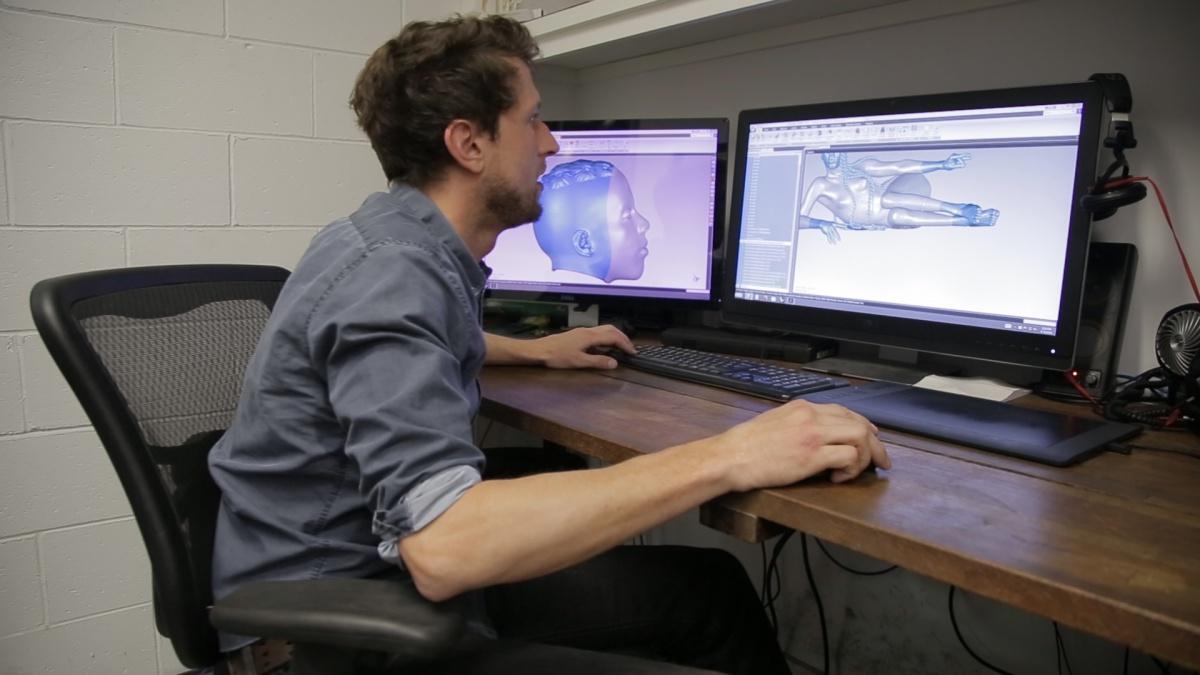
Polich Tallix’s 3D Artist and Production Specialist, Daniel Plonski
“Geomagic offers a tremendous advantage to us,” said Plonski, “From looking at the models we produce, you’d think there was a magic button that smooths and perfects everything, but there’s a lot of digital craftsmanship involved.”
This allows both their artists and clients to review and rework their ideas or artwork on a digital platform, which can essentially be prototyped into the physical realm through their 3D printing technology. After the 3D scanned artwork is prepared for CAD with Geomagic, it can be brought into form with their 3D Systems Projet 3500 CPX wax printer, which Polich Tallix has owned and operated for quite some time now. The printer is primarily used as a lost wax and investment casting processes, and is known for producing smooth, high-resolution 3D prints. The fine art foundry purchased the Projet 3500 CPX wax printer from CAD BLU, an official 3D Systems Reseller.
“Our ProJet MJP wax printer is a workhorse,” said Plonski. “We run it almost 24/7 and have been for some time now. It really complements our workflow and has been a key tool in helping us extend our capabilities beyond what anyone thought possible.”
According to Plonski, who attributes much of his work with Polich Tallix as research and development, the fine art foundry is still working to unlock the full potential of 3D printing technology. But, what the museum has proved to us thus far at least, is that 3D printing and 3D scanning technology can certainly work in tandem as a tool to repair and restore the finest works of art. Discuss further over in the Polich Tallix Foundry 3D Systems Technology forum at 3DPB.com.
