The first of the two new companies to be run by Whitman, Hewlett Packard Enterprise, would focus on servers, storage, networking, security and business consulting while the second, HP Inc., would be getting back to their roots and focus on the printer and personal computer market. While the server and consulting arm of the original HP was already doing pretty well at the time of the split, the printer and PC side of the business was struggling. New HP Inc. CEO Dion Weisler, and former head of the original company’s printer and imaging division, wasted no time and immediately spun the company’s fledgling 3D printer business off into its own division.
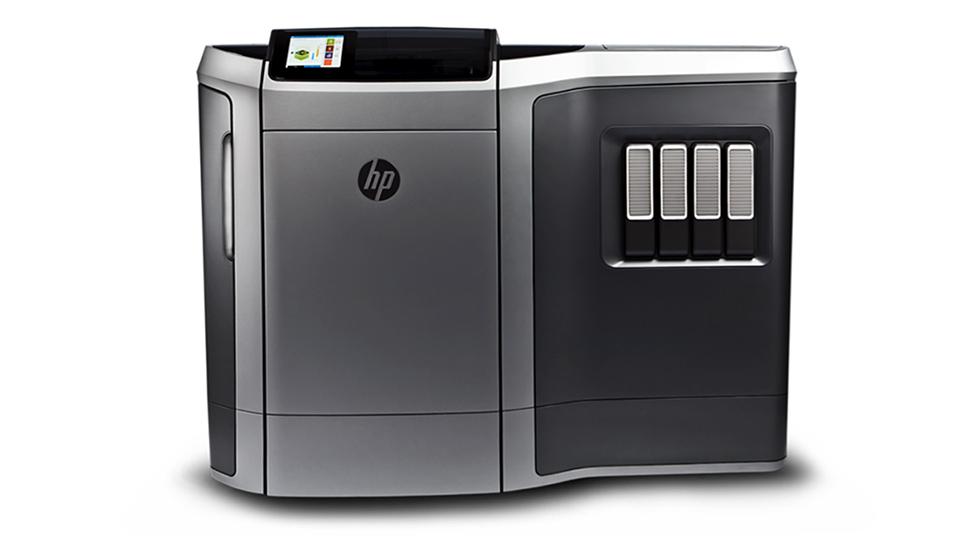
HP’s new Multi Jet Fusion 3D Printer.
The company made it clear right off the bat that their new Multi Jet Fusion 3D Printer, due out this year, and the entire 3D printing industry would be a major focus of their new business strategy. It seems that 3D printing is also going to play a major role in the focus of their just-announced corporate venture arm being called HP Tech Ventures. The investment group is looking to make some early stage investments in startups who are developing cutting-edge technology, with a strong focus on 3D and digital technology.
While HP Tech Ventures was just announced this week, the group has actually been quietly operating even before the Hewlett-Packard split was completed back in November. The group is headed by someone quite familiar with running an investment capital fund, current HP CTO and head of HP Labs Shane Wall, formerly of Intel, who headed up their Intel Capital startup fund. HP Tech Ventures was announced at a brief meeting at this week’s TechCrunch Disrupt NY, and according to Wall, they have already made investments in a few startups. The fund’s eight-person team is being led by Andrew Bolwell, a 16-year HP veteran who has been known as the company’s ‘chief disruptor’ for the last few years.
“The next technology revolution is shifting towards strategic markets that speak to HP’s strengths. With our global brand and broad reach into consumer and commercial markets worldwide, HP can help startups bring product to market, build their business and scale in the global marketplace as they grow,” Wall stated.
The primary goal of HP Tech Ventures is to focus on seeding new companies that would be strategically advantageous to HP Inc., and to eventually move on to Series A financing once the startup has been proven viable. They will be focusing on several key areas, including 3D printing and other related technologies; virtual reality and augmented reality applications and innovations; smart devices, including smart homes and robotics; and applications related to the Internet of Things.

The garage where Hewlett Packard was founded back in 1939.
Interestingly, HP Tech Ventures won’t be running a dedicated fund but will actually be investing in startups right off of the HP Inc. balance sheet. So instead of having a dedicated annual budget, the fund will be making investments on a case by case basis, and counting those investments as part of the company’s operating costs. That type of structure for an investment venture fund is pretty uncommon, but not unheard of. However, the structure tends to lend itself to companies looking to have a more active role in discovering, fostering and developing new startups rather than taking the more common scattershot “let’s see what we hit” approach.