

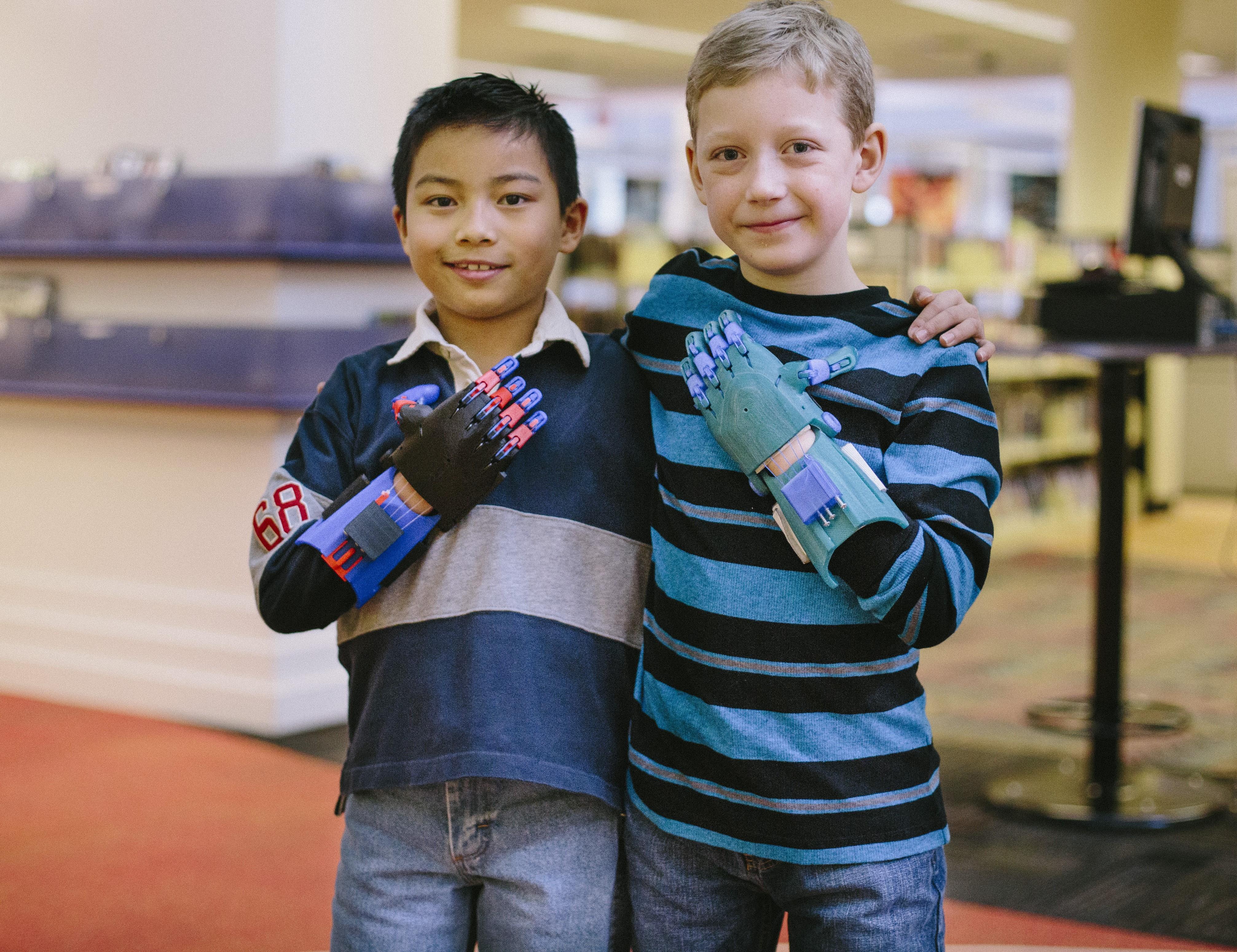
Last year, a young Cincinnati boy named Luke Dennison made the news when his parents took it upon themselves to 3D print several prosthetic hands for him with design help from e-NABLE. Luke was born with symbrachydactyly, a condition in which the fingers are missing or shorter on one hand. Peyton Andry, a fourth-grader at Cincinnati Hills Christian Academy, was born with the same condition. His father, Steve Andry, describes him as “a very confident, self-assured young man,” but he can be self-conscious about his hand.
“I don’t like calling my condition different. I call it special,” said Peyton. “I’ve learned not to let other people judge me for what I look like, but sometimes the kids ask lots of questions, and that part can be annoying.”
Peyton’s music teacher had a connection to Simplify3D, also based in the Cincinnati area, and reached out to them to see if they could look into creating a 3D printed hand for Peyton. As it happens, Luke’s father Gregg Dennison also knows several people at Simplify3D, and a realization was quickly reached: Peyton and Luke should meet.
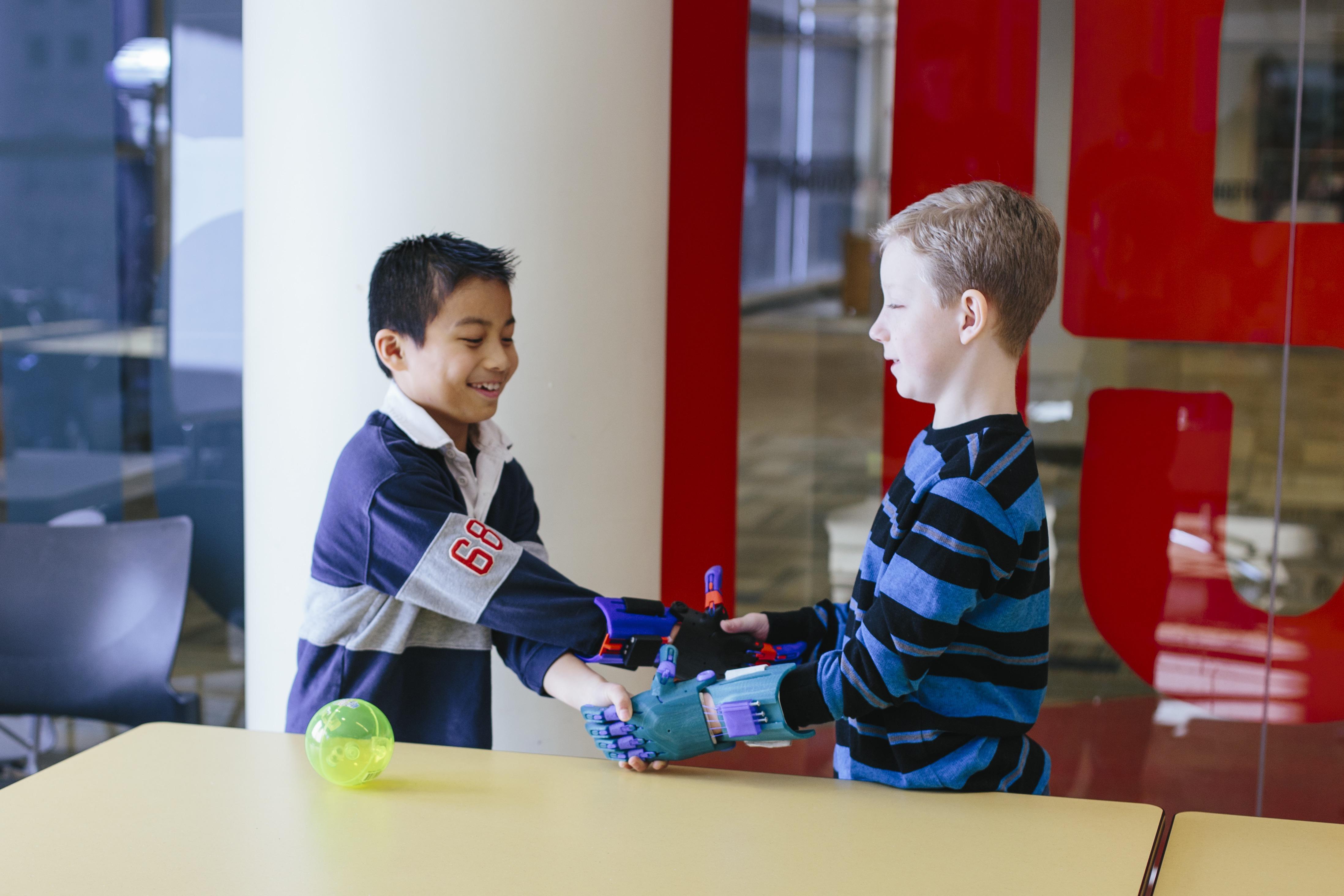
The two boys first met at the Cincinnati Public Library, where they quickly bonded through a discussion of Star Wars, and Luke described the several different hands his parents had printed for him. They were then able to watch a 3D printer in action, and Peyton was fascinated. He had been apprehensive about a prosthetic, but that now vanished. With his approval, Gregg Dennison and Simplify3D proceeded to design a hand for Peyton, asking him to select his favorite superhero colors. (He went with Iron Man, always a favorite.)
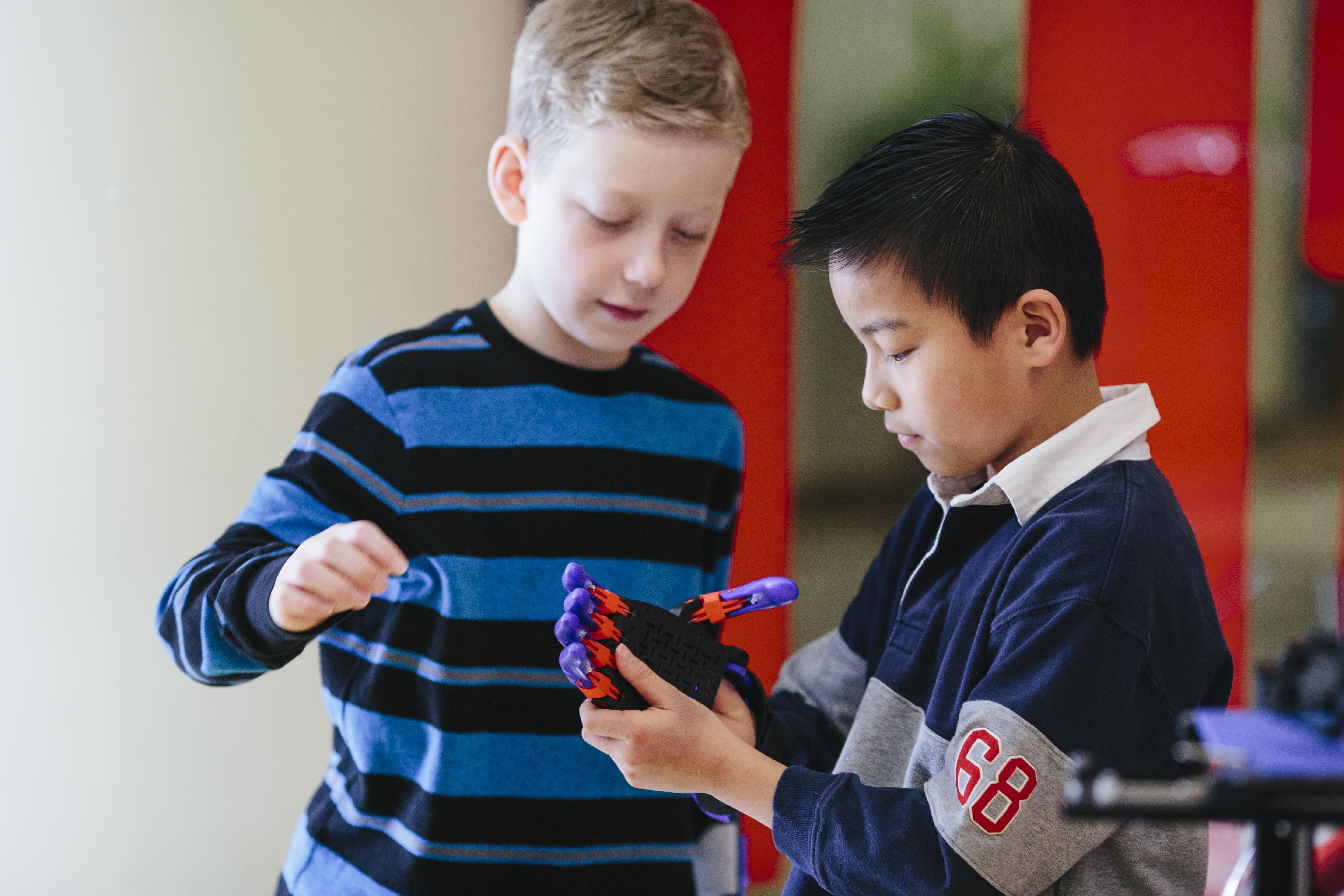
“When I woke up that morning, I was thinking about it a lot and I was really excited,” said Peyton. “But it’s not just the people who get the hands who are excited, it’s also the people who make the hands because they’re making something for people who need it.”
The prosthetic fit perfectly, and Peyton is now able to do the things he had most struggled with. While he was very capable before, there were a few things that still caused him difficulty, particularly holding round objects like cups. Now he can hold a cup, throw a ball, and easily carry things in both hands.
“It is clear that the hand means so much more to Peyton than his new physical abilities,” said Steve Andry. “The hand produced a sense of confidence and purpose. He gets to be seen more for his character, personality and heart, not for what he may be missing.”

Things have changed so much for children with missing or damaged limbs. It used to be a sad fact that kids with differences were frequently made fun of, even with prosthetics; the kid with the missing hand or the metal leg were often the targets of odd looks and whispers. Not only has there been a cultural change in how people with disabilities are perceived, but 3D printing has made it possible for more children to receive fitting and functional prosthetics. And cool ones, at that. Now you have “the kid with the awesome superhero arm.” And one child’s cool 3D printed prosthetic can lead to another’s, as Peyton and Luke have shown.
“The opportunity to be involved with organizations such as e-NABLE and help people like Luke and Peyton is inspiring,” said Clayton Webster, CEO of Simplify3D. “3D printing empowers innovation through technology, but what is magical to me is the outcome that was created by a community working collaboratively to develop a solution and help others.”
See more about Peyton’s story below. Do you know a child who could benefit from such a device? Discuss in the Peyton’s 3D Printed hand forum over at 3DPB.com.
