

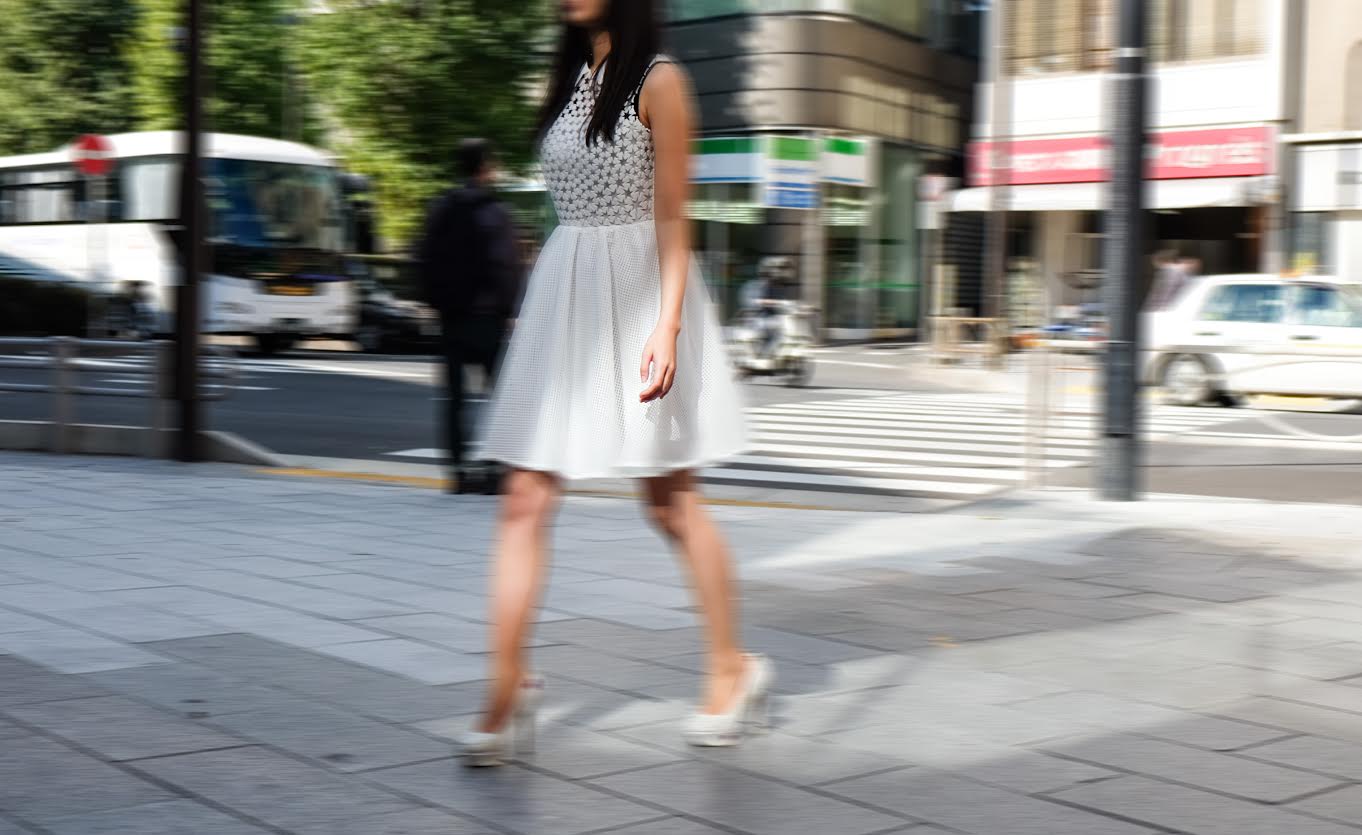
With the combination of both Artec’s 3D Studio, the highly compatible Kinect for Windows scanner, and a 3D Systems SLS 3D printer, one very talented and resourceful Japanese designer may be rolling out a new path on the fashion runway when it comes to 3D printed apparel. While we’ve certainly followed a plethora of fashions at this point, featuring everything from intricate weaponry in apparel to gold-plated heels, there hasn’t been much in the way of realistic clothing you or I might actually wear to a get-together or god forbid, to work.
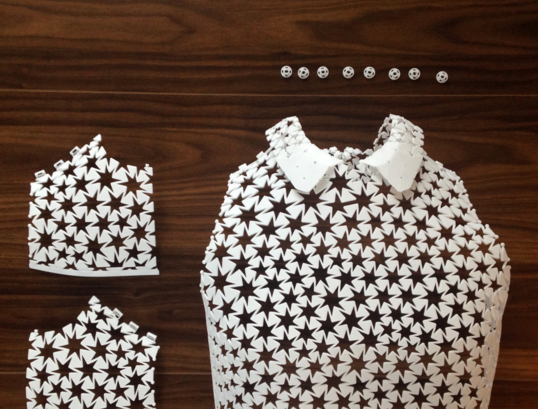
The designer discovered that while he was interested in forming far more than just 3D printed accents, he could make incredible looking, comprehensive designs with combinations of 3D printed materials–and hand finishing.
And while the designer was involved with mastering scanning, software, and 3D printing to make the quintessential ready-wear clothing, he also began examining auxetics, which in terms of textiles is a phenomena that can be explored numerous ways as it promotes ‘growth’ or flexibility, and can be used for its spongy and shock-absorbing qualities.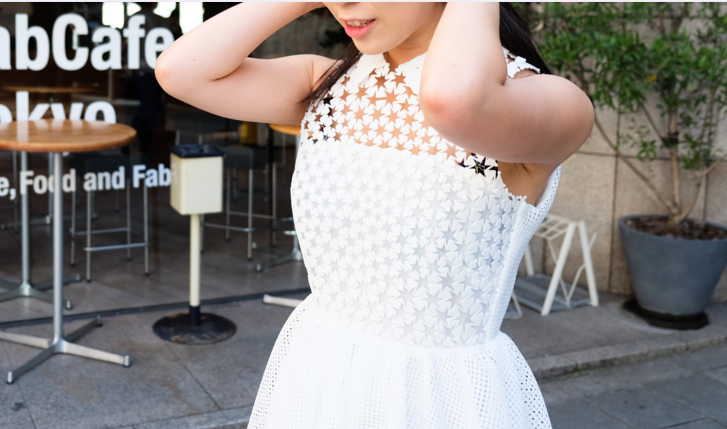
“We propose practical clothes made through 3D printing that utilizes an auxetic pattern,” UTB told 3DPrint.com. “We believe these clothes will revolutionize how 3D printing and fashion are connected.”

“We also verified firsthand, after many repeated tests, that it is possible to directly [sew] together cloth and nylon parts,” UTB told 3DPrint.com. “After that we manufactured a dress for this project from a sewing pattern, performed a 3D scan of what had been sewn, and obtained the 3D data.”
The dresses, with the chest, stomach, and back areas produced on the 3D printer, appear lightweight and comfortable, and perfect for dressing up or down–and as we can see, not out of place in a cafe or on a real street. Extremely attractive, and relevant to fashion today, the different textures and designs joined together in the auxetic fabric are stylish and classic. As UTB points out, they also made the dress, sewn together in a way that would not present a ‘nuisance’ to the wearer.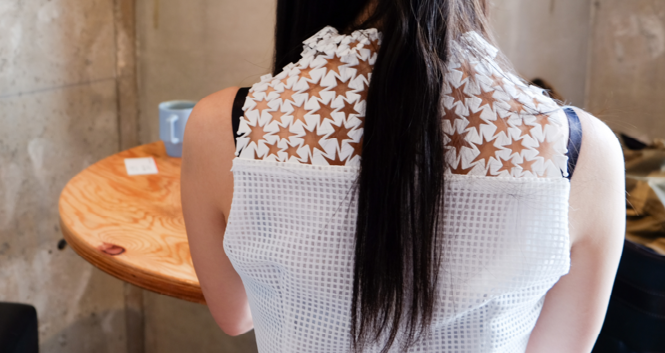
While UTB handled the design and 3D modeling, structural calculations for the pieces were made by engineer Taisuke Ohshima. Not only are these exact designs something we’d love to see hanging in the closet, they should also serve as an indicator for the future of 3D printing in apparel, allowing for incredible personalized fit due to the customizations allowed through digital design and fabrication, as well as affordability and accessibility. You can see more of UTB’s designs in his Shapeways and Rinkak shops. Discuss these designs in the 3D Printed Wearable Apparel forum thread on 3DPB.com.
[Photos: Masaharu Ono, provided directly to 3DPrint.com]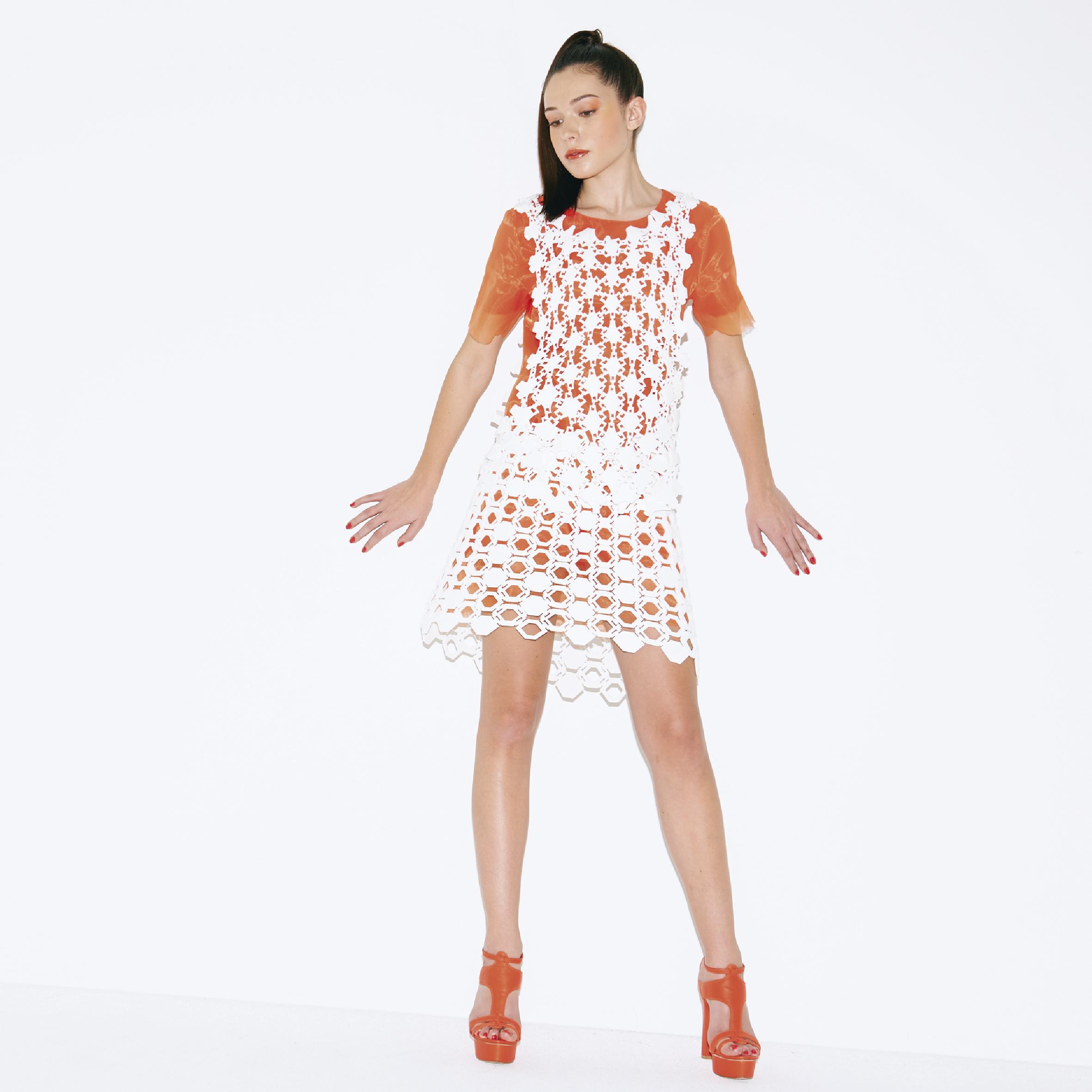
“I made clothes with 3D print earliest in Japan,” UTB told us.