

“Explaining the different types of additive manufacturing (AM) processes can be difficult as there’s significant overlap with materials and hardware between the different technologies,” says Fram-Schwartz. “I’ve created this diagram to make this seemingly sophisticated network of processes palatable for those new to the space.”

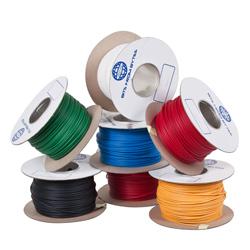
To start familiarizing oneself with additive manufacturing, it’s important to understand the different types of materials used. Fram-Schwartz’s chart breaks it down into three broad categories: liquids, powders and sheets. Liquids can be comprised of melted plastic, glass or metal. Plastic resins are the cheapest and most common material used in 3D printing. Solid plastics are fed into the printer in either pellet or filament form, melted, and extruded in liquid form, layer by layer. Once the liquid is extruded onto the print platform, it must be quickly cured, or hardened, so that the next layer can be laid down on top.
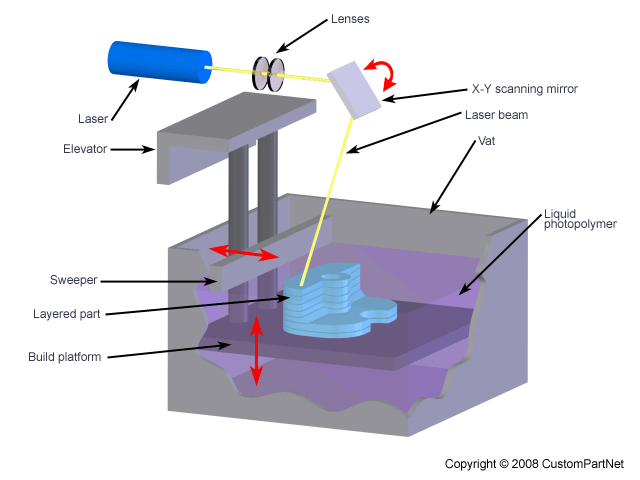
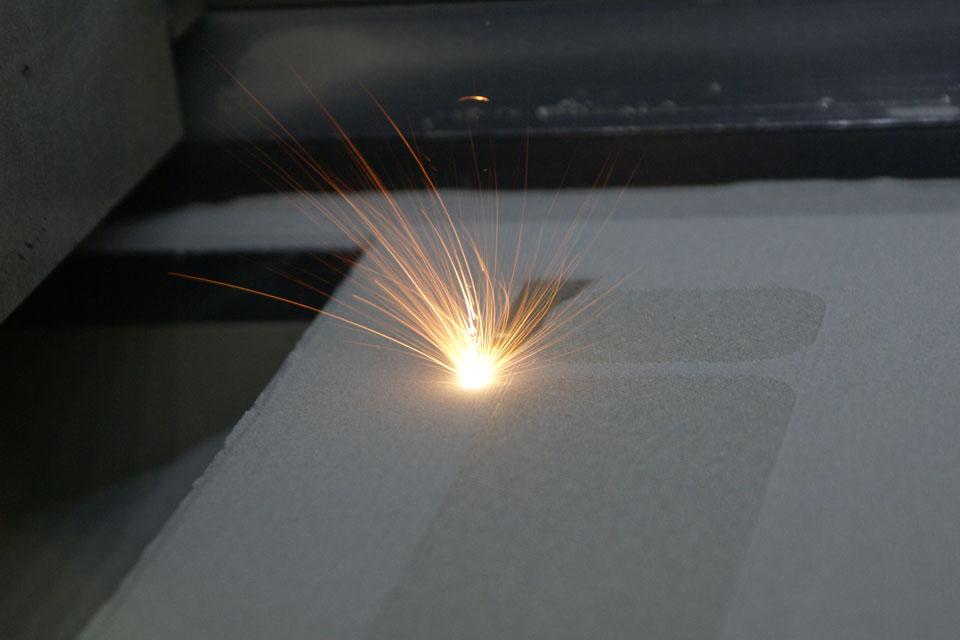
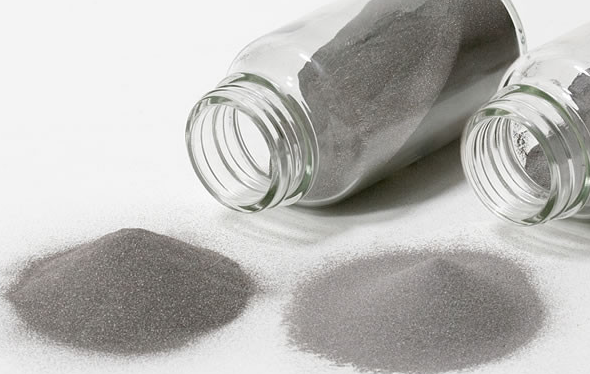
Powders are commonly used in metal additive manufacturing. Powders, when extruded, are fused into a solid material using lasers, electron beams, or liquid binding agents. The types of powder fusion include Electron Beam Melting (EBM), Selective Laser Sintering (SLS), Direct Metal Laser Sintering (DMLS) and Binder Jetting (BJ.)
Finally, there is the form of additive manufacturing known as sheet lamination. This form involves laying down sheets of paper or metal and bonding them together by welding, in the case of metal, or adhesive, in the case of paper. The process of welding metal used in sheet lamination is known as Ultrasonic Additive Manufacturing (UAM), and the process used for paper is called Laminated Object Manufacturing.
While the chart provided by Fram-Schwartz does not cover all of the processes used in 3D printing, it does give a pretty good look at some of the more common ones. You can also check out our detailed overview on 3D printing here, if you’d like to read more in-depth descriptions of some of the most common printing methods. If you’re considering an investment in a 3D printer, it’s important to be as informed as possible so that you can make the right choice for your needs. Discuss this article in the 3D Printing Materials forum on 3DPB.com.