Canadian Rockers, ‘Secret Broadcast’, Record New Single & Video with 3D Printed Instruments

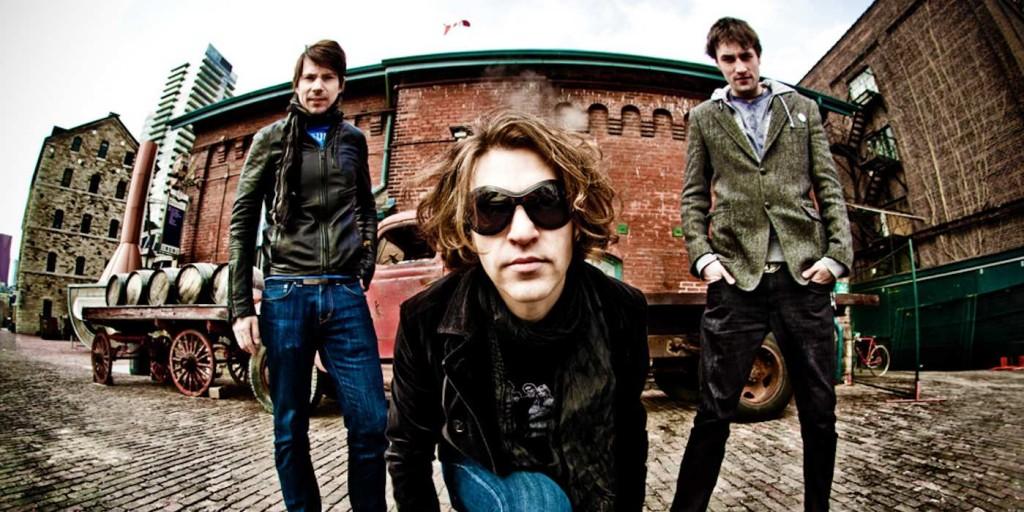
Canadian rockers Secret Broadcast have recorded a video (below) for their single, “One Born Every Minute,” using a kit of instruments created in the 3D printing lab.
“About a month ago, we were having a few drinks while brainstorming some ideas for our new video when we overheard someone at the next table discussing 3D printers,” said singer
Matt Lightstone. “Five minutes later we had our concept. We thought it would be a blast to make our own 3D printed instruments and record a song with them.”
Their new album, Filthy Souls, features a guitar-driven melodic rock style. Singer, guitarist, and songwriter Lightstone joins drummer Keith Heppler in writing the dozen songs on their latest record.
The music was produced by Grammy-winning producer Adam Kasper, who’s also handled production duties for bands like Aerosmith, the Foo Fighters, Nirvana, Pearl Jam, Queens Of The Stone Age, R.E.M, and Soundgarden.
“Working with Adam was incredible,” Lightstone says. “He really pushed us to get the most out of every song. He had a lot of great ideas and encouraged us to record the songs live, which I think helps make it sound like a rock record. We captured most of the basic tracks off-the-floor in one or two takes and I think you can feel the energy in the room when you listen back.”
 Secret Broadcast now call Toronto home, and they’ve opened for acts like Metric, Tokyo Police Club, The Stills, and Matthew Good. They’ve even played a private party for Richard Branson, and they’ve taken up a steady place on Canadian top 40 radio, alternative, and college radio charts.
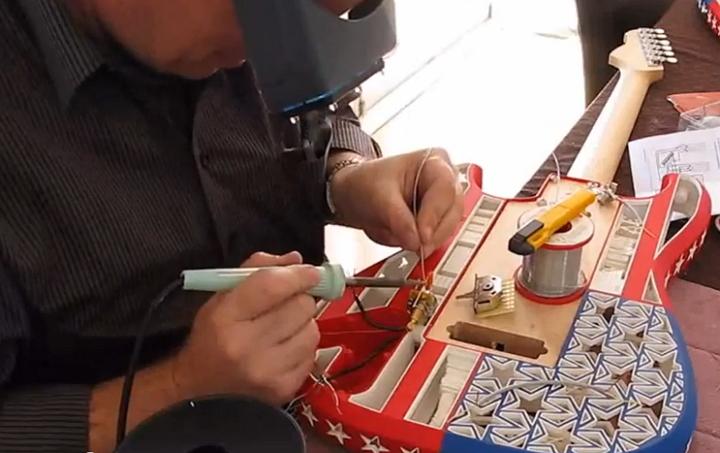
The video for “One Born Every Minute” was shot using GoPro cameras, and it documents both the 3D printing process for the instruments and the recording of the track those instruments were used to create in the studio.
“Agile Manufacturing and 3D Systems were nice enough to help us print the instruments,” Lightstone says. “We then went to Dream House Studios in Toronto and recorded a song live off the floor. It took our engineer a little while to dial in the right sounds, but in the end we were all really happy with how the recording turned out.”
A design project called “MULTI” featured five separate 3D printed instruments at this year’s 3D Print Week NY event from MecklerMedia, and designer and professor Olaf Diegel has also jammed live with 3D printed instruments he designed and built. While it’s not the first time a band played with 3D printed instruments, you may find you like the results.
What do you think of this song played entirely on 3D printed instruments from Canadian rock band Secret Broadcast? Let us know in the Secret Broadcast forum thread on 3DPB.com.
Subscribe to Our Email Newsletter
Stay up-to-date on all the latest news from the 3D printing industry and receive information and offers from third party vendors.
You May Also Like
Air Force Awards Fortius Metals $1.25M to Qualify 3D Printing Wire for Hypersonic Applications
AFWERX, part of the US Air Force Research Laboratory (AFRL), awarded a Direct-to-Phase II Small Business Innovation Research (SBIR) contract worth $1.25 million to Colorado’s Fortius Metals, to accelerate qualification...
US Air Force Awards JuggerBot $4M for Large-format Hybrid 3D Printing
Large-format 3D printer manufacturer JuggerBot has received a $4 million grant to develop a large format 3D printer, courtesy of the Under Secretary of Defense, Research and Engineering Manufacturing Technology...
Where Have All AM’s Unicorns Gone?
In the rapidly evolving world of 3D printing, startups valued at over a billion dollars, known as unicorns, once seemed as fantastical as the mythical creatures themselves. While a few...
How My Childhood Fascination with Planes Led to Investing in 3D Printing
My fascination with aerospace started young, and I started studying planes–identifying them in the sky and learning everything I could about how they work. Fast forward to my first week...