As 2017 begins, PyroGenesis is getting ready to see their first powder production system become operational, which, according to President and CEO P. Peter Pascali, will happen by the end of the first quarter of 2017. By that time, the company expects to have received all necessary parts, assembled and commissioned the system, and conducted the first powder run.
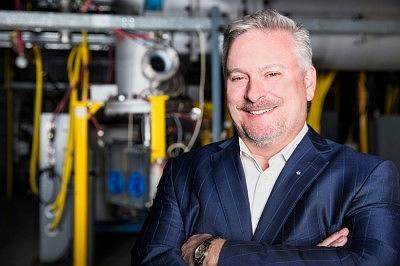
PyroGenesis CEO Peter Pascali
“The only major items that have yet to be received are the reactor and the feeder, both of which are expected to be delivered in the second half of February,” Pascali says. “Assembly is expected to be completed within two weeks of receipt of these items and commissioning within an additional two weeks thereafter. The first powder run is scheduled for the last week of March. We note that although there may be delays from suppliers, we believe we have sufficiently estimated for such uncertainties as best as we can, and are confident the first powder run will be completed on schedule.”
After the first powder run, PyroGenesis’ goal is to gradually ramp up to full production capacity over the ensuing four months; however, the company’s powders, complete with certificates of analysis, will still be available for purchase during the ramp-up phase. Their existing ISO 9001:2008 certified quality control system will also be expanded to include additional protocols required for the additive manufacturing industry. As time permits, Pascali adds, PyroGenesis also intends to test other production rate/particle size distribution improvements.
“With one of the largest concentrations of plasma expertise in the world, PyroGenesis believes it is uniquely positioned to develop such improvements,” he states. “It is PyroGenesis’ goal to become a leading supplier of high purity powders, specifically catering to the Additive Manufacturing Industry. Our initial focus will be to produce pure Titanium and Ti-6Al-4V powders, with additional powders/products being developed to address market needs.”

“GE’s acquisition of Arcam, and by extension AP&C, has arguably disrupted the supply chain of speciality powders in the Additive Manufacturing Industry, and furthermore, effectively caused end users of such powders to re-examine their access to them, all while PyroGenesis is re-entering the market as a supplier of powders,” Pascali explains.
“Since GE’s acquisition of Arcam, there has been an increased interest, by others in the industry, in the timing of both PyroGenesis’ powder production and its intention to spin-off its Additive Manufacturing capabilities. This interest has created certain delays as PyroGenesis weighs the possibility of structuring the spin-off to include agreements, contracts and/or partnerships; any of which would increase the value of the spin-off to shareholders.”
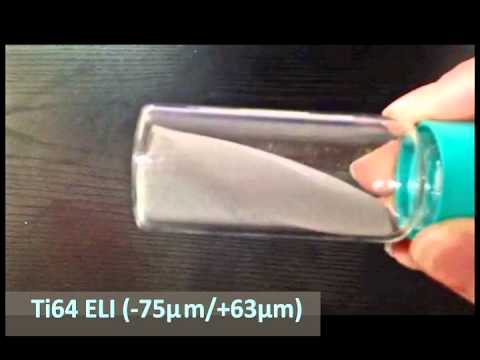
Powder produced by PyroGenesis’ Plasma Atomization Process
Regardless, PyroGenesis still intends to launch their still-unnamed spinoff company in 2017, barring any further complications. The decision to shift their focus to additive manufacturing was a deliberate and strategic one – after years of producing powders for the biomedical industry, the company decided that the materials were no longer profitable, as the biomedical industry was only interested in one specific particle size and not in any of PyroGenesis’ other products.
However, when the company saw that there was increasing demand in the additive manufacturing industry for the exact type of powder they were producing, they decided to re-enter the market and devote their production capabilities to the manufacture of powders for additive manufacturing.
[Source: TMX Money]“We underscore the fact that we are on schedule to be producing powders in Q1 2017, and expect to, as a minimum, double capacity every year from cash flow alone; however we further note that options to accelerate this will be considered once we are in a better position to quantify demand,” Pascali concludes. “We expect this to be a significant revenue contributor to the Company in the very near future.”